
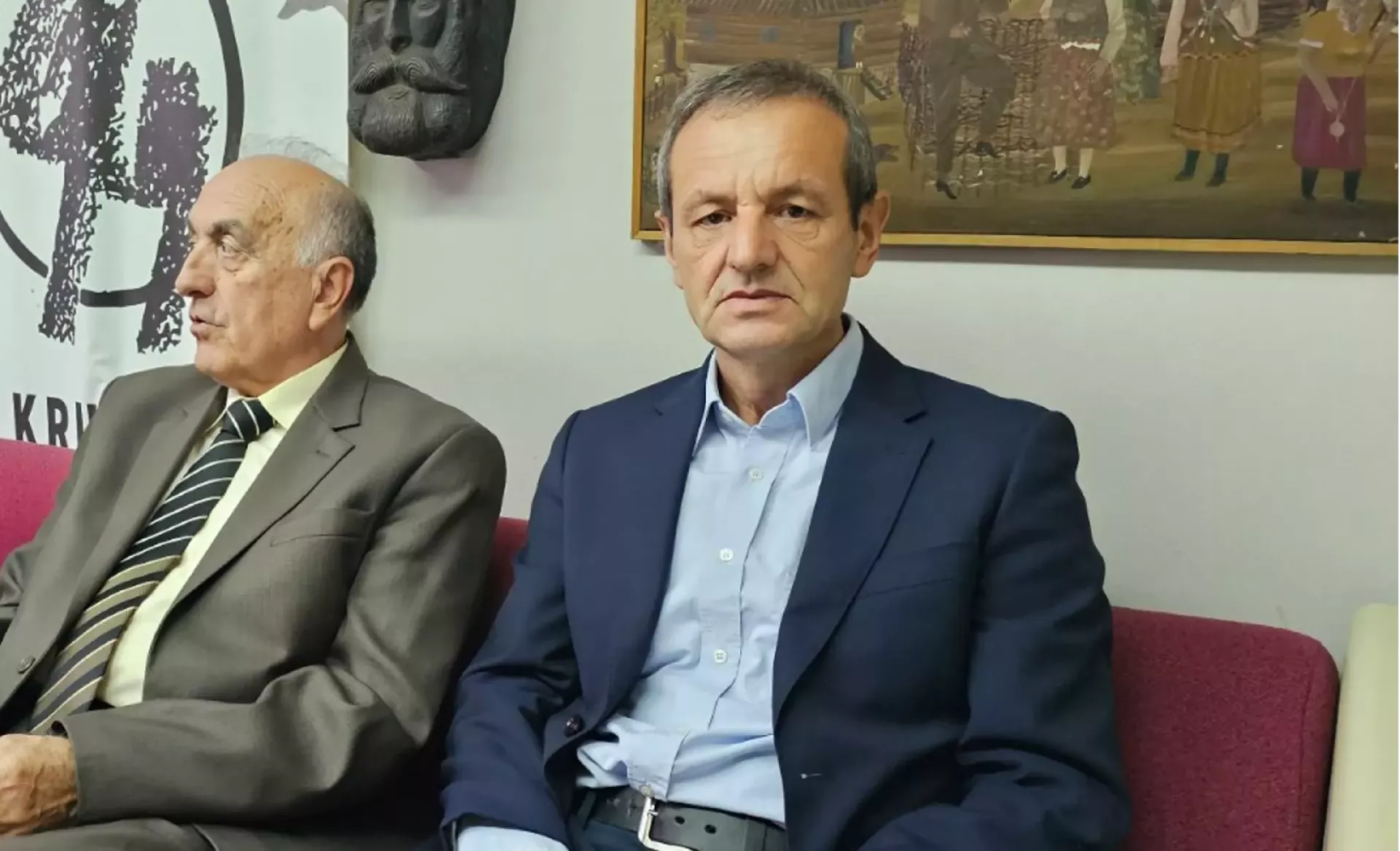
(Patria) - Sarajevo is not what it used to be. No city is what it used to be. For all other cities, this phrase has a nostalgic character, but when talking about Sarajevo, it very often has an ideological or political background, believes member of the Presidency of Circle 99, Prof. Dr. Hazim Bašić.
In his address at the regular session of Circle 99 on the topic "Defending Sarajevo from Demonization", Bašić quoted Professor Vahidin Preljević with the words: "People have the right to nostalgic feelings, the problem is when such personal experiences, one's own perception, are attempted to be imposed as objective fact".
- Muslim Sarajevo. In Sarajevo, especially after the war, New Year's lights were obsessively counted, it was determined whether the number of Santa Clauses was sufficient, and the number of catering establishments where alcohol was not served, as well as the number of women wearing headscarves, were counted.
Minarets were also counted in Sarajevo. The purpose of such "inventories" was not statistical, but ideological - to present Sarajevo as a closed, backward Muslim city, as a kind of oriental enclave in the heart of Europe.
In public discourse, some anti-state policies openly named it: "Muslim Sarajevo". This was an attempt to create an image of a city that no longer belongs to "everyone", but only to "some", and in fact, it is a project of delegitimizing the multi-ethnic identity of the city.
Paradoxically, those who talk the most about "Muslim Sarajevo" actually dream of ethnically homogeneous cities. Thus, Sarajevo is being emptied of everything that makes it real, its complexity is being erased, the experience of living together that does not fit into their ideological matrices is being nullified.
Because Sarajevo did not become "Muslim". It simply ceased to be tailored to the measure of those who want to see it through their prejudices - said Bašić.
He also touched upon the term "political Sarajevo", emphasizing that the term "political" is commonly used when talking about centers of political power: e.g., political Berlin, political Brussels, political Washington.
- However, in the domestic context, the term "political Sarajevo" becomes a means of territorial stigmatization (S. Turčalo). It does not denote the political activity of the country's capital, but is used as an enemy label - as a code for centralism, dominance, or ideological exclusivity.
This rhetoric has a clear goal - to challenge the existence of the country's political center, to present every decision coming from institutions located in Sarajevo as an expression of particular, not state, interest. In this narrative, the state is fragmented, and Sarajevo is attempted to be stripped of its authority and symbolic role - Bašić says.
He emphasizes that the term "political Sarajevo" should also be used here - in Sarajevo, but in its legitimate capacity of denoting the official political activity of the country's capital.
- The term "political Sarajevo" should be returned to its original meaning. It should mean what other capitals represent - a center of political decision-making, a symbol of statehood and democratic responsibility.
Sarajevo is an open, free city. A city of heroes, which owes nothing to anyone. The art of endurance that the city of Sarajevo mastered during the four-year siege can offer answers to many challenges facing humanity today - concluded Bašić.
Komentari (0)
Prijavite se za komentiranje
PrijavaJos nema komentara. Budite prvi!
Minuta
Sve →Iz drugih kategorija

High Representative Not Elected: Germans, French and British Against Americans, New Attempt at End of June

ČOVIĆ WITHOUT MERCY: How Those Who Brought Ademović to Office Created a Political Hell for Him



Sunny Saturday, quite warm



Tragedy in Albanian resort: Two minors drown












