
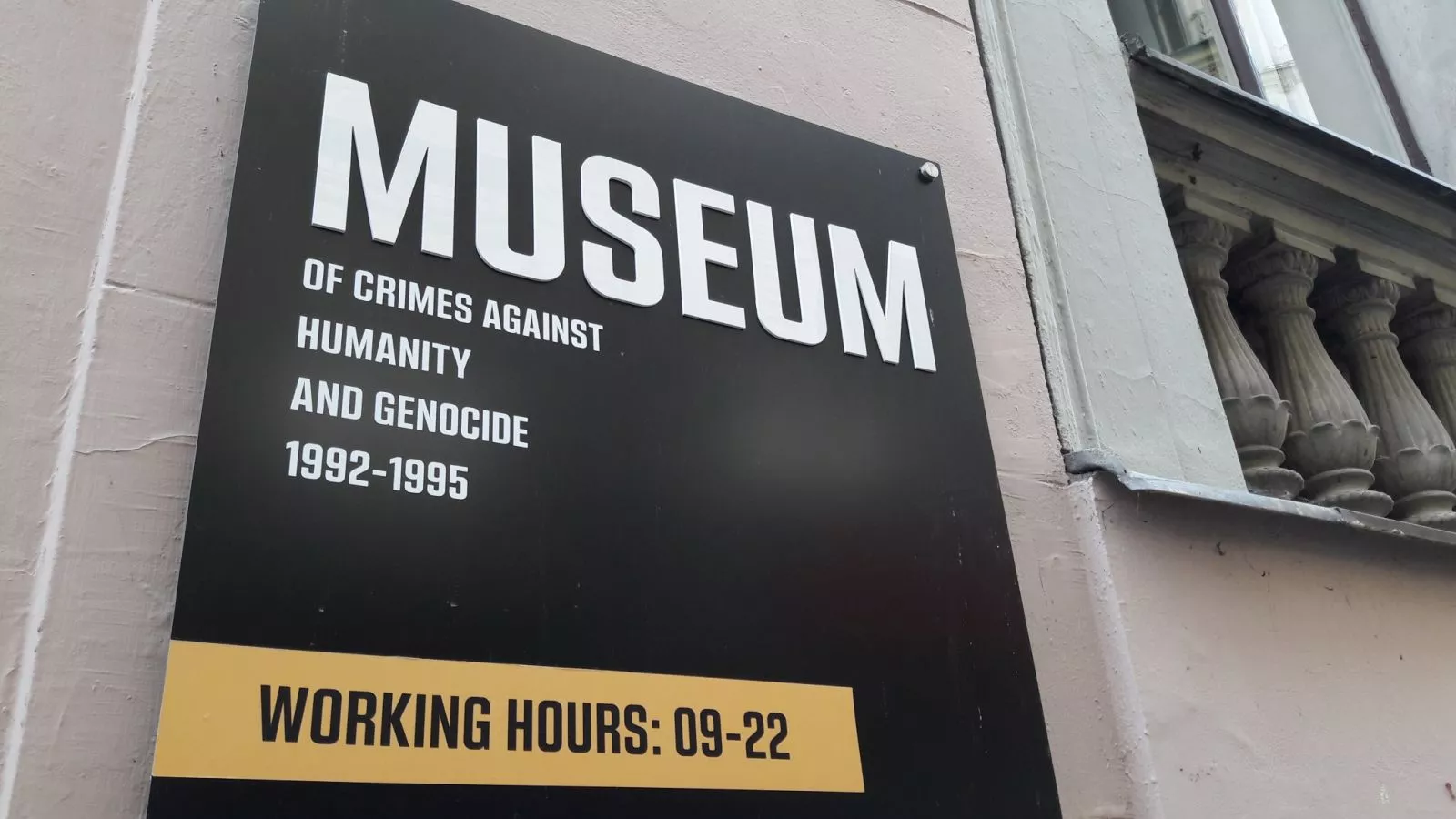
Denial of genocide, according to research by renowned scientific authorities on the Holocaust and genocide, is the final stage of genocide, which always accompanies this most severe form of crime against humanity and international law and can last for a very long time after the genocide has been committed.
"Genocide denial is a valid and reliable indicator that genocide has been committed. Denial has various motives: ideological, strategic, and others, with tragic consequences for the victims. Genocide denial is a crime of genocide, which takes place in two phases: during the commission of the crime and after its commission. Denial aims to: consciously and intentionally falsify facts, especially regarding the causes, objectives, and nature of the war (insisting on a civil war, rather than an international armed conflict), and the nature of the crimes (insisting on "ethnic cleansing" rather than genocide); equate perpetrators of genocide with victims; intentionally misinform and deceive domestic and international public opinion; suggest the existence of multiple parties with equal guilt and responsibility; enable perpetrators to evade responsibility for genocide; portray perpetrators as heroes fighting for a just cause; encourage the commission of genocide; demonize victims and portray them as perpetrators of crimes; conceal, minimize, and relativize genocide, especially facts about the number and status of victims, thereby downplaying planned and systematic mass and individual killings; maintain the presence of genocidal ideology, policy, and practice," stated the Institute for the Research of Genocide Canada.
Genocide in Bosnia and Herzegovina, along with five other major genocides of the twentieth century, is commemorated and studied every April in Canada through a Resolution of the Canadian Parliament. April is the month declared by Canada as the month of fighting against genocide. In 2015, the Canadian Parliament unanimously passed a historic Resolution recognizing April as "Genocide Remembrance, Condemnation, and Prevention Month." The genocides recognized in Canada by the Parliament and Government are the Holocaust, the genocide of Tutsis in Rwanda, the Ukrainian Holodomor, the Armenian Genocide, the Yazidi Genocide, the Rohingya Genocide, and the Srebrenica Genocide.
"Scientific knowledge, gained through scientific research on genocide and other forms of crimes against humanity and international law, in addition to its scientific contribution, is most directly in the service of building, preserving, and developing peace, freedoms, and rights, solidarity, reciprocity, etc., in a word, all the proclaimed principles and values in the highest documents of the United Nations, whose respect and integration into the foundations of human society ensures the development of a better and more just world, as an ideal to which contemporary civilization and culture and humanity should strive.
By researching genocide, the Institute for the Research of Genocide Canada (IGK), as an independent scientific research institution in Canada, simultaneously raises its voice against genocide and sends a message that will influence and affect the consciousness of world leaders, in order to save contemporary humanity and civilization, preserve the highest human values, human freedoms, human rights, and the lives of small, weak, and vulnerable groups, human communities, and peoples. Present and future generations must finally learn a historical lesson from all past genocides about the need to strengthen, develop, and unite all human forces, regardless of national, ethnic, racial, religious, ideological, or political affiliation and commitment, in a strategy for preventing and punishing the crime of genocide," it was announced.
The idea for the establishment of IGK arose from the need to rethink the culture of remembrance in a different way.
"This culture of remembrance implies that the greatest crimes should be contemplated through the use of science and research, because the fight against historical revisionists is not possible with emotions alone. Only scientific research findings can be a lasting basis for developing our abilities in timely detection, identification, prevention, and punishment of genocide, in which genocide researchers have a historical role and responsibility. Researchers must have professional responsibility and sufficient moral courage in researching and communicating scientific truth about genocide to the public. IGK strives to influence the consciousness of people and their collectivities about the need to unite all human forces in the fight against genocide wherever and whenever it occurs. Through its overall activities, IGK arrives at scientific truth, which it presents to the public in a timely and adequate manner, thereby warning about the vast scale of genocide, which is one of the possible adequate forms of preventive strategic action. IGK has reduced the space for numerous lies, falsifications, and falsifiers of history, and has influenced the consciousness, behavior, statements, and actions of individuals, certain social subjects, and social groups that deny or reject genocide.
IGK strives to influence the consciousness of people and their collectivities in Canada, North America, and beyond about the need to unite all human forces in the fight against genocide wherever and whenever it occurs. Through its overall activities, IGK arrives at scientific truth, which it presents to the public in a timely and adequate manner, thereby warning about the vast scale of genocide, which is one of the possible adequate forms of preventive strategic action," the IGK noted.
Through scientific research, it arrives at scientifically true findings which it presents to scientific and other publics, in order to, among other things, significantly reduce the space for numerous lies, falsifications, and falsifiers of history, and to influence the consciousness, behavior, statements, and actions of individuals, certain social subjects, and social groups that deny or reject genocide.
Canada has made a significant contribution to truth and justice, thus taking a major step towards prevention in the fight against genocide worldwide. At the same time, Canada has contributed to peace and security in Bosnia and Herzegovina and the region, which must be based on truth, justice, and a culture of remembrance. Canada is an example of how to institutionally approach the culture of remembrance through the use of scientific research, judicial, and historical facts. Scientific work for truth and justice has united all significant institutions, organizations, and individuals, friends, and activists of truth and justice in Canada in the process of fighting against genocide denial and the revision of judicial, scientific research, and historical facts. This is a significant step in the emergence of a much-needed coalition for peace, security, and cooperation based on truth and justice.
Komentari (0)
Prijavite se za komentiranje
PrijavaJos nema komentara. Budite prvi!
Minuta
Sve →Iz drugih kategorija

High Representative Not Elected: Germans, French and British Against Americans, New Attempt at End of June

ČOVIĆ WITHOUT MERCY: How Those Who Brought Ademović to Office Created a Political Hell for Him



Sunny Saturday, quite warm



Tragedy in Albanian resort: Two minors drown












