
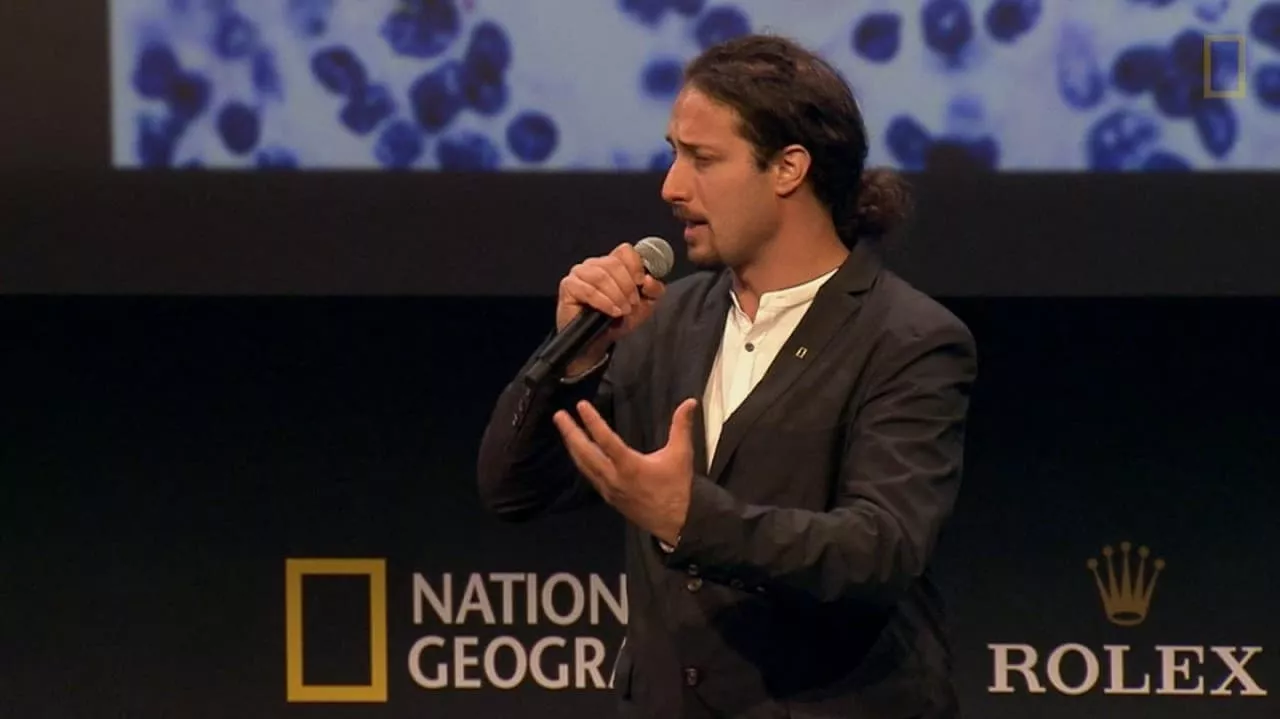
SARAJevo, (Patria) - Bosnian researcher Andrej Gajić spent almost the entire past month in New York, New Jersey, and Washington D.C. at the annual NatGeoFest gathering which brings together just over a hundred of the most influential scientists from around the world, including some of the most famous scientists of all time, such as Robert Ballard, the professor credited with discovering the Titanic, Sylvia Earle, and many others.
"After the USA, I traveled to Germany and Slovenia, where I participated as a keynote speaker at another National Geographic conference," Gajić told the Patria News Agency. He does not hide his enthusiasm for having had the opportunity to represent Bosnia and Herzegovina at such an important event.
During his stay at NatGeo headquarters in Washington, Gajić gave a speech in the Grosvenor Auditorium (NatGeo's main auditorium), where he discussed recent studies on the impact of pollution on shark diseases. The BiH team is leading one such study in the Mediterranean Sea, with a focus on studies in the Bay of Neum.
"Since National Geographic represents the pinnacle of science in the world and has been gathering the most eminent researchers since 1888 – at this year's gathering, I presented with our country's flag, aiming to acknowledge the science we do here and to place our country among the strongest scientific research circles (especially considering there were only about 10 of us from Europe). To stand before such an assembly and extremely well-known figures in the world of science is the greatest honor one can have as a scientist and researcher," says Gajić.
NatGeoFest is the flagship annual event at National Geographic and includes numerous symposia, seminars, round tables, internal meetings, and filming – attended by the most influential scientists, researchers, and photographers, along with staff.
AWARD FOR THE BEST
Through this event, National Geographic strives to celebrate the engagement and achievements during the year, reward the best, and create development strategies for future periods, as well as enrich itself with new knowledge and skills. Given that NatGeo has thousands of researchers worldwide, only slightly over a hundred of the most influential scientists are selected within NGF – and each program is available exclusively by invitation and not to all researchers.
This year's NGF focused primarily on innovations in science and technology, as well as establishing long-term conservation measures for certain species (and their habitats) that are on the brink of extinction; and on the vision of protecting 30% of the planet by 2030, finding ways to reduce the negative impact of (micro)plastic waste, and models necessary for establishing a balanced planet – which is also the primary goal of National Geographic.
"In addition to purely scientific research, our focus has been on numerous activities aimed at educating and raising awareness among the wider public through our channels and magazines," says Gajić.
He also led two major sessions titled "Pathobiology of Aquatic Animals" and "Scientific Research Diving" (together with his friend Giovanni Chimienti from the University of Bari) – which included panel discussions on the most current issues in the field, improving the quality of work, and establishing numerous international collaborations and support.
"In Washington, I socialized with some of the most influential scientists of today, such as Robert Ballard, Sylvia Earle (a pioneer of marine biology and one of the most famous scientists of all time), Enric Sala (head of Pristine Seas, who worked on protecting 4.5 million square kilometers of ocean), Lee Berger (the most influential American anthropologist), and many others, as well as award-winning directors, actors, and our leadership (executive and regional directors) at National Geographic, CEOs of Walt Disney… What always fascinates me at our gatherings is the cordiality and equality of all of us, and the fact that we all function literally as a big family – both during work and in our free time, which we always spend socializing together," says Gajić.
"Our team in Slovenia created an excellent atmosphere for several hundred visitors who gathered at Cankarjev dom in Ljubljana for this year's 'National Geographic Raziskovanja'. It was a great honor and immense pleasure for me to share the stage with other colleagues and friends who have achieved exceptionally significant and internationally recognized success in their fields. After the lectures, which are just a formal part of any event, I most enjoy interacting with the audience and answering numerous questions. Professionally and effectively engaging the audience to take direct action and make changes is the most important task for a lecturer."

Photo: Abigail Lea Engleman
Throughout his career, Gajić says he was preoccupied for a long time with how many papers he would publish in higher-quality journals and how he would rank in the world – which is certainly important for his position at NatGeo, where he is currently a member of the Advisory Council for Researchers. However, he decided, he says, to put all those statistical data in the background.
"What occupies me today are activities through which I can see the direct impact of my work on the community and nature conservation. Therefore, it is not my primary interest to see a new hundred citations of my work, but to see positive and, above all, measurable changes in ecosystems, and to see motivated young people and scientists. The number of citations and other indices are not a measure of a scientist (although I am satisfied with mine), but only the impact they have on civilization and nature. Therefore, if it is not measurable, everything else is in vain."
LEAVING BOSNIA AND HERZEGOVINA
This Bosnian-Herzegovinian scientist says he has been trying to avoid leaving the country for years. He has tried countless times to establish a stable scientific research center related to marine and freshwater biology in Bosnia and Herzegovina. Unfortunately, he says, no one from his immediate team has encountered sufficient goodwill from the authorities.
"Since I cannot find any stability there – I am currently forced to transfer my engagement to a Western country and leave BiH. Essentially, holding onto and maximally promoting BiH in all of this was clearly my great desire rather than an objective need, given that we only have 24 kilometers of coastline," says Gajić.
An elementary school in New Jersey chose Gajić as their "hero" and developed a series of classroom activities to honor his work: they created a comic strip about him and his research engagement, created a short booklet about Gajić, and even filmed a show where they conducted an imaginary interview with him, with a girl playing Gajić and even drawing a beard in his likeness.
MAJOR SCIENTIFIC REFERENCES
Andrej Gajić has so far published a total of 63 bibliographic references, including three books. He has lectured at over 30 conferences in America, England, Spain, Georgia, etc. He has led over 35 scientific research expeditions across Europe, North Africa, and Asia. He has been the lead researcher on over 10 projects in the last three years. Throughout his career, he has encountered over 50 species of sharks and rays.
National Geographic, NatGeo WILD, FOX, BBC, Al Jazeera, Deutsche Welle, Disney, and many other world media outlets actively report on the work of Andrej Gajić.
Komentari (0)
Prijavite se za komentiranje
PrijavaJos nema komentara. Budite prvi!
Minuta
Sve →Iz drugih kategorija

High Representative Not Elected: Germans, French and British Against Americans, New Attempt at End of June

ČOVIĆ WITHOUT MERCY: How Those Who Brought Ademović to Office Created a Political Hell for Him



Sunny Saturday, quite warm



Tragedy in Albanian resort: Two minors drown












