
By: Rasim Belko @rasimbelko
The budget of the Federation of Bosnia and Herzegovina (FBiH) for 2025 envisages a significant revenue growth, particularly in economic code 712 "Contributions for PIO/MIO", with a planned increase of 626,895,571 KM. This increase clearly shows the absence of plans by Nikšić's FBiH Government for more serious fiscal reforms, thus heralding the continuation of the current policy of increasing the fiscal burden on employers. The decision to increase the minimum wage to 1000 KM places employers in the position of the main bearers of this change, which will inevitably lead to reduced employment and layoffs.
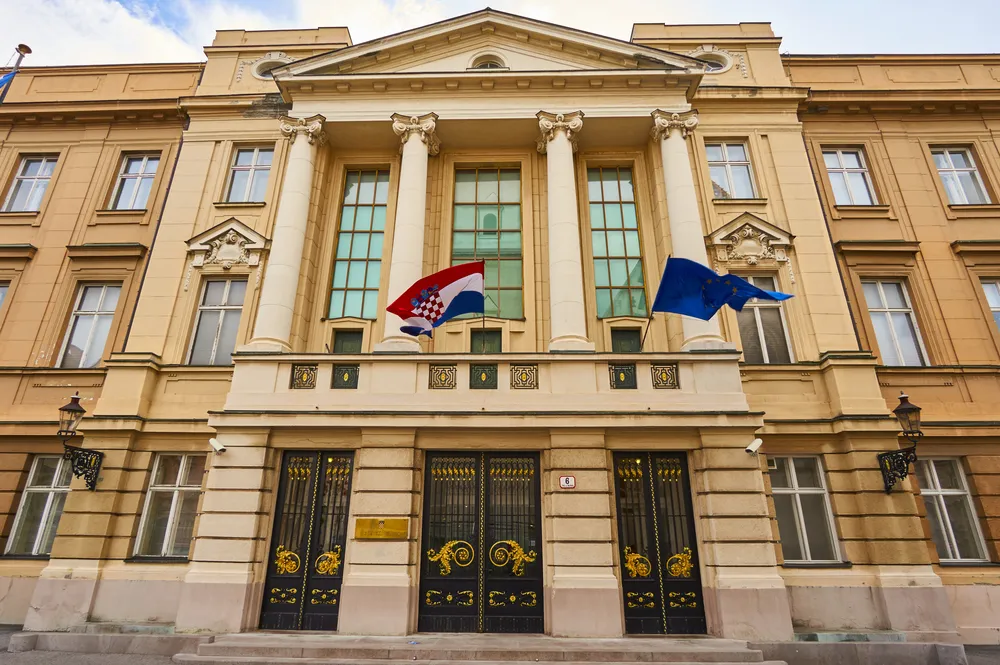
On January 20, the FBiH Government adopted the Draft Budget, but it was returned for revision regarding expenditures. In the revenue section, it is clear that the FBiH Government counts on revenue growth from contributions following the increase in the minimum wage.
Politically speaking, this approach allows the FBiH Government to publicly present the minimum wage increase as a measure to protect workers, while simultaneously avoiding the necessary reforms that would stabilize the economic system in the long term.
The planned increase in indirect tax revenue by 205,288,089 KM also has a dual dimension. On one hand, the growth of these revenues can be an indicator of increased economic activity, but on the other hand, it represents an additional burden for citizens through increased living costs. This measure allows the government to generate additional revenue without directly increasing income tax, thus avoiding political unpopularity. However, such a policy has limited scope, as it can reduce citizens' purchasing power, which in the long run can threaten economic stability and cause public dissatisfaction.
The planned borrowing of 586 million KM, significantly more than the previous year, raises questions about economic sustainability and political responsibility. Despite revenue growth, the FBiH Government continues with a high level of borrowing, indicating inefficient public finance management and a possible inability to control rising expenditures. Such a practice can be used as a means to maintain current positions through increased spending in vote-getting sectors, but without a real strategy for long-term economic development.
The increase in the minimum wage, accompanied by the growth of indirect taxes and borrowing, most affects the business community and workers. Employers will be forced to reduce costs through layoffs or reduced investments, while workers who lose their jobs will be direct victims of such policies. This situation can lead to increased dissatisfaction among citizens, which could have negative consequences for the ruling structures.
The protests of employers scheduled for Wednesday, January 22, in front of the FBiH Government building, also show this. However, the FBiH Government uses the minimum wage increase as a political tool for apparent worker protection, while simultaneously avoiding addressing key economic challenges.
What confuses economic experts is also the fact that the FBiH Law on Fiscalization is already in public debate, although it has only been adopted by the House of Representatives of the FBiH, which is nonsensical, given that when the House of Peoples adopts the draft of the aforementioned law, it will be in public debate again. But, this perhaps best describes the economic disorientation of the current authorities in the FBiH.
The 2025 budget of the Federation of BiH reflects a combination of economic and political interests, where an appearance of stability is sought through increased revenue and borrowing. However, the absence of real reforms and the shifting of the burden onto employers and workers can have long-term negative consequences for economic stability and political sustainability. The government uses these measures to temporarily strengthen its position, but the cost of such decisions could be high, both economically and politically.
During his first term as Prime Minister of the Federation of Bosnia and Herzegovina, Nermin Nikšić showed a serious flaw, which was his inability or unwillingness to listen to public and expert opinion. This trait directly reflected in a series of decisions that culminated in one of the most massive social crises in the recent history of Bosnia and Herzegovina. Ignoring warnings from experts and socio-economic factors led to dissatisfaction that escalated in February 2014, when citizens took to the streets protesting against economic stagnation, corruption, and poor governance. The protests culminated in violence, including the burning of institutional buildings, which clearly reflected deep-seated dissatisfaction with Nikšić's policies.
Today, in his second term, Nikšić faces the same challenges, but it seems he is repeating past mistakes. Through cooperation with 'bought' representatives of the Alliance of Independent Trade Unions of Bosnia and Herzegovina (SSSBiH), he is trying to appease workers by promoting populist measures, such as increasing the minimum wage to 1000 KM. However, this move, although seemingly aimed at improving the workers' position, ignores the real economic capacities of the FBiH economy.
The economic structure of the FBiH, facing a series of systemic problems, is simply not capable of bearing the additional burdens arising from the minimum wage increase. Nikšić, aware of these economic limitations, uses populist measures for short-term political survival, while sacrificing labor market stability in the long run. Workers, for whom he supposedly fights, will most likely be the biggest victims of this policy, as employers, facing increased costs, will be forced to reduce the number of employees or even close their businesses. This situation can lead to increased unemployment and further deterioration of the socio-economic situation in the country.
Nikšić's disregard for warnings from economic experts and his manipulative use of trade unions for political purposes show a continuity in his political leadership style, which prioritizes political interest over the well-being of citizens and the economy. In this context, repeating past mistakes and a lack of accountability towards the real needs of the economy and workers could result in a new crisis, with far-reaching consequences for social stability and economic recovery of the Federation of BiH.
____________________
*You may also read this text on the etto.ba portal, but you should know that it is stolen property of NA Patria, which etto.ba continuously steals, paraphrasing our texts and signing them as their own
Komentari (0)
Prijavite se za komentiranje
PrijavaJos nema komentara. Budite prvi!
Minuta
Sve →Iz drugih kategorija
High Representative Not Elected: Germans, French and British Sabotaged Americans, New Attempt at End of June
ČOVIĆ WITHOUT MERCY: How Those Who Brought Ademović to Office Created a Political Hell for Him

Sunny Saturday, quite warm
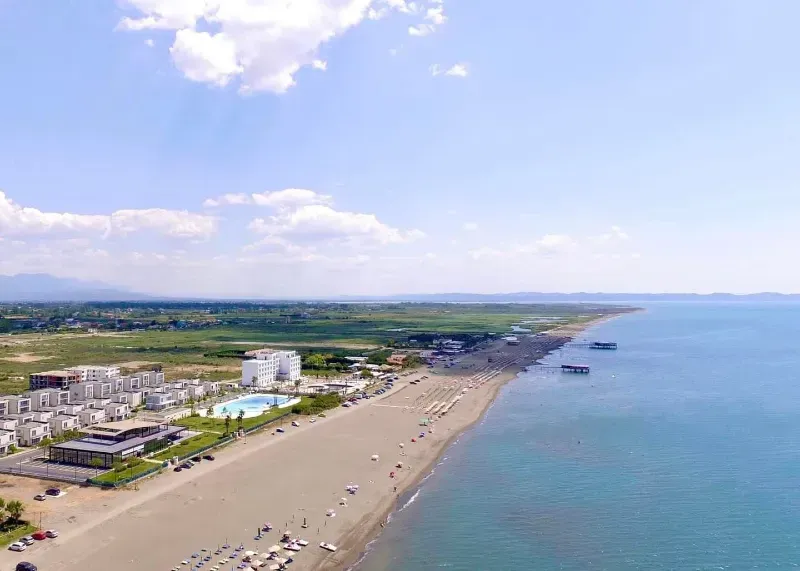
Tragedy in Albanian resort: Two minors drown