
By Armin Aljovic
From the state government of Bosnia and Herzegovina on Friday, a statement arrived at the emails of newsrooms, informing them that Bosnia and Herzegovina has received grant funds for new kilometers of highway: “At the Summit held within the framework of the Berlin Process, Bosnia and Herzegovina was approved a package of three investment projects in the field of transport. These are grant funds in the amount of 96.8 million euros for highway sections on Corridor 5c (parts of the Vukosavlje - Doboj, Zenica north - Žepče south, and Žepče south - Doboj south sections). The total value of these three projects is 433.39 million euros.”
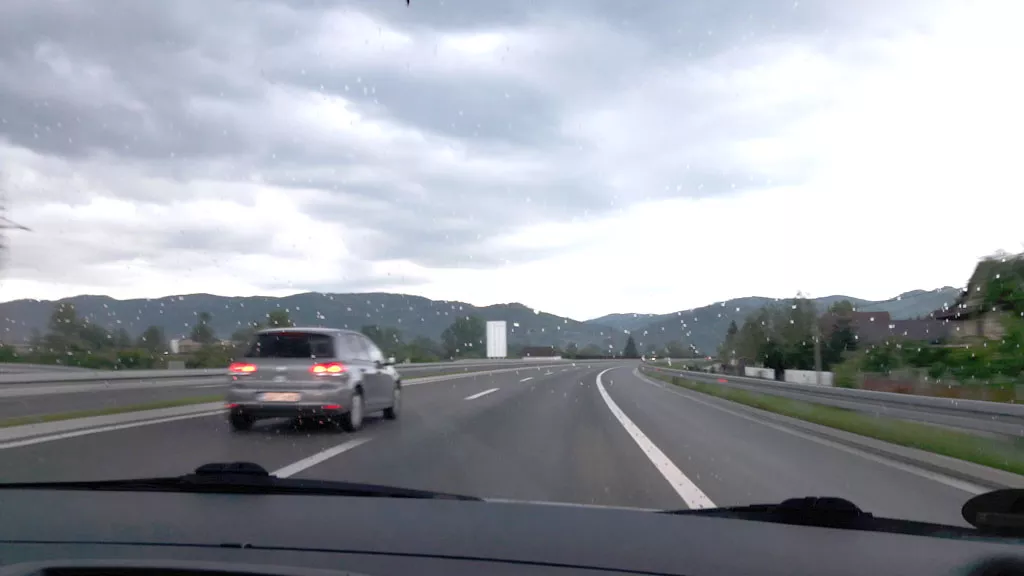
It seems that for Bosnia and Herzegovina, the easiest part is securing financial resources for the construction of this national corridor, which would not only mean faster communication from the central parts of the country towards the north and south, but would also make Corridor 5c the main transit route from Central Europe to the Mediterranean. The problem, however, is that the first international highway through BiH, one of the most important national infrastructure projects for the country since the Dayton Peace Agreement in 1995 until today, which should bring prosperity to citizens, is not decided by the law of economics, but in BiH, the construction of the highway is completely wrongly framed as an issue of ethno-politics. The route of the highway itself is often the subject of debate as to whether it should pass through Croatian, Bosniak, or Serbian land, which postpones construction indefinitely.
Corridor 5c, which runs along the entire length of BiH, is a European transport corridor about 700 kilometers long, starting in Budapest, Hungary, passing through Croatia, then through the whole of Bosnia and Herzegovina, and re-entering Croatia. The idea of those who created Corridor 5c at the Pan-European Transport Conference in 1994 in Crete, and refined it three years later in Helsinki, was to connect Central and Southern Europe. The Hungarians have completed their part of the corridor, Croatia, despite significant problems today, still has one smaller section to build towards Hungary, while Bosnia and Herzegovina, through which half of this corridor passes, is significantly lagging behind. Out of the 300 or so kilometers of highway passing through the country, the construction of which began in 2001 with works on the Jošanica - Podlugovi section, only about 100 kilometers, or one-third of this important corridor, has been completed to date. If it took the authorities of Bosnia and Herzegovina 18 years to build one-third of the highway, and if they continue at the same pace in the future, Corridor 5c will be completed in 36 years! However, it is clear that Bosnia and Herzegovina does not have that much time to wait, primarily due to the outflow of qualified personnel (according to the Employment Strategy Document of the Federation of Bosnia and Herzegovina 2018-2021, about 20,000 people leave BiH annually). It is very likely that BiH will soon not have its own workforce capable of building Corridor 5c passing through BiH, and this job will have to be entrusted not only to foreign companies – as some of them are already working on the BiH highway - but also to their imported workers, in the way the Chinese are building the Pelješac Bridge or as the construction of Thermal Power Plant Block 7 in Tuzla is planned. According to the laws of economics, this is the worst scenario for a country, because governments borrow multi-million euro loans from banks, while the money does not remain to circulate within the country and its own bloodstream, but through foreign companies and imported labor leaves the country, leaving the country only with obligations to banks.
The lack of transparency in the construction of Corridor 5c passing through BiH is an additional problem that burdens this national project – a landslide on the highway section from Sarajevo to Lepenica showed that there were shortcomings in the very planning of the Corridor's construction. Experts warn that geologists should have noticed suspicious parts of the terrain and prevented the disaster, but it is evident that the preparations for the construction of that part of the highway were not carried out according to the highest standards. In mid-last year, in Glamočani near Banja Luka, the Minister of Transport in the BiH entity of Republika Srpska, Neđo Trninić, ceremonially opened the demolition of toll booths on the highway that should connect to 5c – which were placed in an improper location! The construction of these booths cost taxpayers 2.5 million KM, while citizens also had to pay for the demolition, in the amount of a full million KM.
Although journalists have been investigating irregularities in highway construction for years, everything has ended without serious sanctions.
Domestic and international independent experts have long been sounding the alarm – if Bosnia and Herzegovina does not build its part of Corridor 5c with domestic companies and domestic labor force in the next six or seven years, this highway could later become a tight noose around the neck of both the country and its citizens.
Komentari (0)
Prijavite se za komentiranje
PrijavaJos nema komentara. Budite prvi!
Minuta
Sve →Iz drugih kategorija

High Representative Not Elected: Germans, French and British Against Americans, New Attempt at End of June

ČOVIĆ WITHOUT MERCY: How Those Who Brought Ademović to Office Created a Political Hell for Him



Sunny Saturday, quite warm



Tragedy in Albanian resort: Two minors drown












