
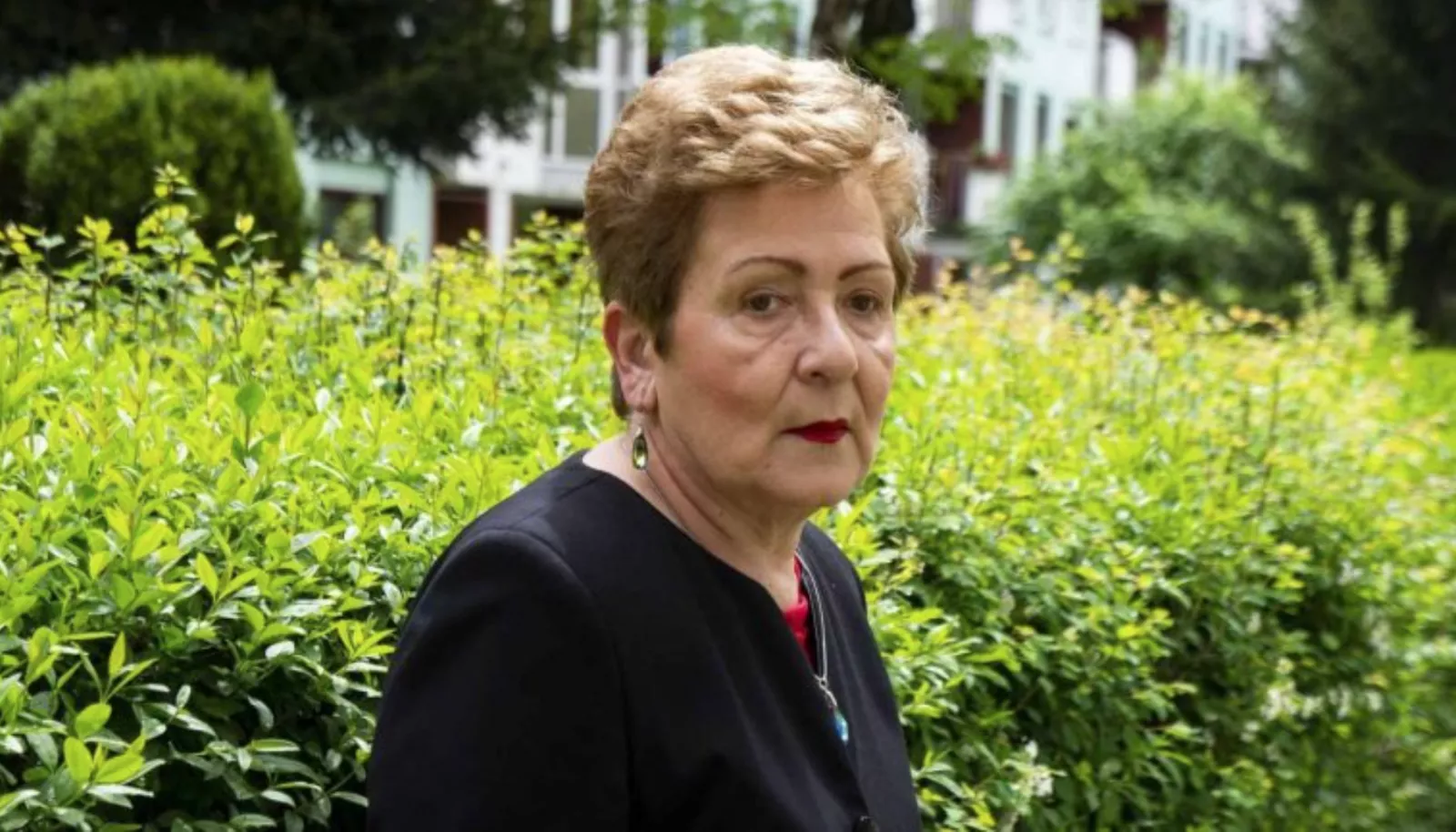
SARAJEVO, (Patria) - Today's regular session of Krug 99 was themed "Summit for Democracy without BiH and the Zornić Judgment". The speakers were Dr. Valery Perry from the Democratization Policy Council, Azra Zornić, a citizen and the most deserving person for the success of the appeal before the Court in Strasbourg, and young activist Samir Beharić.
Azra Zornić believes that the Zornić judgment is imperative for the democratic future of Bosnia and Herzegovina.
"If it had been implemented at the time it was rendered, citizens would not be living in a state of ethno-rule and fear of segregation, war, and secession today. Instead of dealing with the economy and business to save the country from bankruptcy, to retain young people and ensure them a better future in BiH, ethno-nationalist leaders, in order to preserve their personal wealth acquired on the backs of citizens, and to protect themselves from indictments for corruption and abuse of office and authority, are holding citizens hostage to their ethno-nationalist, i.e., fascist actions throughout the territory of our only Bosnia and Herzegovina.
Why is the Zornić judgment imperative for the democratic future of Bosnia and Herzegovina? For the simple reason that the European Court of Human Rights, with that judgment, ordered the state of Bosnia and Herzegovina to adopt a civic constitution. According to a civic constitution, all citizens of Bosnia and Herzegovina are equal, not only in the electoral process but also in all other spheres of social life. In such a situation, politicians competing in the electoral process would have to base their programs and election campaigns on the social, economic, business, health, and all other segments of life of all citizens in BiH," said Zornić.
Valery Perry, a senior associate at the Democratization Policy Council, engaged in academic and research work on governance, democratization, and extremism in BiH and the region, spoke about the Summit for Democracy that was held.
"While the Biden administration saw this event as an opportunity to show that 'America is back' in the post-Trump era, and to encourage democratic systems that seem to be suffering from a crisis of trust globally, there were also strong criticisms from all sides. However, perhaps the key message to take from this practice and future possible related initiatives is that democracy and democratization are a process, not a linear endpoint. This is clear in the US as it grapples with challenges to voting rights, increasingly sharp political tribalism (politics with little or no significant political differences among individuals), and the disintegration of civic solidarity.
However, this message must also become a fundamental element of foreign policy. There is a need to recall the principles of liberal/democratic peace theory, which argues that security improves when more countries are based on democratic systems and the rule of law based on law. And perhaps it is precisely this small country, Bosnia and Herzegovina, located in the 'backyard' of Europe, that provides an opportunity to establish as key the values of civic participation, political responsibility, layered identities, good governance, and respect for rights that respect the dignity of every person in the country. To do otherwise would mean retreating from the values proclaimed at this week's summit and being willing to support value-less transactionalism* that will end contrary to liberal democratic peace," says Perry.
Samir Beharić believes that the failure to implement the Zornić judgment, as well as other judgments of the European Court of Human Rights, sends a clear signal to young people in BiH that this country is not ready to build a society according to modern European principles that do not discriminate against individuals and groups based on their ethnic affiliation (or lack thereof).
"This type of discrimination is just one example of ethnic segregation that we find even in the educational system, where young Bosniaks and Croats attend separate classrooms simply because they are Bosniaks and Croats. Young people from BiH today speak more foreign languages, learn computer coding via YouTube, and the whole world is at their fingertips – two or three touches of a smartphone screen away. In other words, we see how our peers live around the world, we are aware of the educational system they are educated in and how much they earn as soon as they graduate.
If BiH does not become an environment where the young people of this country feel comfortable, they will not stay here at all. If BiH does not soon become an EU member, young people will become EU citizens – but without their homeland. The departure of young people, who truly love BiH as a country, represents a logical step for all those who have tried to change the situation they live in, but have become tired, frustrated, and left empty-handed on that path. Patriotism alone is not enough to stay in BiH, especially not the patriotism advocated by politicians with deep pockets and dubious pasts. Patriotism does not fill the stomach. To make matters worse, the few individuals who have decided to return to BiH and try to contribute to the country through work in state institutions are seen as a kind of competition, so their return is discouraged, and their stay is made difficult. This sends a bad signal not only to those individuals who have returned to BiH but also to those who are currently studying or working abroad and considering returning to BiH," says Beharić.
Komentari (0)
Prijavite se za komentiranje
PrijavaJos nema komentara. Budite prvi!
Minuta
Sve →Iz drugih kategorija

High Representative Not Elected: Germans, French and British Sabotaged Americans, New Attempt at End of June

ČOVIĆ WITHOUT MERCY: How Those Who Brought Ademović to Office Created a Political Hell for Him



Sunny Saturday, quite warm



Tragedy in Albanian resort: Two minors drown












