
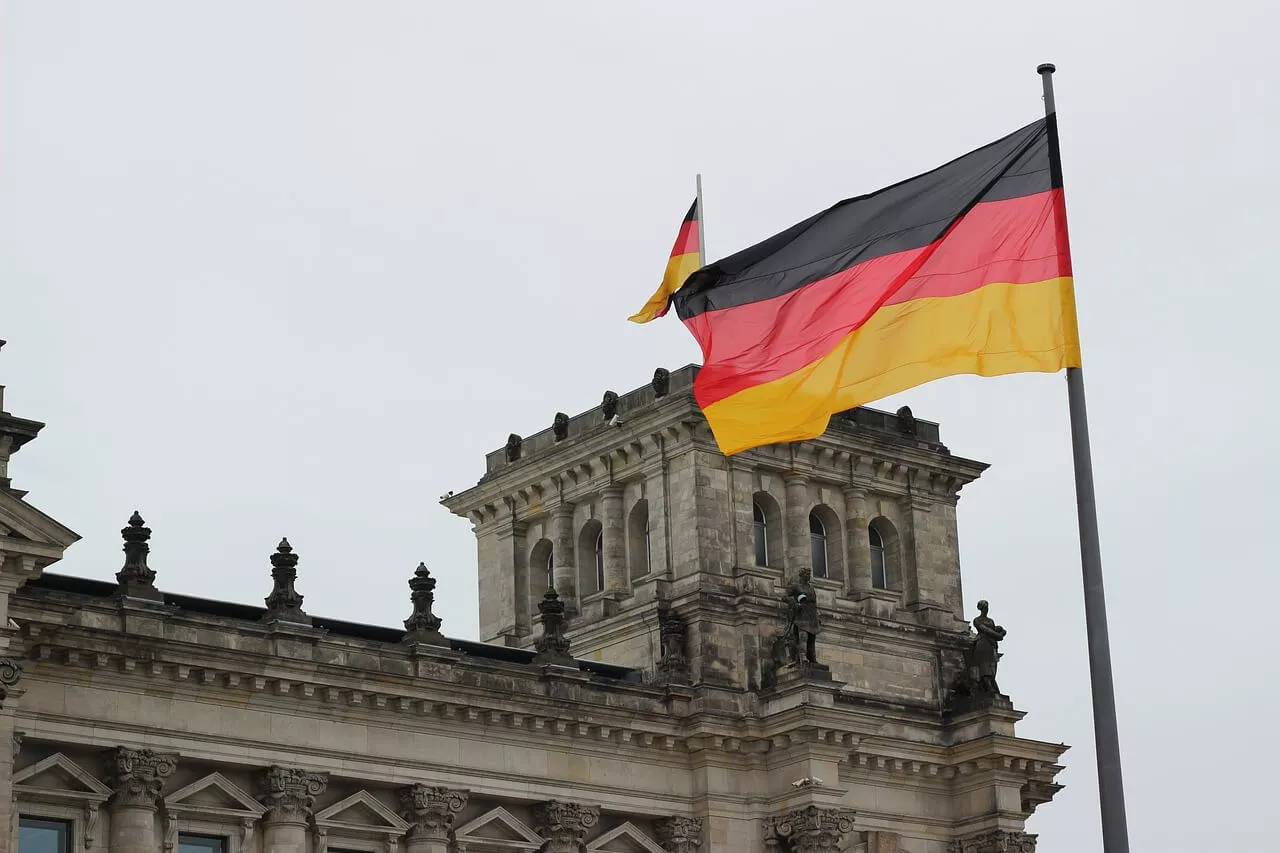
(Patria) - The energy shock caused by the Russian invasion of Ukraine has caused the biggest drop in the standard of living in Germany since World War II.
The decline in German economic output can be compared to the 2008 financial crisis, according to estimates by former economic advisors to the German Government.
In a joint report created to show the depth of the economic crisis in Germany, it was highlighted that real wages in the country fell in 2022 to a level not seen since 1950, writes the British The Guardian.
The failure to protect German industry from rising energy prices could turn this decade into a lost one for Germany and further fuel the rise of the right-wing populist party AfD, warned the authors in a report published by "Forum for New Economy".
- In an era of conflict, climate and geopolitical crises, the rise of the AfD is a wake-up call. The drop in the standard of living experienced by Germans is unprecedented since World War II.
It is true that the factors influencing the rise of the AfD are not only economic, but it is also impossible to ignore how the unprecedented decline in living standards in Germany has gone hand in hand with the growing popularity of the far-right, said Isabella Weber, associate professor of economics at the University of Massachusetts.
Weber was a member of a high-level expert commission tasked by the German government to devise a way to stop energy prices for companies and households in 2022. The study's co-author, Professor Tom Krebs, was a senior advisor to the Minister of Finance under Olaf Scholz, the current German Chancellor.
Their findings indicate how strongly Europe's largest economy is still shaken by the consequences of the Russian invasion of Ukraine in February 2022.
The International Monetary Fund has predicted that Germany's economic growth in 2024 and 2025 will be lower than any comparable advanced economy except Argentina.
The economy shrank by 0.3 percent in the last three months of 2024 and is expected to shrink again in the first quarter of 2024. Two consecutive quarters of declining output are defined as a technical recession.
Weber and Krebs pointed out that two prominent increases in support for the AfD in 2022 and 2023 coincide with periods of uncertainty when the German government did not know how to deal with the impact of energy price shocks on the standard of living.
They calculated that real wages, measured against pre-crisis forecasts, fell by 4 percent from April 2022 to March 2023, while output fell by 4.1 percent.
When the damage caused by the coronavirus crisis to production is included in the equation, the result is that at the end of 2023, it was 7 percent lower than the pre-crisis trend. Real wages were 10 percent lower.
Economists claim that the energy price cap, introduced by Scholz's coalition government in late 2022, was the correct political response, but that the delay in its implementation, at a time when the market price of gas had skyrocketed, led to a strong increase in support for the AfD during the summer after the Russian invasion.
Komentari (0)
Prijavite se za komentiranje
PrijavaJos nema komentara. Budite prvi!
Minuta
Sve →Iz drugih kategorija

High Representative Not Elected: Germans, French and British Against Americans, New Attempt at End of June

ČOVIĆ WITHOUT MERCY: How Those Who Brought Ademović to Office Created a Political Hell for Him



Sunny Saturday, quite warm



Tragedy in Albanian resort: Two minors drown












