
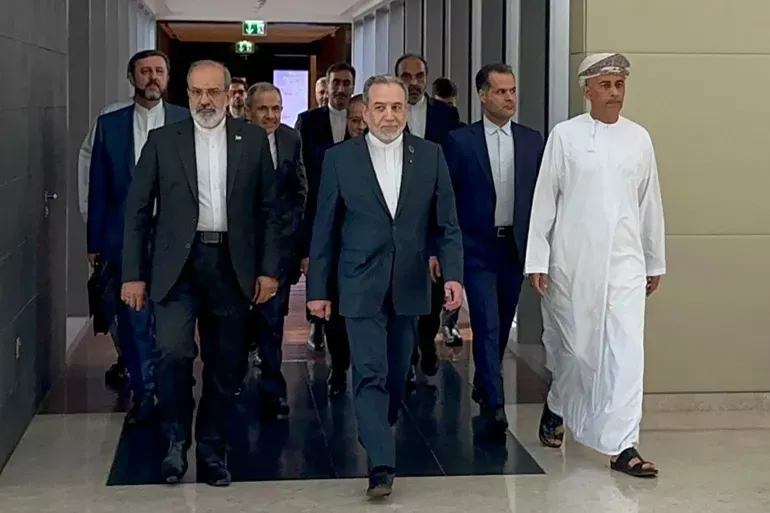
(Patria) - Negotiations between the United States and Iran on Tehran's nuclear program have concluded.
The dispute related to the topics of discussion, and especially the differences in views on Tehran's missile arsenal, suggest that progress will be difficult to achieve.
Although both sides have stated that there is goodwill for continuing the talks, Tehran has unequivocally rejected the possibility of negotiating its own defense capabilities, including missiles and their range.
Washington and Tehran did not agree on anything before the start of the negotiations – from the location to the parameters of the talks. Originally agreed to take place in Turkey, they were ultimately held in the capital of the Sultanate of Oman – Muscat.
While the US insisted on expanding the topics to include Iranian ballistic missiles, support for armed groups like Hezbollah in Lebanon and the Houthis in Yemen, and "treatment of its own people," after days of speculation, Iranian negotiators were satisfied that, at least initially, only the nuclear dispute would be discussed.
- If the other side continues with the negotiations and with the same approach to problem-solving – I think we can achieve a framework for new talks. I don't want to give any assessments of today's meeting, but I think it was a good start and gives hope for new talks – said Iranian Foreign Minister Abbas Araghchi.
The first talks since the June US attacks on Iranian nuclear targets were led separately by the Omani Foreign Minister Badr al-Busaidi with his Iranian counterpart Araghchi, and then with US Special Envoys for all, now also for the Middle East – Steve Witkoff and Jared Kushner – Donald Trump's son-in-law.
- The US administration's negotiating objectives towards Iran are clear – no uranium enrichment, you can't have it, you must accept strict limits on your missiles, on your missile stockpiles and production – said Alan Eyre from the Middle East Institute in Washington.
The central issue of the negotiations is the fate, according to estimates, of about 400 kilograms of highly, about 60 percent, enriched uranium – which has been at the center of the dispute since the US attacks on Iranian nuclear facilities in June last year.
Tehran could be ready for difficult compromises to achieve the easing of sanctions that have broken the back of the Iranian economy. They have impoverished Iranians and led to very serious, large-scale protests that threaten the very sustainability and survival of the regime.
Tehran's clerical leadership remains deeply concerned that Trump might carry out his threats to attack Iran after the US Navy's military buildup near Iran.
In June, the US attacked Iranian nuclear targets, joining the final phase of a 12-day Israeli bombing campaign. Tehran stated at the time that its uranium enrichment work had stopped.
The strengthening of the US Navy, which Trump called a massive "armada," followed the bloody government crackdown on protests across Iran last month, intensifying tensions between Washington and Tehran.
Trump warned that "bad things" would likely happen if a deal was not reached, increasing pressure on the stalled Islamic Republic, which has led to mutual threats of air strikes.
- While these negotiations are ongoing, I would remind the Iranian regime that the President has many options available besides diplomacy, as the supreme commander of the most powerful military in the history of the world – White House spokesperson Karoline Leavitt told reporters yesterday.
World powers and regional countries fear that the breakdown of negotiations would lead to another conflict between the United States and Iran, which could spread to the rest of the oil-rich region.
Iran has promised a sharp response to any military strike and warned neighboring Persian Gulf countries, which host US bases in the region, that they could become targets.
Iran has one of the largest stockpiles of ballistic missiles in the Middle East.
Komentari (0)
Prijavite se za komentiranje
PrijavaJos nema komentara. Budite prvi!
Minuta
Sve →Iz drugih kategorija

High Representative Not Elected: Germans, French and British Sabotaged Americans, New Attempt at End of June

ČOVIĆ WITHOUT MERCY: How Those Who Brought Ademović to Office Created a Political Hell for Him



Sunny Saturday, quite warm



Tragedy in Albanian resort: Two minors drown












