
Written by: Armin Sijamić
After three weeks of the Israel-Hamas war, the attitude of many countries towards official Tel Aviv is changing, but the slowest is in the Middle East, where its alleged "mortal enemies" are located.
Former Prime Minister and army commander Ehud Barak also noticed that the war in the Gaza Strip will cost Israel its reputation in the world. "Israel will 'probably lose the support of world public opinion,'" Barak said in an interview with Foreign Policy, adding that he believes the United States will remain with that country, although things there will "become more complicated."
The condemnation of Israel in a large part of the world is not surprising. The killing of about four thousand children in three weeks is difficult to justify. Although almost all major media in the United States and the West in general are inclined towards Israel, there are more and more who ask why Israel is not condemned. We see this on social networks, in the statements of opposition members, parliamentarians, intellectuals, public figures and religious leaders.
Many from the Jewish people have condemned Israel's behavior, and some of them are among the biggest critics of Israel's attitude towards Palestine.
Most European countries followed the United States' stance that Israel "has the right to defend itself," but many did not express unconditional support for Tel Aviv. Open criticism of Israel's behavior came from officials in Spain, Croatia, Norway, Bosnia and Herzegovina, Ireland, Turkey...
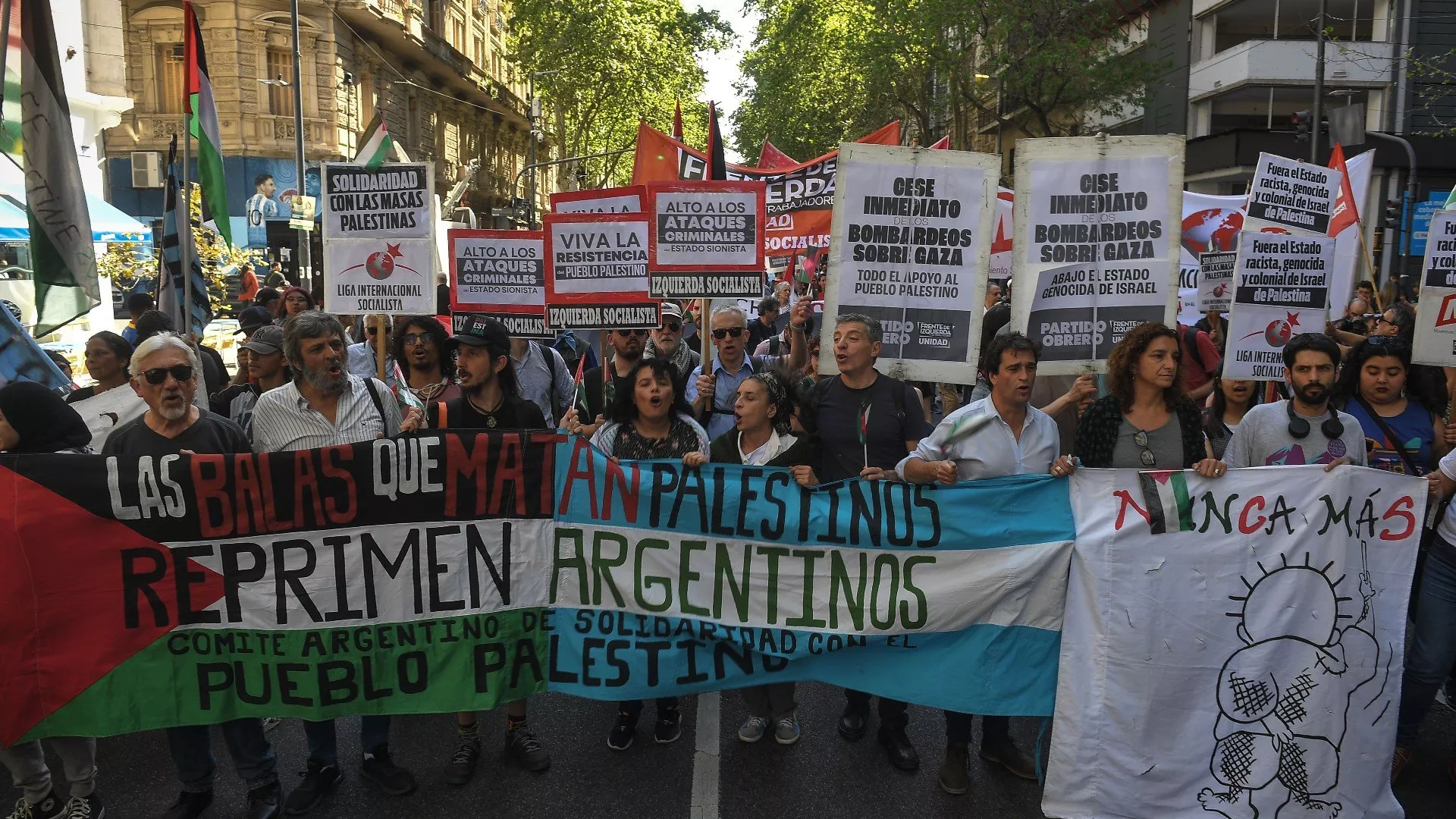
Nevertheless, the Latin American states are louder than others and with concrete moves. The authorities of Bolivia, Colombia, Chile, Argentina, Brazil or Mexico defend civilians in Gaza more courageously, in accordance with their capabilities in that distant part of the world, than some predominantly Muslim countries.
The biggest critics of Israel's operations in the Gaza Strip are Turkey and Iran – non-Arab states, and military aid to Hamas could be provided by Iran, the Lebanese Shiite Hezbollah, Shiite militias and authorities in Syria, Shiites from Yemen and Iraq, which prompted Washington to send aircraft carriers to the Middle East.
This week, Jordan recalled its ambassador from Israel and announced that it would return him to his post when the attack on the Gaza Strip ceases. Bahrain also recalled its ambassador and severed economic ties with Israel. The largest Arab, predominantly Sunni states, Egypt and Saudi Arabia, have so far reacted mildly, calling on the West to save the Palestinians and stop Israel.
How is it possible that some Latin American states condemn Israel more strongly than its Middle Eastern neighbors, who are sometimes perceived as "enemies" of the Jewish state?
An ongoing rebellion
The behavior of Latin American states led by leftists is not a surprise for those who have been following processes in that part of the world in recent decades. These states have many times sided with the opposing camp of the United States. For example, former Venezuelan leader Hugo Chávez in 2008 called the right-wing government in Colombia, close to Washington, the "Israel of Latin America," accusing President Alvaro Uribe of being a servant who wants regional divisions and war.
There are many similar examples, and there are instances where some attitudes towards the rest of the world have become established and do not depend on the relationship with Washington or Moscow. For example, most Latin American states condemned Russia in the United Nations for the aggression against Ukraine, but did not impose sanctions. Washington and Moscow tried to attract them to their camp and failed.
A more recent example is the relationship between Brazil and the leftist president on whose partnership US President Joseph Biden seriously counted. Luiz Inácio Lula da Silva made several statements about the war in Ukraine that bothered Kyiv and the West, while he accused Benjamin Netanyahu of "madness" because he "wants to destroy the Gaza Strip" and called on Israel to stop the attacks.
Political interests and conscience
In condemning Israel for the attack on the Gaza Strip, Bolivia, the poorest country in Latin America, went the furthest. Bolivia "decided to break diplomatic relations with the state of Israel as a sign of rejection and condemnation of the aggressive and disproportionate Israeli military offensive taking place in the Gaza Strip," said Deputy Foreign Minister Freddy Mamani. "We reject the war crimes committed in Gaza. We support international initiatives to guarantee humanitarian aid, in accordance with international law," emphasized Bolivian President Luis Arce.
They were called to this move by former President Evo Morales, who in 2009 broke diplomatic relations with Tel Aviv for the same reason, and interim right-wing President Jeanine Áñez restored them in 2020. He called on President Arce to do so because "the people of Bolivia feel" that way, that it is a matter of "dignity and solidarity of our people" and called for Israel to be declared a "terrorist state," for Netanyahu to be reported to the international court, and for the US and the European Union to be asked to "explain" why they give "political, military and diplomatic" support for the crimes.
Colombia and Cuba described the events in the Gaza Strip as "genocide." Colombian President Gustavo Petro led a debate on social networks with the Israeli ambassador in Bogota and threatened to break diplomatic relations. Bogota recalled its ambassador from Israel, and Chile did the same.
"I have decided to recall our ambassador to Israel. If Israel does not stop the massacre of the Palestinian people, we cannot stay there," Petro said. "That is called genocide, they are doing it to remove the Palestinian people from Gaza and take it over," Petro said. "The head of state who committed this genocide is a criminal against humanity," he added.
Chilean President Gabriel Boric said that innocent civilians are the main victims of the Israeli offensive. And from the Chilean Ministry of Foreign Affairs, they condemned the "collective punishment" of the Palestinian people. Mexico, Argentina and others joined the criticism and calls for a ceasefire.
Israel responded that Bolivia is "surrendering to terrorism and the ayatollah regime in Iran" and "the terrorists of Hamas," and that Colombia and Chile should "condemn the terrorist organization Hamas, which slaughtered and kidnapped babies, children, women and the elderly."
Freedom comes at a cost
This attitude of some Latin American states towards Israel, especially its strongest states (Brazil, Mexico, Argentina, Colombia and Chile), is certainly partly conditioned by the fact that the biggest ally of that Middle Eastern state is Washington, which is fighting to establish control in its "backyard," pushing back Russia, China and previously European powers.
Nevertheless, these attitudes are also the result of the political and social awareness of the local peoples who are in the vortex of conflicts between states, domestic elites, clashes of great powers and personal ambitions of elite members.
In addition, religion plays an important role in these predominantly Catholic states, regardless of whether leftists or rightists are in power. Namely, in addition to Cuba's ruling atheists, in Latin America many leftist movements want socialism but do not renounce religion. This is one of the reasons why some members of the church often find themselves in the crosshairs of Washington or other powers. Archbishop Óscar Romero is the most famous example of what it means to stand up for the protection of the oppressed and powerless.
However, probably the main reason for this behavior of a large number of Latin American states is the hard-won independence in decision-making, which can still be revoked today after changes following elections or military coups. The local people and political elites have tasted what freedom of political decision-making looks like and do not want to give up that privilege, regardless of the high price they pay. The majority of Arab and Middle Eastern peoples and states have never had this privilege.
Komentari (0)
Prijavite se za komentiranje
PrijavaJos nema komentara. Budite prvi!
Minuta
Sve →Iz drugih kategorija

High Representative Not Elected: Germans, French and British Against Americans, New Attempt at End of June

ČOVIĆ WITHOUT MERCY: How Those Who Brought Ademović to Office Created a Political Hell for Him



Sunny Saturday, quite warm



Tragedy in Albanian resort: Two minors drown












