
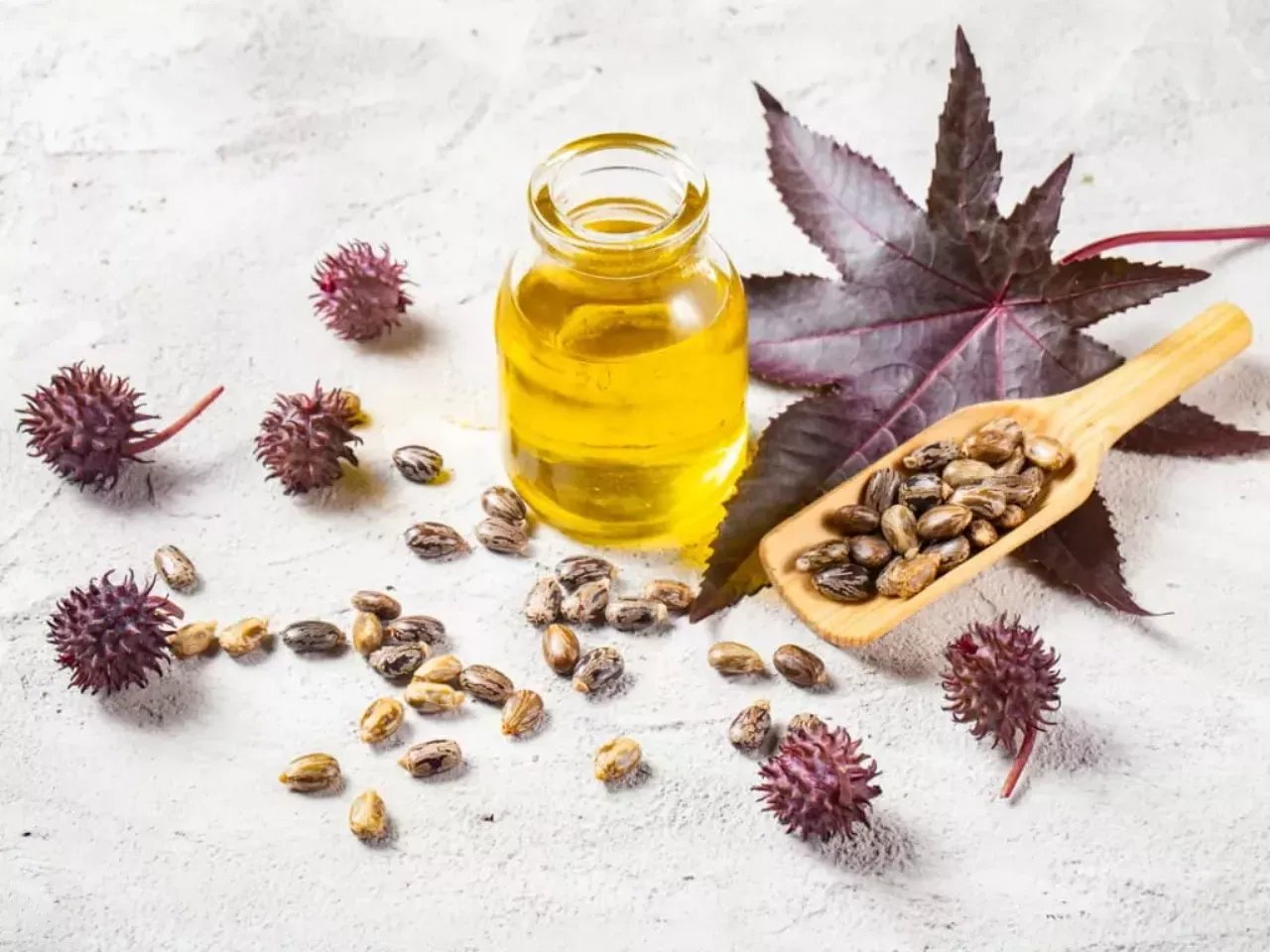
(Patria) - Ricin is a powerful biological toxin obtained by extraction from castor beans (Ricinus communis).
It has been researched for its potential role in bioterrorism, as well as in cancer treatment.
We can see it in numerous series and films as a popular choice of poison.
The toxicity of this plant has been known since ancient times, and more than 750 cases of poisoning have been recorded.
Chemical structure
Ricin is a protein belonging to the lectin group, proteins that bind to carbohydrates.
It consists of two polypeptide chains, an A chain and a B chain, connected by a disulfide bond. It can depurinate adenosine from RNA.
The A chain is a globular protein composed of three domains that form the active site, made up of 267 amino acids organized into 8 α-helices and 8 β-sheets.
The B chain consists of two domains of 262 amino acids, with each domain having a lactose-binding site.
The A chain, or active chain, can catalytically modify the 28S subunit of eukaryotic ribosomes, thereby blocking protein synthesis.
History and use
Ricinus communis is a plant native to the tropical regions of Africa and Asia, as shown by archaeological research in caves in South Africa.
Traces of acids found in this plant have been found on a wooden stick used for applying poison, dating back as far as 24,000 years ago.
Ricin was used in ancient Egypt, ancient Greece, in ancient Eastern cultures, along the Mediterranean, in Africa, the Caribbean, and Brazil.
It was used for diarrhea, injuries, rheumatism, inflammation, lung problems, and in the treatment of many other ailments.
Today, we study ricin as a potential cancer treatment due to its ability to selectively kill cancer cells.
Studies have shown high effectiveness in killing cancer cells in experimental animals.
However, much more research is needed to determine if ricin is safe and effective for human use, writes National Geographic.
Should we fear ricin?
Although ricin is one of the most poisonous substances known to man and a substance that can survive for a long time in the environment, there is no reason to fear it.
Ricin is not easily transmitted from person to person, it is not widely available, and it is not often found in the environment.
To be used as a weapon, it must be intentionally extracted from castor beans, and it is not easy to produce in large quantities.
Ricin in popular culture
Ricin has been used in a large number of fictional works, often as a deadly poison.
Jim Prideaux, a character in the popular British series "Tinker Tailor Soldier Spy", almost ends up on his deathbed after being poisoned with ricin.
Walter White from the American series "Breaking Bad" uses ricin to poison a rival drug dealer.
Ricin is mentioned in the James Bond films "Skyfall" and "Moonraker".
Besides fiction, it has also been used in real life. Georgi Markov, a Bulgarian dissident, was stabbed in 1978 with an umbrella containing a ricin injection.
The former Russian double agent and his daughter suffered ricin poisoning in the UK in 2018 but survived the attack.
What if we are poisoned?
If exposure to ricin has occurred, one should immediately go out into fresh air and call emergency services or the national poison control center.
Then, remove any clothing that may have been exposed to the poison. Do not pull clothing over the head.
Wash the skin exposed to ricin with soap and water. If it comes into contact with the eyes, rinse them with plenty of water for 10 to 15 minutes.
Place the removed clothing in a well-sealed plastic bag, then place that bag inside another bag and seal it well.
Use rubber gloves and tongs during these procedures.
Komentari (0)
Prijavite se za komentiranje
PrijavaJos nema komentara. Budite prvi!
Minuta
Sve →Iz drugih kategorija

High Representative Not Elected: Germans, French and British Against Americans, New Attempt at End of June

ČOVIĆ WITHOUT MERCY: How Those Who Brought Ademović to Office Created a Political Hell for Him



Sunny Saturday, quite warm



Tragedy in Albanian resort: Two minors drown












