
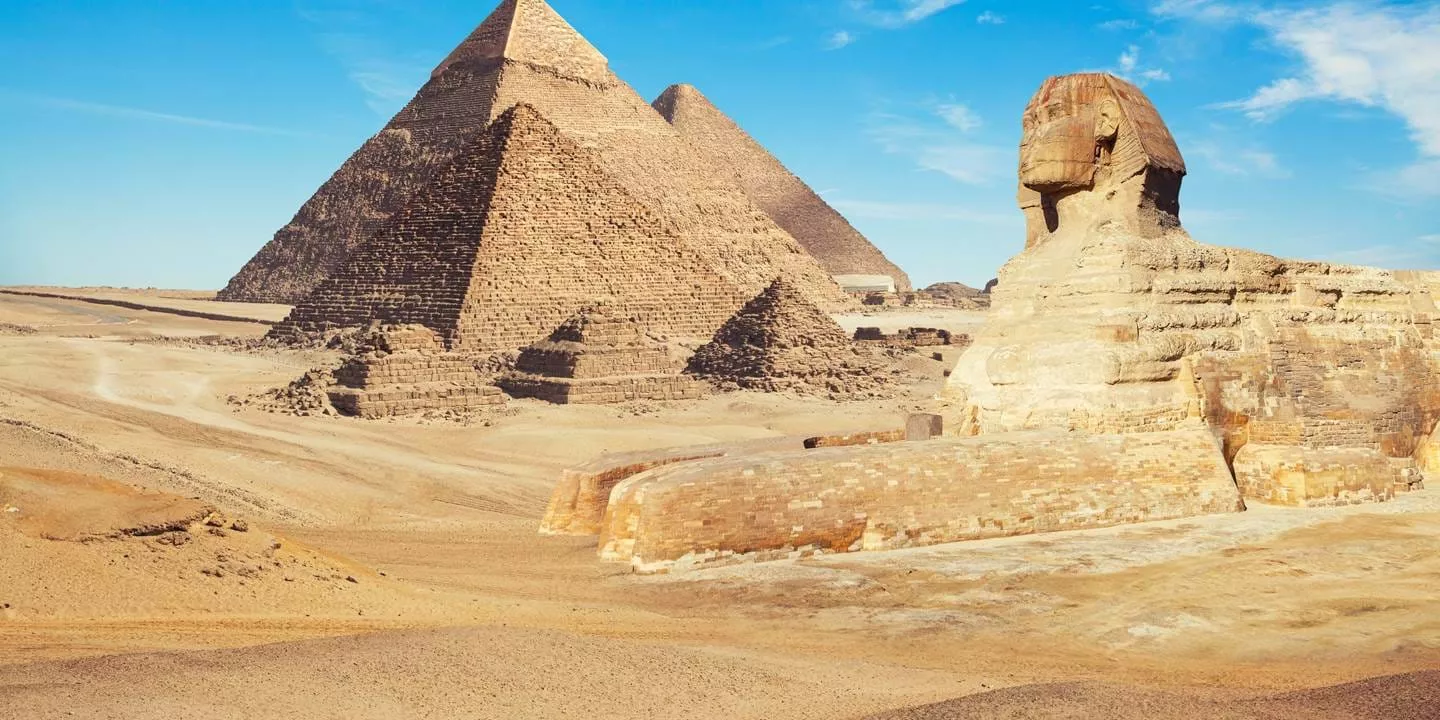
(Patria) - When someone mentions ancient Egypt and things related to it, they sound quite familiar.
There is no one who doesn't know about pyramids, mummies, and the like, but apparently, we have perceived some things incorrectly.
Therefore, we delved a little deeper and explored some insights into ancient Egypt.
Tutankhamun's Curse
The discovery of Tutankhamun's tomb in 1922 marked the finding of the first largely intact ancient Egyptian royal tomb ever discovered.
The story captured the public's imagination, and newspapers at the time exploited this interest by inventing a story about a curse.
Tutankhamun's curse arose from a media battle for readers, and as The Times had exclusive reporting rights for the excavation, other newspapers published speculative stories, including rumors of a curse.
Readers eagerly accepted the idea of a curse, and any illnesses, accidents, or other events that occurred were attributed by the newspapers to the opening of the tomb.
The most significant was the death of Lord Carnarvon, who financed the excavation, and although the man died of blood poisoning, of course, his death was attributed to - the famous curse.
Recent research has revealed that there is no curse, but since facts don't sell a good story, you will often hear this legend even today, writes Punkufer.
Mummification
Ask anyone about ancient Egypt, and probably one of the first things they'll think of is mummified human remains in tombs. Perhaps it is then surprising to many how burials were much simpler.
Mummification was a complex process, perfected over time, and allowed those who could afford it to be embalmed - "in style".
We can imagine the embalming industry as offering several package levels, with the "gold" standard guaranteeing the best materials and techniques.
The mummification ritual was sacred, and we have little direct evidence from the ancient Egyptians themselves because they did not leave texts about the process, so history largely relies on second-hand accounts from the 5th-century BC Greek historian Herodotus.
If you were not among the privileged few and belonged to the poor, chances are you were simply buried in the sand, which is ironic, as it is one of the most effective ways to preserve a body, given how sand and heat draw out moisture.
Knowledge of Hieroglyphs
One of the main curiosities associated with ancient Egypt is hieroglyphs, but, like mummification, it was a skill available only to the privileged.
This may be surprising because writing is everywhere - on papyri, in tombs, on monuments, but the reality was that very few ancient Egyptians knew how to read or write.
It is difficult to calculate the exact number, but scientists generally estimate that literacy was only about 3 to 5 percent, with some believing this number to be even lower.
Even the artists who worked on the beautiful hieroglyphic inscriptions were not able to read or write, meaning a good portion of them, but rather received instructions.
The relationship between art and text in ancient Egypt was very close, often complementing each other to create an even stronger message, and we can see this in the beauty of the hieroglyphic script's forms.
Formal hieroglyphs were reserved for inscriptions in temples, while a more cursive script was used for everyday writing. Papyrus was expensive, so canvas, pottery shards, wood, or any other surface was more commonly used.
Worship of Animals
Ancient Egyptians worshipped animals - a phrase often used, but does it have a basis in truth? In a sense, yes, but it's not that simple.
Namely, people did not worship the animals themselves, but rather their connection to the gods.
There were several exceptions, the most significant being the bull Apis, believed to be the Ka (a concept roughly equivalent to spirit or life essence) of the creator god Ptah, the patron of craftsmen.
Only one such bull lived, and when it died, it was mummified and buried in the Serapeum with great ceremony, a massive sarcophagus with full honors.
The cow that gave birth to Apis was also revered as the mother of the sacred bull. Bulls were one of the animals whose image was closely associated with the king from the earliest times, due to their strength and fertility.
Other royal animals included the lion (as seen on the Great Sphinx of Giza), the falcon, and the snake. There are also literally millions of mummified animals and birds, as some cults (Bastet, Horus, Anubis) lasted for centuries.
Komentari (0)
Prijavite se za komentiranje
PrijavaJos nema komentara. Budite prvi!
Minuta
Sve →Iz drugih kategorija

High Representative Not Elected: Germans, French and British Against Americans, New Attempt at End of June

ČOVIĆ WITHOUT MERCY: How Those Who Brought Ademović to Office Created a Political Hell for Him



Sunny Saturday, quite warm



Tragedy in Albanian resort: Two minors drown












