
By Armin Sijamić
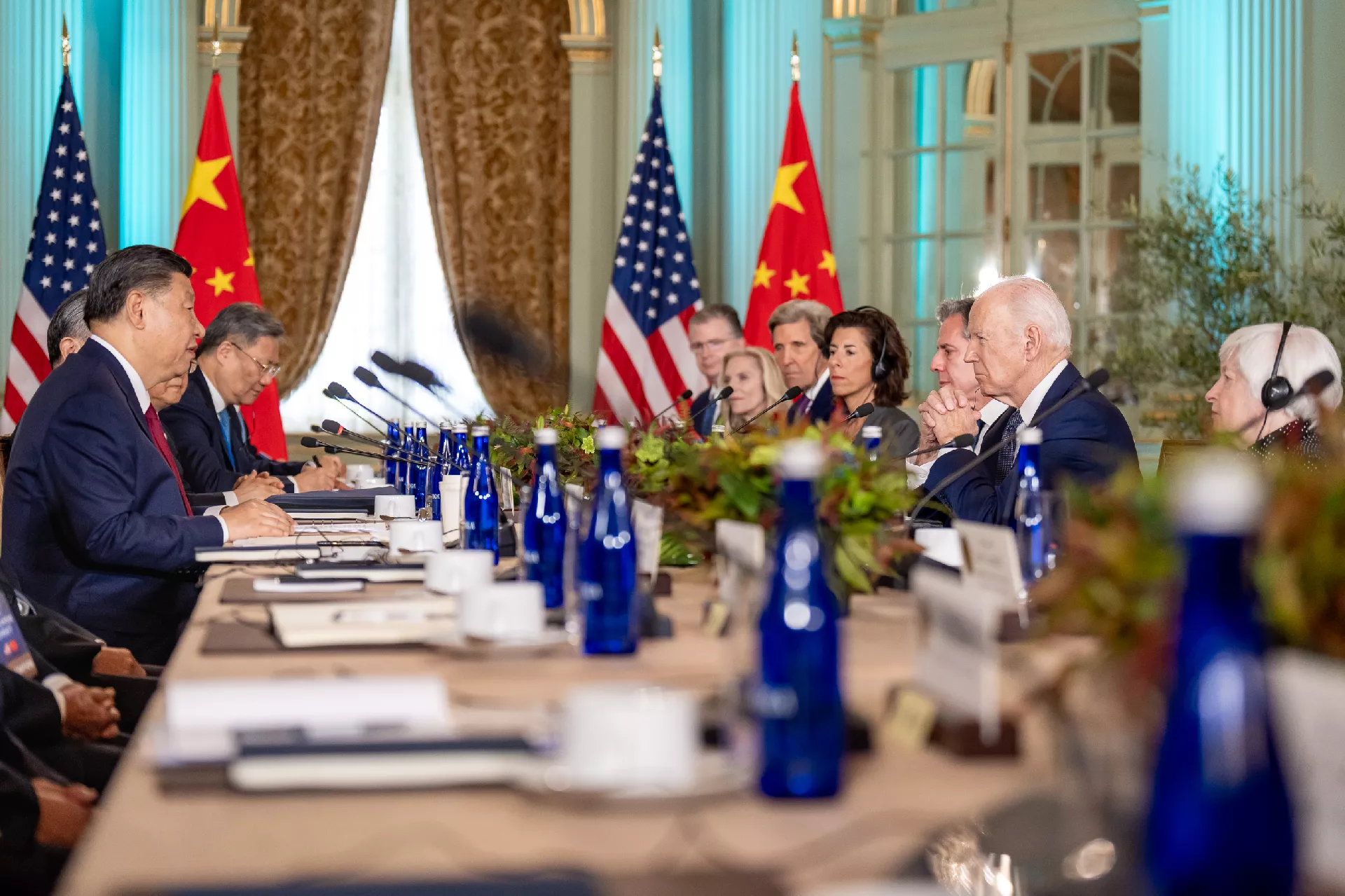
A year after their last meeting, the presidents of the United States and China met on Wednesday in San Francisco on the sidelines of the annual summit of the Asia-Pacific Economic Cooperation (APEC). It was an opportunity for the two powers to confirm their positions, while hiding their ultimate intentions behind messages that sound like they are being sent to their closest allies.
The long-awaited meeting between Joseph Biden and Xi Jinping was held on Wednesday in San Francisco, dozens of kilometers from where the other APEC member states had a busy agenda. Of course, the main issue for all of them is the relationship between Washington and Beijing.
According to American media, the Chinese delegation initially opposed the meeting being held at Filoli Mansion, widely known to the public as the filming location for the series Dynasty – the most watched series in television history. Since summits of this kind are skillfully planned and all details are meant to send a specific message, the reason for choosing this location might be found in Biden's earlier statement that the relationship between the United States and China would define the 21st century.
Minimal expectations and hard stances
As the summit approached, optimism, especially among American officials, that the two leaders would reach any strategically important agreements diminished. In the days leading up to the Chinese leader's arrival in the United States, American officials told the media that they did not expect much from the summit, meaning they would be satisfied if the talks between the two countries and their militaries were resumed.
The two countries, on whose relationship the stability of the largest part of today's world economy depends, are currently very distant politically, and it seems there are no ideas on how to fix it. These are not just the obvious problems in the relations between the two countries (the visit to Taiwan by former Speaker of the House Nancy Pelosi, the shooting down of a Chinese supposedly spy balloon over the United States, or Biden's assessment that Xi is a dictator), but structural differences.
China's strong economic growth, and consequently military and political power, has forced Washington to start treating China differently. Barack Obama, Donald Trump, and now Biden are practically trying to change the system of economic relations in the world, which the United States created after World War II. That system now suits China more than its creators.
The narrative of free markets, economic freedoms, and minimal state intervention in the economy was abandoned by Washington a few years ago precisely because of China. Washington's sanctions were a prelude to limiting China's economic growth at the expense of the United States, and that is where the story of the divergence of two powers, whose economies are closely linked, begins.
Agreement on self-evident matters
The warm opening words of the two presidents, in front of the cameras, could not hide the crack appearing between their countries. Biden's statement that the "competition" between the two powers "should not spill over into conflict" and Xi's response that "the planet Earth is big enough for two countries to succeed" could not hide the fact that the United States is diligently working to limit Chinese expansion, while Beijing is challenging American leadership around the world, often very successfully.
Therefore, both powers pretend not to see the other side's ultimate intention and send conciliatory messages while their paths diverge. This is also evidenced by the agreement from the long-awaited summit of the two leaders.
Biden and Xi agreed that the two countries would work on combating climate change, which was essentially agreed upon earlier. Then, Biden and Xi agreed that China would suppress the distribution of the drug fentanyl to America, which is certainly the duty of all countries. At the insistence of the American side and after months of Chinese refusal, it was agreed that the two militaries would resume interrupted communication and thus prevent possible incidents, and finally, Biden and Xi agreed to continue talking.
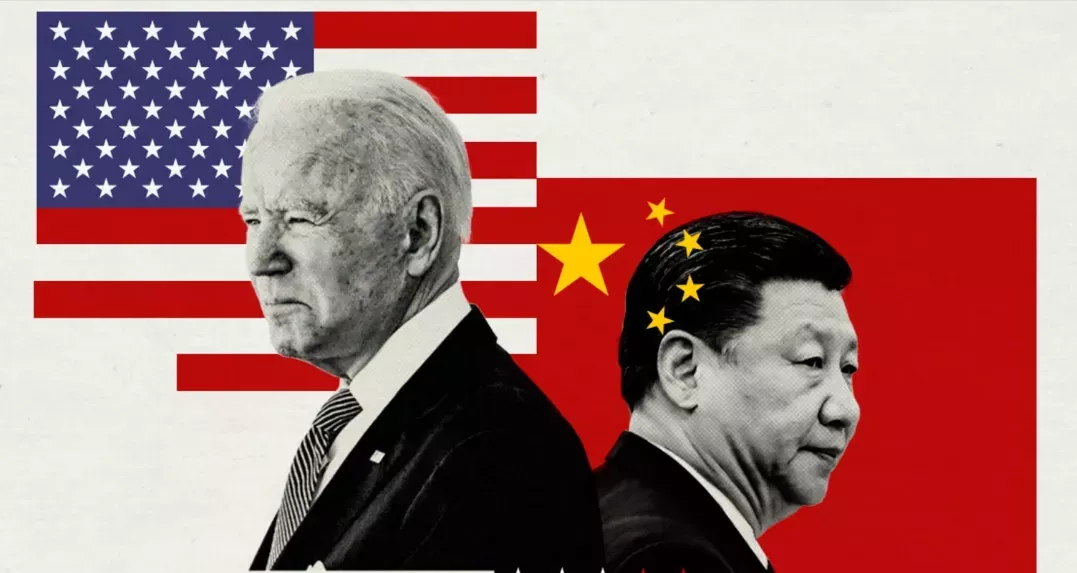
Essentially, this is an agreement with "figs in pockets," meaning maintaining relations just enough to prevent things from getting out of control. It is clear to China that the American side is trying to build alliances in China's backyard and limit Chinese influence, and it is clear to the United States that China is strengthening and showing its power around the world.
Earlier, American and Chinese officials spoke about the need to bring the competition between the two powers under control, meaning to set the rules of the game in the clash of two giants. Biden and Xi want to continue on this path, as there are clearly no ideas on how rival powers can develop in peace and cooperation while limiting each other's access to high technologies, rare minerals, energy resources, and markets.
This particularly applies to APEC members and the Indo-Pacific region, which is becoming the main stage for the (controlled), primarily economic, clash of the two largest world powers, with secondary scenes extending from Eastern Europe, through Africa and the Middle East, to the most remote parts of Latin America, where all means will be used through intermediaries.
(Un)predictable relations
However, it would be wrong to think that the two powers will completely clash or completely separate. U.S. Treasury Secretary Janet Yellen explained this earlier. She says that two economic systems are being built, one around the United States and one around China, which sometimes cooperate and sometimes act as rivals.
It would not be wrong to say that the Biden-Xi summit is another confirmation of the distancing between the United States and China in certain areas, especially regarding artificial intelligence and efforts to secure supply chains that will depend on allies loyal to them.
Another confirmation that the two powers do not overly rely on political correctness and friendly relations between the two leaders in the near future is Biden's new statement after the summit, calling Xi a dictator, which the Chinese leader certainly did not like.
Therefore, the most important part of the agreement from the summit, that the two leaders and two countries will continue to communicate, could be reduced to the desire to avoid a clash between the two armies, while the political leadership of both countries works to economically defeat the opponent. Perhaps the location of the summit, after all, describes what the relationship between these two countries will be like in the near future.
Komentari (0)
Prijavite se za komentiranje
PrijavaJos nema komentara. Budite prvi!
Minuta
Sve →Iz drugih kategorija

High Representative Not Elected: Germans, French and British Sabotaged Americans, New Attempt at End of June

ČOVIĆ WITHOUT MERCY: How Those Who Brought Ademović to Office Created a Political Hell for Him



Sunny Saturday, quite warm



Tragedy in Albanian resort: Two minors drown












