
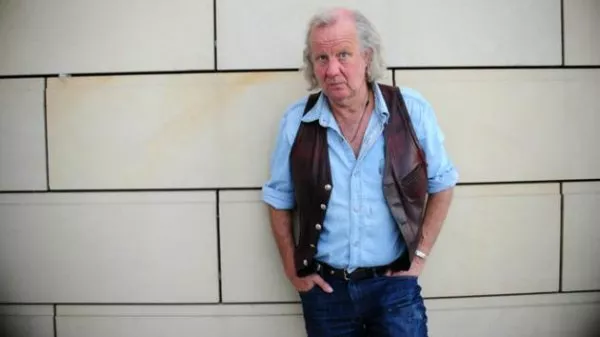
SARAJEVO, (Patria) - British journalist Ed Vulliamy, who reported from the BiH area during the war, and later testified before the Hague Tribunal on several occasions (including at the trials of Ratko Mladić and Radovan Karadžić) wrote a commentary for the British The Guardian on the occasion of the death of General Slobodan Praljak, who drank poison during the pronouncement of the verdict before the Hague Tribunal and later died in hospital.
Jutarnji list translated his text from The Guardian from English into our language.
- It was May 6, 2006. General Slobodan Praljak was on his feet in the courtroom in The Hague and was questioning me as a witness. And this was not the first time we had met face to face.
That second meeting was in September 1993 at his headquarters in the self-proclaimed mini-state of "Herceg-Bosnia". General Praljak signed an order allowing three journalists, including your correspondent, to enter a concentration camp under his command in Dretelj, near the Croatian stronghold of Čapljina. In that camp, Bosnian Muslims were subjected to abuse, starvation, and murder.
With so much attention focused on the verdict against Bosnian Serb general Ratko Mladić last week, many have forgotten about the alleged second war in Bosnia, in which Bosnian Croats sought to establish their own "ethnically pure" territory. Praljak was accused that day in 2006 of being one of the leaders of that murderous undertaking, and I was called to court to tell what I knew about his role in it.
Like Bosnian Serb leader Radovan Karadžić, Praljak defended himself, very eloquently, and refused lawyers. He shared Karadžić's adventurous madness, which could be considered eccentric if it weren't so deadly.
- We don't have much time. Therefore, I ask you to answer briefly and precisely - Praljak began. He was a confident, dominant personality in any room, including this one.
I told the court that in September 1993, based on a letter from Croatian President Franjo Tuđman suggesting that conditions in the camps in Bosnia where Muslims were held were not in accordance with the Geneva Convention, we went to investigate the matter.
We were again denied entry to Dretelj. But finally - for reasons known only to him - Praljak signed an order to let us in. When we showed up at the former JNA military base and showed the order to the camp commander, Major Škota, he was taken aback, but he respected Praljak's order and we were allowed in.
Hundreds of frightened men were housed in a warehouse, sitting or crouching. Shortly before, the doors had been closed for a full 72 hours, leaving them to suffocate in the heat and stench, forced to drink their own urine.
After that, we headed towards two hangars on the hill. The doors were open, but it was dark inside. The prisoners were in a terrible state - thin as skeletons, with unfocused eyes, with skin problems. They told us that the doors were often locked, and one night drunk guards fired through them, killing several prisoners and wounding several others.
We saw bullet holes in the metal doors, as well as on the back wall of the tunnel. Although Muslims, many prisoners fought for Praljak's Bosnian-Croatian HVO against the common Serbian enemy. Now they were imprisoned and persecuted by former comrades-in-arms.
I also testified about the widespread and horrific massacre in the Muslim enclave in the eastern part of Mostar, which was besieged by Praljak's army, but to my knowledge not during the time he had direct command over it.
Thirteen years later, Praljak didn't want to hear about it. He wanted to talk about how ethnic groups have the "right to sovereignty" and asked me: "Is the right to defense and freedom an obligation and right of a sovereign people?". His ears weren't steaming, but it felt like it.
Judge Antonetti intervened:
- Mr. Praljak, can you please ask questions that the witness can answer? - and we talked in that style for some time.
Praljak focused his gaze on me and asked:
- Are you an investigative journalist or a political journalist?
I told him that when reporting from a war, "you have to, I think, know at least a little about the political situation.".
We went in circles the whole time.
- Mr. Praljak, the judges to my left and right... believe you are asking questions that are not directly related to the matters we are trying to establish here.
After the accused spoke for some time about another camp, Gabela, time ran out, and Praljak insisted, "although I had many more questions for you, I will stop here. Thank you for answering the questions." The court record states that the witness said: "Thank you, General." And that was it.
Praljak put on a show in the courtroom, but I wasn't sure what he achieved, other than that I stuck to my story against a war criminal who had his own story to tell. His performance on Wednesday was more decisive, but by no means outside his role - concluded Vulliamy.
Komentari (0)
Prijavite se za komentiranje
PrijavaJos nema komentara. Budite prvi!
Minuta
Sve →Iz drugih kategorija

High Representative Not Elected: Germans, French and British Sabotaged Americans, New Attempt at End of June

ČOVIĆ WITHOUT MERCY: How Those Who Brought Ademović to Office Created a Political Hell for Him



Sunny Saturday, quite warm



Tragedy in Albanian resort: Two minors drown












