
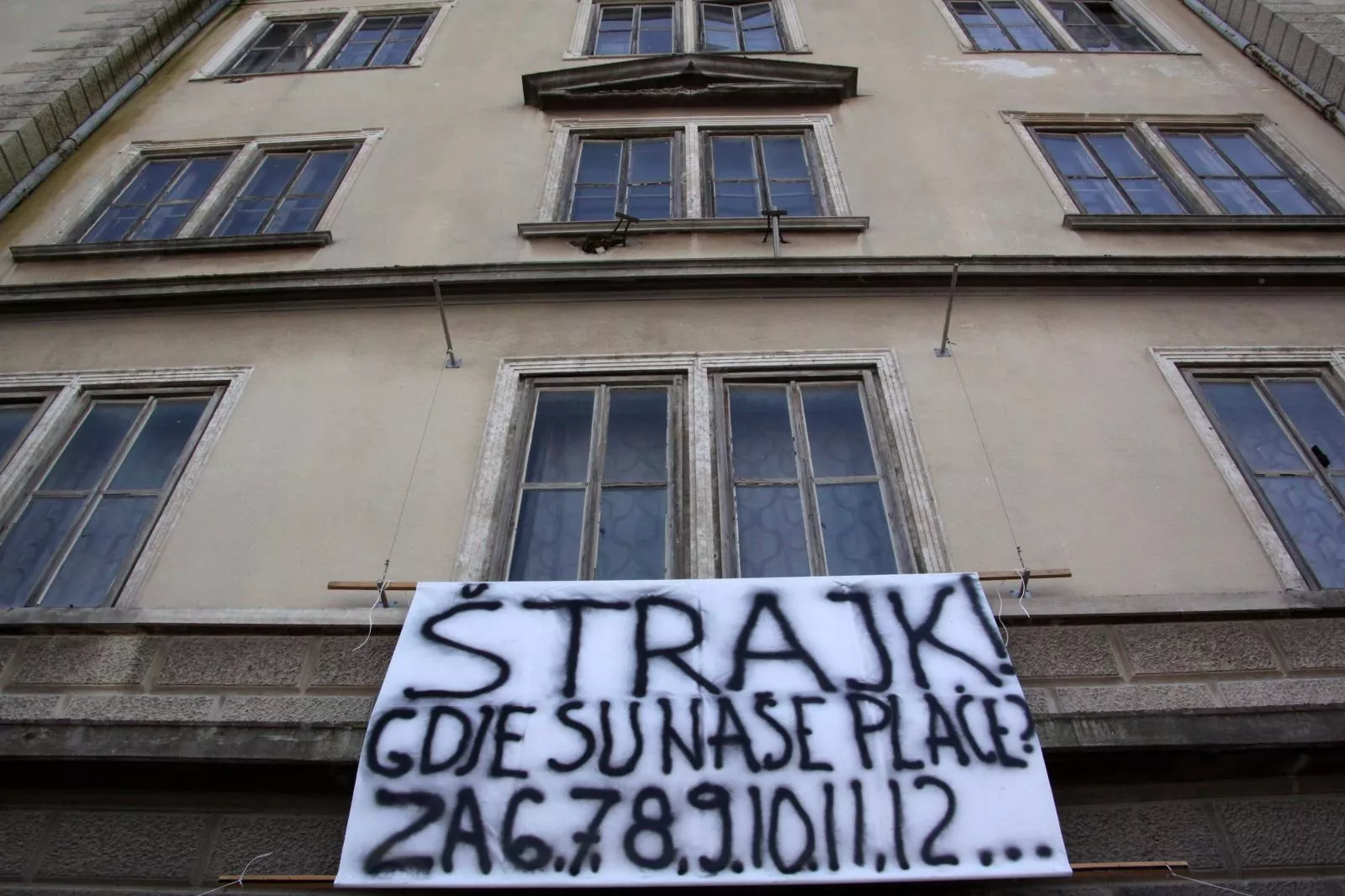
SARAJEVO, (Patria) - I have nothing against an employer aiming for profit, but the state must still ensure some balance in society, believes economic analyst Damir Miljević, who commented for Patria on the huge disparity between the high profits some companies in Bosnia and Herzegovina are making and the low wages of their employees.
The problem of high owner profits and low worker standards is particularly pronounced in the private sector.
Among the twenty or so companies that achieved the highest profits in the Federation of Bosnia and Herzegovina in 2018, half are private firms, while the other half are companies owned by the Federation Government.
The most profitable public company in the Federation of BiH, according to data published by Akta for 2018, is the Public Company Motorways of the Federation of BiH. At the end of 2018, it earned 117.4 million KM. This is followed by BH Telecom (57.2 million), JP Elektroprivreda BiH (49.1 million), JP Ceste Federacije (38 million), Elektroprivreda HZ HB (16.3 million)...
Among the most profitable private companies in the Federation of Bosnia and Herzegovina in 2018 are Bingo d.o.o. Tuzla with revenue exceeding 1.1 billion KM and a profit of 76.4 million KM, followed by Premijer World Sport Kladionice from Čitluk with 46.3 million KM in profit, and Fis from Vitez with 34.4 million KM in profit last year. Violeta earned 31.6 million KM and ranked fourth among the most profitable private companies in FBiH, while Prevent at the end of 2018 earned 24.9 million KM and took fourth place among the most profitable private firms in the Federation of BiH.
Although one of the largest retail chains in BiH, Konzum had a revenue of 350.7 million KM in 2018 and was among the 20 companies with the highest revenue in the Federation of BiH last year, while the retail chain's profit was not among the top 20 companies.
And while the largest companies in Bosnia and Herzegovina boast of good business performance, trade unions warn that owners achieve enormous profits primarily due to low worker wages, and that this must change in favor of the workers.
According to data from the Agency for Statistics of BiH, the largest number of employees in BiH are in the manufacturing industry, where around 166,000 workers have an average monthly wage of about 670 marks, which is not even a third of the consumer basket, which for a four-member family in BiH in 2018 amounted to more than 2,000 KM.
This is followed by "wholesale and retail trade" with about 150,000 employees, and their average wage last year was around 650 marks. In the textile industry, workers most often work for 500 KM.
Economist Miljević believes that the state should create a balance between costs and profits through legal solutions, "because Bosnia and Herzegovina is the only country in Europe, along with Montenegro, where it is enough to pay a 10 percent profit tax, and then you can deposit millions into private accounts."
Professor and economic analyst Svetlana Cenić tells the Patria agency that if company owners in BiH paid their workers decent wages, their year-end earnings could not be so high, or it would have to be about super-successful managers.
"If worker wages in Bosnia and Herzegovina were higher, owners' earnings could not be so high, especially in Bosnia and Herzegovina where the burden on labor is high," says Cenić, emphasizing that for the economic development of a society, two things must be ensured - higher employee productivity and their higher standard of living.
"If you are focused only on dividends, shareholder satisfaction, then people leave and you have a problem," says Cenić.
Komentari (0)
Prijavite se za komentiranje
PrijavaJos nema komentara. Budite prvi!
Minuta
Sve →Iz drugih kategorija

High Representative Not Elected: Germans, French and British Against Americans, New Attempt at End of June

ČOVIĆ WITHOUT MERCY: How Those Who Brought Ademović to Office Created a Political Hell for Him



Sunny Saturday, quite warm



Tragedy in Albanian resort: Two minors drown












