
By A.Čorbo-Zećo
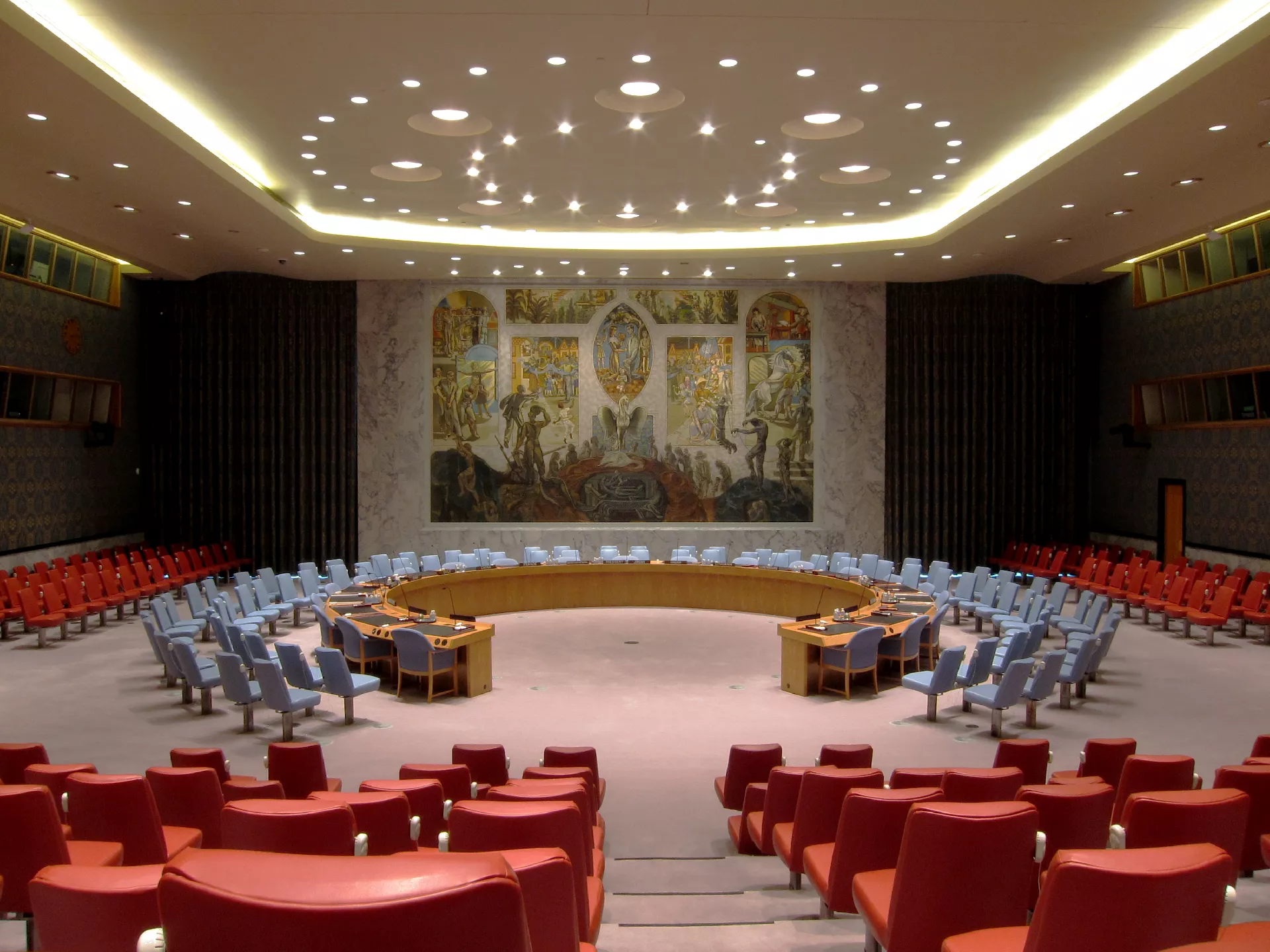
The UN Security Council's statement on Bosnia and Herzegovina can be viewed in several key contexts, but one must always start from the historical role of the UN in relation to BiH, as well as the current international dynamics, which include Russia's influence, but also the role of the OHR.
Based on the statement, we can see that the UN, despite calling for political dialogue, is actually not prepared to take concrete measures that could lead to real stabilization. Calling for dialogue, without explicit support for sanctions, the engagement of the OHR, or a stronger EUFOR mission, can be considered a lack of decisiveness.
This call for dialogue and avoidance of confrontation may also reflect the current political climate within the UN, where permanent members (especially Russia, but also China) often block more drastic measures.
The UN, unfortunately, was deeply involved in controversies related to Bosnia and Herzegovina during the aggression against BiH. Although present on the ground, the UN had significant failures in protecting civilians and maintaining security. The biggest example of this was the inability to protect Srebrenica in 1995.
UN forces (UNPROFOR) were weakened by restrictive mandates and the inability to take effective military action. Although the UN subsequently condemned these events, the failure of the international community itself to prevent the massacre left a deep scar on the history of BiH.
Today, looking from the perspective of the Security Council's statement, it seems that the UN is still not taking concrete measures that would truly help stabilize BiH. There is always a great deal of political calculation within the Security Council due to the different interests of the permanent members, which leads to the absence of clear and decisive actions in crisis situations.
It is no coincidence that the OHR is not mentioned in the Security Council's statement. The role of the OHR, as an institution established to monitor the implementation of the Dayton Peace Agreement and be a guarantor of political stability in BiH, has been and remains very sensitive. Support for the OHR from the UN or the BiH Security Council can be problematic due to political disagreements among the Security Council members, who often have different views on the role of high representatives.
Since the 2000s, when the international community, under great pressure, began to consider reducing the powers of the OHR, the argument was that BiH should take responsibility for its own stability. The current Security Council statement, which does not mention the OHR, can be interpreted as further distancing of the international community from direct intervention and control in BiH, which only underscores the insecurity and instability.
Therefore, the UN's decision may be good, as it declaratively mentions the BiH Constitution, the state of BiH... However, let's remember that the fugitive Dodik also invokes the Constitution and the Dayton Peace Agreement.
The UN Security Council's statement, although formally calling for dialogue and the preservation of peace, can be interpreted as a continuation of the UN's passive policy towards BiH. Throughout its history, the UN has failed to provide just responses to crises and aggression against BiH, and the lack of support for the OHR further emphasizes the insecurity of international efforts in BiH. Russia, with its veto power, remains a key factor hindering any more serious international action, while BiH faces serious political challenges without clear international support.
Komentari (0)
Prijavite se za komentiranje
PrijavaJos nema komentara. Budite prvi!
Minuta
Sve →Iz drugih kategorija

High Representative Not Elected: Germans, French and British Against Americans, New Attempt at End of June

ČOVIĆ WITHOUT MERCY: How Those Who Brought Ademović to Office Created a Political Hell for Him



Sunny Saturday, quite warm



Tragedy in Albanian resort: Two minors drown












