
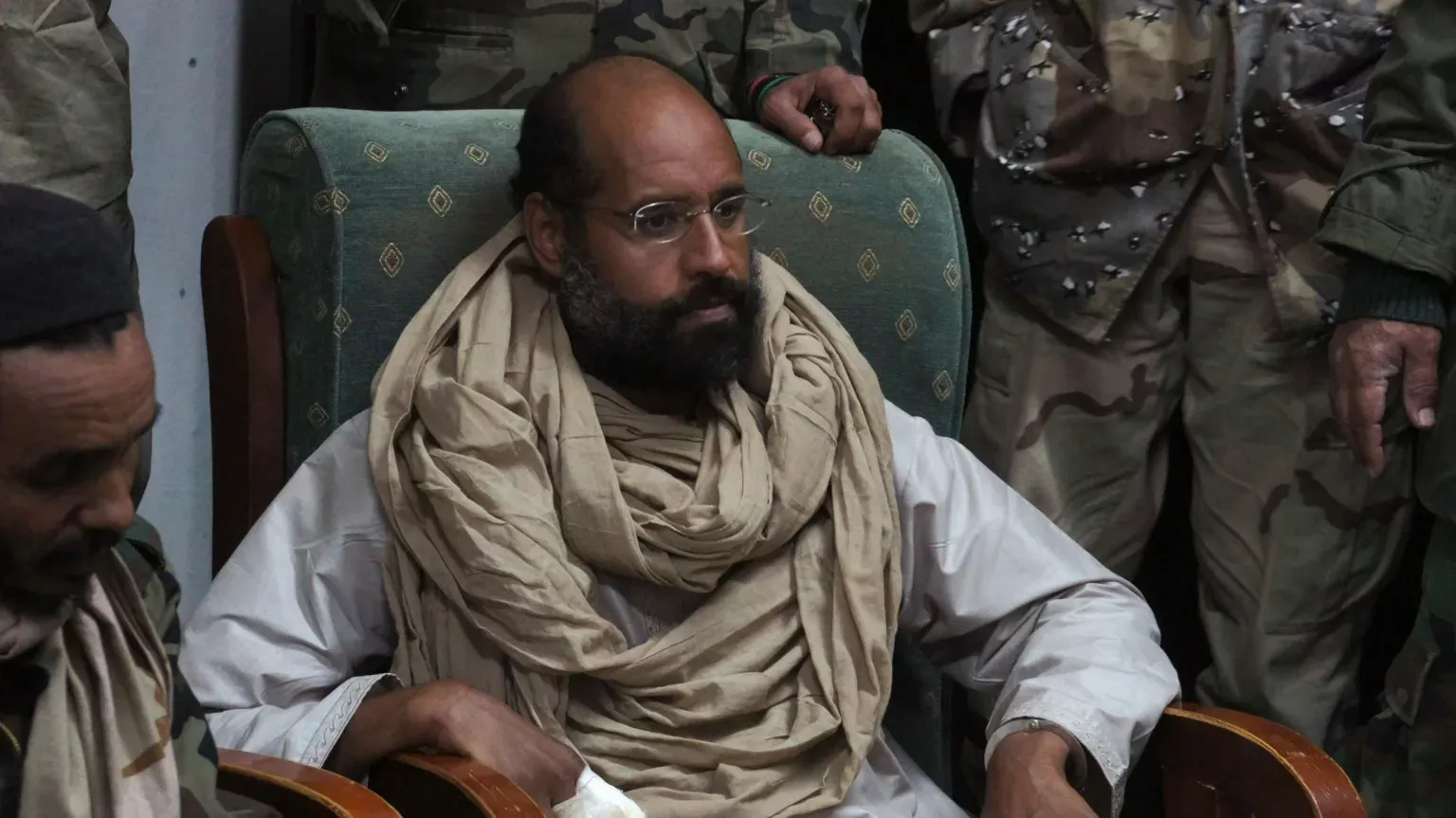
(Patria) - Saif al-Islam Gaddafi, son of former Libyan leader Muammar Gaddafi, has been killed at the age of 53.
He was reportedly shot dead in the western Libyan city of Zintan, where he had been residing for the past ten years, Al Jazeera reports.
His path led him from being his father's apparent successor, through a decade of imprisonment in a remote mountain town, to a failed presidential candidacy that ultimately undermined the electoral process.
News of his death was confirmed today by sources close to the family, his lawyer Khaled el-Zaydi, and Libyan media, but the circumstances are not yet known, Reuters writes.
Although he did not hold an official position, he was once considered the most powerful person in Libya after his father, the autocrat who ruled for more than four decades.
Saif al-Islam shaped policy, led sensitive diplomatic missions, and was key in negotiations for Libya to renounce weapons of mass destruction, as well as for compensation to the families of victims of the 1988 Pan Am Flight 103 bombing over Lockerbie.
Determined to pull Libya out of its status as an international pariah, Saif al-Islam collaborated with the West and presented himself as a reformer advocating for a constitution and respect for human rights.
Educated at the London School of Economics and a fluent English speaker, he was an acceptable face of Libya for many Western governments.
However, when the rebellion against Gaddafi's long rule broke out in 2011, he unhesitatingly chose loyalty to his family and clan. He became the architect of the brutal suppression of protests, calling the rebels rats.
In an interview with Reuters during the uprising, he stated: "We are fighting here in Libya, we are dying here in Libya."
He warned that there would be "rivers of blood" and that the government would fight "to the last man, woman, and bullet."
"The whole of Libya will be destroyed. It will take us 40 years to agree on how to run the country, because today everyone will want to be president or emir, everyone will want to rule," he said, wagging his finger at the camera in a televised address.
After the rebels took Tripoli, Saif al-Islam tried to escape to neighboring Niger disguised as a Bedouin. However, he was captured by the Abu Bakr Sadik brigade on a desert road and taken to the city of Zintan, about a month after his father was captured and executed.
He is believed to have been betrayed by a Libyan nomad. "I'm staying here. As soon as I get out, they'll shoot me full of bullets," he said at the moment of his capture, as recorded on an audio recording.
He spent the next six years in captivity in Zintan, far from the privileged life he was accustomed to, with pet tigers and socializing with the British elite.
Human Rights Watch visited him in prison, and then-Libya director Hanan Salah stated that he did not complain of abuse but expressed concern that he had spent most of his time in solitary confinement.
He was missing a tooth and said he was isolated from the world, but had access to television and some books.
A court in Tripoli sentenced him to death by firing squad in absentia in 2015 for war crimes. The International Criminal Court (ICC) in The Hague also issued a warrant for his arrest for murder and persecution.
After being released by a militia in 2017 under an amnesty law, he hid in Zintan for years. Since 2016, he had been allowed to communicate with the outside world and received visitors with whom he discussed politics and the country's situation.
He reappeared in public in 2021, when he submitted his candidacy for the presidential elections in the city of Sabha, dressed in traditional Libyan attire.
He counted on nostalgia for the relative stability that existed before the 2011 rebellion, but his candidacy caused numerous controversies and strong opposition from powerful armed groups.
His candidacy became one of the main points of contention in an already fragile electoral process.
The electoral commission disqualified him due to the war crimes conviction, and when he tried to appeal, armed fighters blocked the court. These clashes contributed to the complete collapse of the elections and Libya's return to political deadlock.
Komentari (0)
Prijavite se za komentiranje
PrijavaJos nema komentara. Budite prvi!
Minuta
Sve →Iz drugih kategorija

High Representative Not Elected: Germans, French and British Against Americans, New Attempt at End of June

ČOVIĆ WITHOUT MERCY: How Those Who Brought Ademović to Office Created a Political Hell for Him



Sunny Saturday, quite warm



Tragedy in Albanian resort: Two minors drown












