
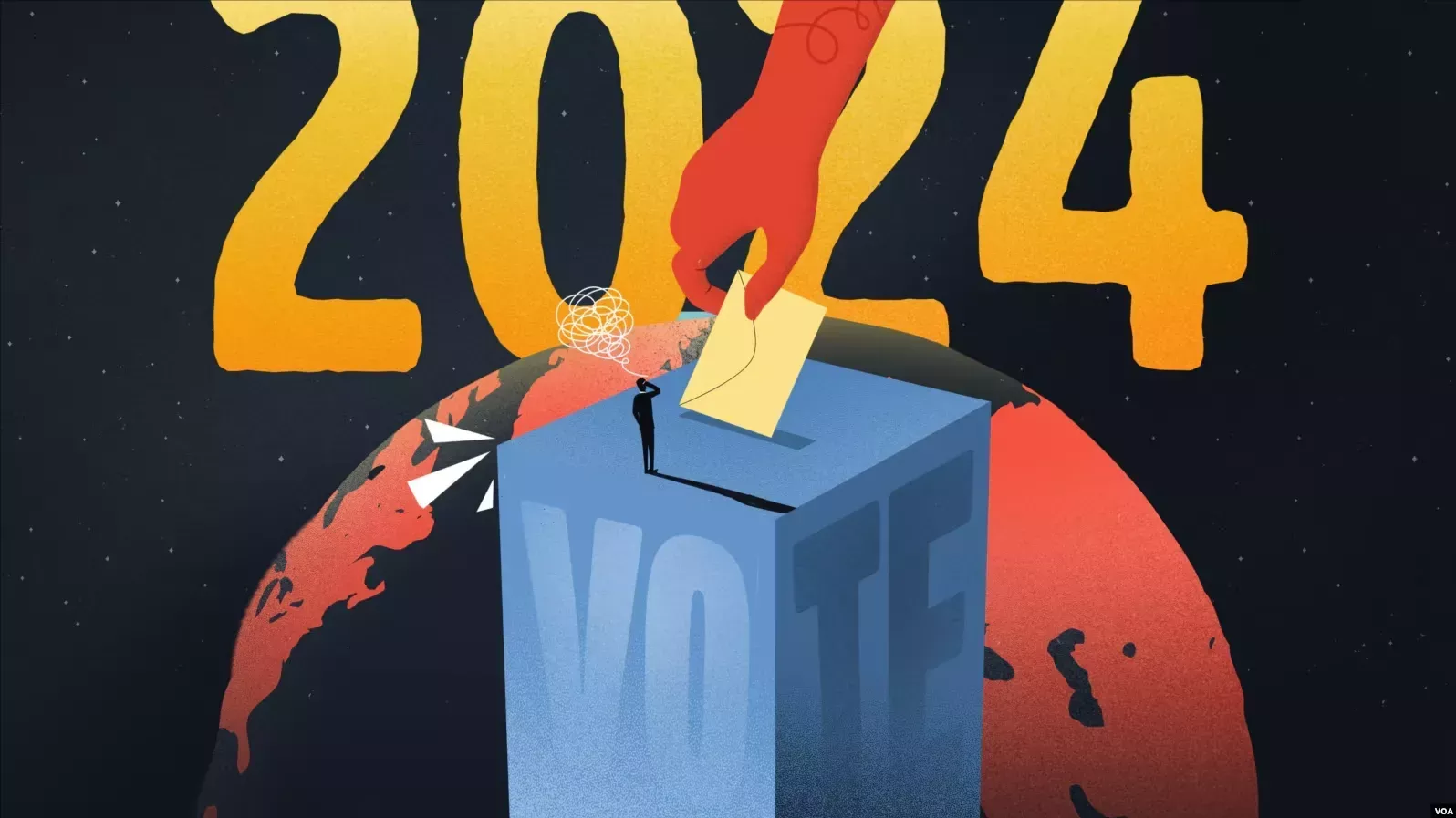
(Patria) - During 2024, elections were held in more than 70 countries around the world, encompassing more than half of the world's population, writes Voice of America.
Among the countries that organized elections were some of the world's largest democracies - India, the USA, Indonesia, and Bangladesh - as well as 27 EU member states that elected a new European Parliament.
According to data from the International Institute for Democracy and Electoral Assistance, more than one billion and 600 million people voted in 71 electoral races.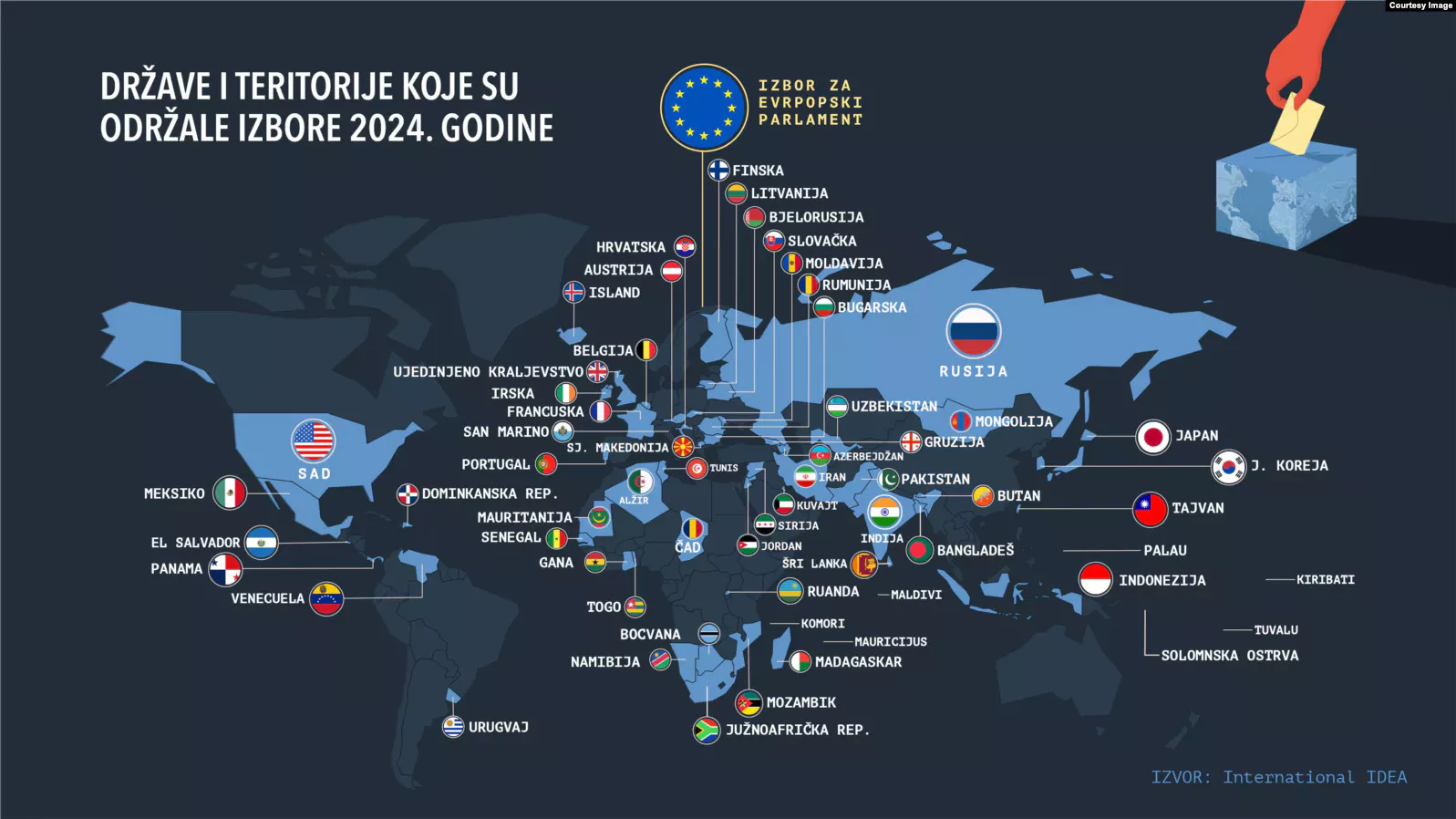
Voting Against the Status Quo
Elections in 2024 generally had an unfavorable outcome for those already in power.
All ruling parties in developed countries where elections were held received a smaller share of votes than in previous elections, according to a Financial Times article in November, which references the ParlGov project, a database of parliaments and governments managed by European universities.
This is the first time this has happened in almost 120 years, the period covered by the ParlGov project.
In rich and poor democracies around the world, in more than 80 percent of countries, the incumbent government lost seats or a share of votes in the last elections, according to an analysis by the 538 project, part of ABC News.
According to that analysis, countries are democratic if their score on the Democracy Index was at least 5 out of 10.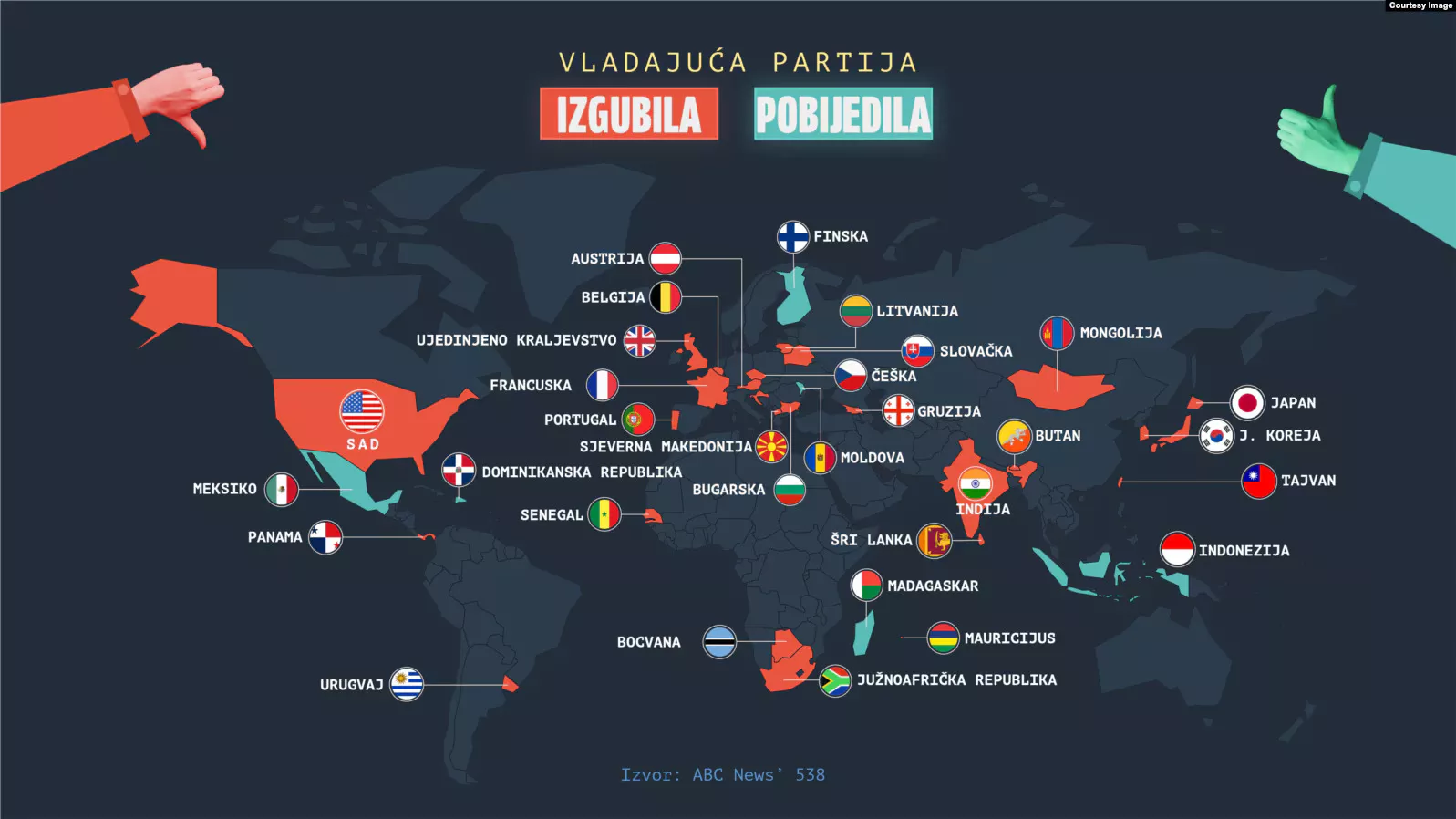
The changes affected both the political left and right equally.
Conservatives achieved victories in countries and regions such as the USA, where former President Donald Trump convincingly won the November elections; in Portugal, where the center-right Democratic Alliance saw a significant increase in votes in March; and in the EU Parliament, where more far-right members won seats than ever before in the June elections, gaining control of approximately a quarter of that body.
The left leveraged the anti-incumbent sentiment to achieve victories in the British parliamentary elections in July, where the Conservative Party lost almost 20 percent of its 2019 vote share, as well as in South Korea, where liberal opposition parties, led by the Democratic Party, took power in the April parliamentary elections.
In several countries, ruling parties retained power but reduced their majority, including India, where Narendra Modi's Hindu nationalist Bharatiya Janata Party lost its absolute majority in parliament in June but retained power with the help of allies.
Ruling parties in Japan, South Africa, and France saw a similar decline in support on their way to re-election.
The trend against incumbents did not necessarily hold in less democratic countries, where governments could exert more influence on elections to ensure a desired outcome.
In Rwanda, President Paul Kagame, who ran with almost no opposition in July, won 99% of the vote, a similar outcome to 2017.
In Russia, President Vladimir Putin secured a convincing victory in March, and international observers deemed those elections neither free nor fair.
However, in some less democratic countries, there were also signs of anti-incumbent sentiment.
In Bangladesh, Prime Minister Sheikh Hasina was re-elected in January, in elections boycotted by the opposition, but with a smaller margin than before. Seven months later, she was overthrown after a popular uprising.
In Iran, where Supreme Leader Ayatollah Ali Khamenei has the final say on all state matters, voters elected Masoud Pezeshkian, a more moderate presidential candidate, in the July elections to succeed the more radical Ebrahim Raisi, who died in a helicopter crash.
Why Did the Changes Happen?
Analysts have focused on voter dissatisfaction with the global economy, including rising living costs, to explain the electoral defeats of ruling parties and politicians.
One of the few countries where the incumbent party was successful was Mexico, where Claudia Sheinbaum, nominated by her predecessor Andrés Manuel López Obrador, easily won the presidency in June.
Voters there stated they were satisfied with economic conditions, one of the few countries where this was the case, according to a June survey by the Pew Research Center.
Other issues that affected voters in 2024 included rising migration in some countries and the ongoing consequences of the pandemic, which led to long-term disruptions in businesses, workplaces, and schools.
Additionally, Pew research showed that democracy itself has become less appealing to voters, reflecting a broader sense of voter frustration with those in power.
The survey, which polled people from 24 countries with functioning democracies in February, found that while a large majority believe representative democracy is a "good" system of government, an average of about 59% of respondents stated they were dissatisfied with how democracy functions in their countries.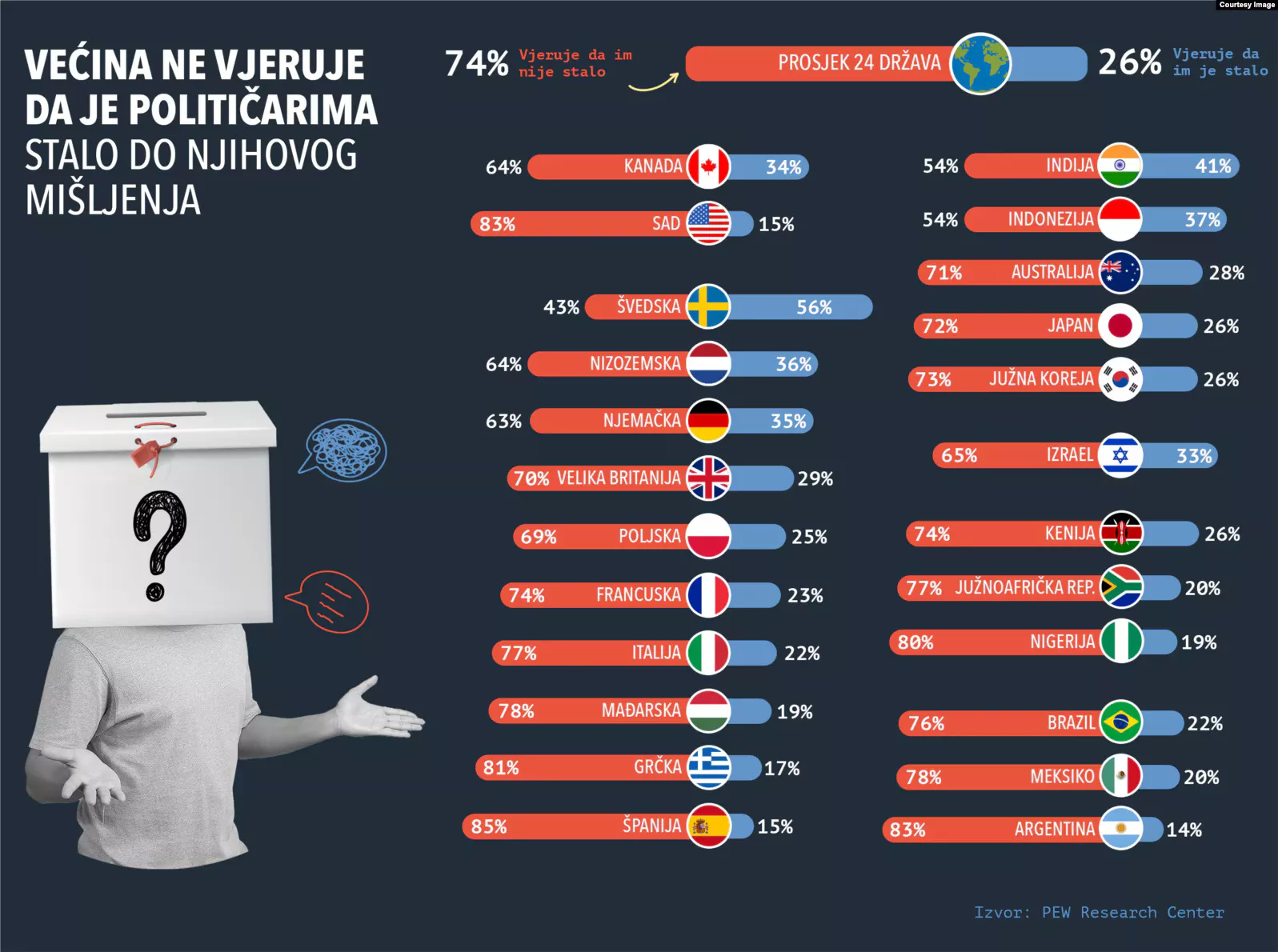
In almost all countries where the survey was conducted, a majority of respondents stated that elected officials do not care what people like them think. Expressing a sense of alienation, 42% of respondents said that there is no party in their country that adequately represents their views.
While 2025 will not be as big an election year as 2024 - the elections that will be held will show whether this year's trend will continue or if new factors will influence the outcomes.
In 2025, elections will be held in Argentina, Australia, Belarus, Canada, Japan, and the Philippines, among others.
Komentari (0)
Prijavite se za komentiranje
PrijavaJos nema komentara. Budite prvi!
Minuta
Sve →Iz drugih kategorija

High Representative Not Elected: Germans, French and British Sabotaged Americans, New Attempt at End of June

ČOVIĆ WITHOUT MERCY: How Those Who Brought Ademović to Office Created a Political Hell for Him



Sunny Saturday, quite warm



Tragedy in Albanian resort: Two minors drown












