
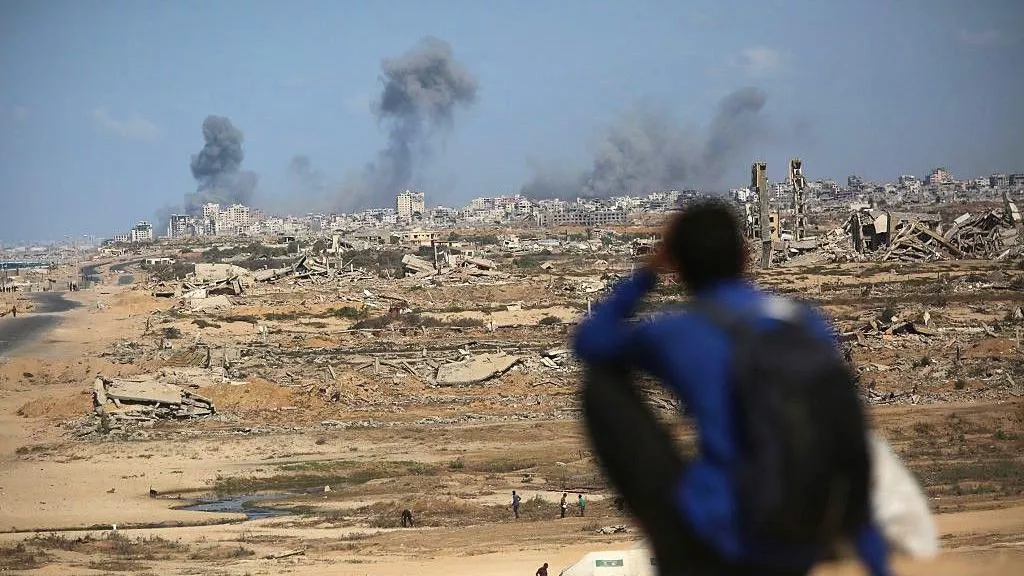
(Patria) - Israeli and Hamas negotiators began indirect talks today in the Egyptian city of Sharm el-Sheikh on ending the two-year war in Gaza and exchanging hostages.
This is the most concrete attempt at an agreement so far, but there are still many obstacles that could prevent a lasting ceasefire.
It is unclear, for example, how exactly an Israeli withdrawal from Gaza would look like, whether Israel would actually stop bombing after the agreement, what would happen if Hamas did not agree to disarmament, and who would govern Gaza after the war.
The talks were organized at an accelerated pace after Hamas agreed to release Israeli prisoners and accept certain conditions from the so-called Trump plan in 20 points, which envisages a phased withdrawal of Israeli forces and the establishment of an international Arab-Muslim mission responsible for the demilitarization of Gaza.
The US President interpreted this Hamas move as a sign of genuine readiness for peace and immediately called on Israel to temporarily halt bombing to allow for a safe exchange of hostages.
However, despite this call, Israeli forces continued their attacks. Palestinian authorities claim that at least 70 civilians were killed in airstrikes over the weekend, but also that Israeli ground units remained in defensive positions without new offensives.
According to Trump's statement on the social network Truth Social, Israel has agreed to an "initial line of withdrawal," which should enable the first phase of hostage exchange. When Hamas agrees, Trump said, the ceasefire will "immediately take effect" and the exchange of hostages and prisoners will begin.
According to the map Trump published, Israeli forces would retain about 70 percent of the Gaza Strip territory, or approximately all the space they controlled before the start of Operation "Gideon's Chariot II".
Such a proposal contradicts earlier summer negotiations, which spoke of a withdrawal to only 1.6 kilometers from the border, so there is doubt that Hamas might reject it.
Trump claims this is an initial step that should enable the release of hostages. Hamas will want to get guarantees that the withdrawal will be fully implemented. The issue of control over Gaza after the war will not be addressed at this stage of negotiations for now.
The United States sent Middle East envoy Steve Witkoff and Trump's son-in-law Jared Kushner to Egypt, and the Israeli delegation is led by Minister of Strategic Affairs Ron Dermer, a close associate of Netanyahu.
The Hamas delegation is led by Halil al-Haja, the Israeli portal Ynet reports. He is one of Hamas leaders who was targeted in an assassination attempt in Doha.
In exchange for the release of Israeli hostages, Hamas will reportedly seek the release of 250 Palestinian prisoners, including former Fatah leader Marwan Barghouti, whom Israel had previously refused to release. The exchange would take place gradually, under the supervision of the International Committee of the Red Cross.
According to former Israeli Navy commander Eliezer Marom, two strong forces are influencing the negotiations now - the United States, which is trying to force Israel to accept the peace plan, and the Islamist-Arab bloc led by Turkey, which has influence over Hamas.
Marom points out in an analysis for the Jerusalem Post that Ankara, due to its own interests in Washington, will try to pressure Hamas to accept the deal.
Israel is in a very unfavorable international position today, and its only ally is practically Washington. Trump is using this as leverage against Netanyahu, offering him a lifeline – the opportunity to present acceptance of the plan as his own victory.
Trump admitted in an interview with Axios that he told Netanyahu that he "has no choice" but to accept the offered plan.
"I said, 'Bibi, this is your chance to win,'" and added that the US will "restore lost international support for Israel."
Many American Jews do not approve of Israel's actions in the Gaza war, with 61 percent saying Israel has committed war crimes, and four out of ten saying it is guilty of genocide, according to a poll conducted by the Washington Post.
On the other hand, Netanyahu is trying to give the impression that Israel is conducting negotiations from a position of strength. In a public address on Saturday, he said the country is "on the verge of a great achievement," emphasizing that all hostages will be released in the first phase, while Israeli forces will retain key positions in the Gaza Strip.
He announced that the release could occur during the Jewish holiday of Sukot, noting that "in the second phase, Hamas will be disarmed and Gaza demilitarized – diplomatically or militarily."
Such statements reflect Israel's ambiguous position, which on the one hand agrees to negotiations, and on the other hand retains the possibility of continuing the war.
Hamas insists on a complete withdrawal of Israel, lifting the blockade, releasing all Palestinian prisoners, and international security guarantees – demands that Netanyahu is not prepared to accept for now. Hamas has also not clearly stated that it agrees to disarmament.
The key point of contention remains the order of actions. Hamas refuses to release hostages without a clear and binding agreement on the complete withdrawal of Israeli forces, while Israel insists that demilitarization must precede any political solution.
Netanyahu believes that the Israeli army must maintain a security belt along the Gaza border and towards Egypt as long as, he says, "the threat of terrorism is removed."
And Hamas fears that after the release of hostages, Israel might renew its military campaign, so it will demand firm international guarantees that this will not happen.
Komentari (0)
Prijavite se za komentiranje
PrijavaJos nema komentara. Budite prvi!
Minuta
Sve →Iz drugih kategorija

High Representative Not Elected: Germans, French and British Sabotaged Americans, New Attempt at End of June

ČOVIĆ WITHOUT MERCY: How Those Who Brought Ademović to Office Created a Political Hell for Him



Sunny Saturday, quite warm



Tragedy in Albanian resort: Two minors drown












