
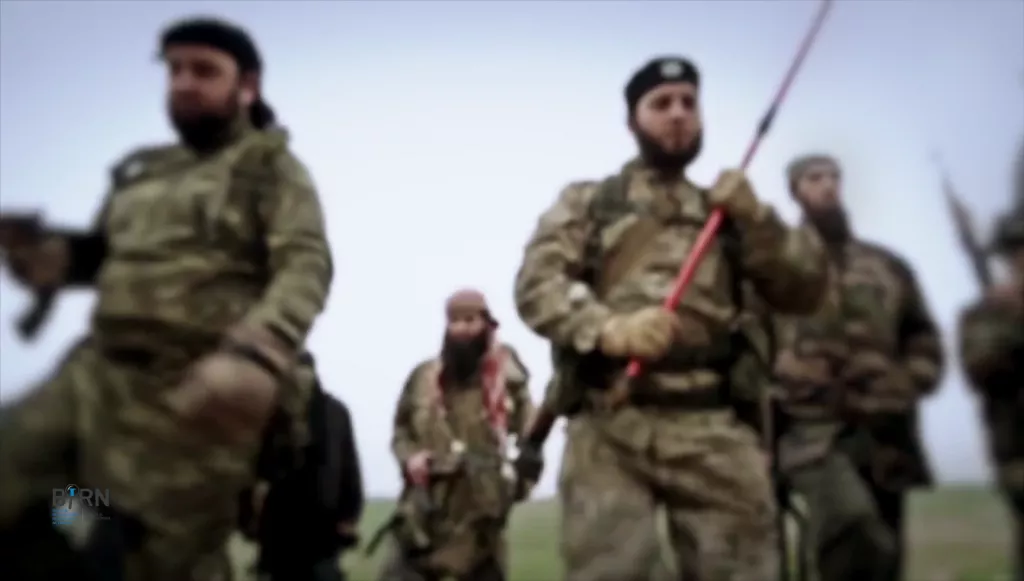
SARAJEVO, (Patria) - During 2019, citizens of Bosnia and Herzegovina did not go to foreign battlefields, but several dozen of them are still in Syria, Iraq, and Ukraine, while the country is facing challenges in the fight against terrorism due to the lack of cooperation among police agencies and lenient court sentences, and the world is facing the growing threat of right-wing extremism, according to parts of the latest terrorism report recently published by the US State Department.
The Europol report, published at the same time, states that although many right-wing extremist groups across the European Union (EU) have not resorted to violence, they contribute to an atmosphere of fear and hostility towards minority groups in cities across the Union.
While the State Department report details Bosnia and Herzegovina's fight against terrorism, the Europol report only briefly mentions BiH.
Here are five things you need to know about terrorism in the world and BiH in 2019, based on the Europol and State Department reports. BiH faces the challenge of foreign fighters returning from battlefields and poor internal cooperation.
The State Department states that BiH remained a US ally in the fight against terrorism during 2019 and continued to increase its capacities, but that deradicalization efforts remain a problem.
"Although little progress has been made in rehabilitation and deradicalization, various civil associations, the Interreligious Council, and individual religious leaders have made significant efforts to prevent and counter terrorist radicalization and recruitment," the State Department report states.
The report states that BiH citizens did not go to foreign battlefields during 2019, but several dozen of them are still present in Iraq, Syria, and Ukraine.
"BiH continues to face the danger of returning fighters," the report states.
Following a decision by the Presidency of BiH, a group of women, children, and fighters returned to BiH in December 2019, the report states.
The report praised BiH's cooperation with US agencies but highlighted the poor internal cooperation among counter-terrorism agencies in BiH.
"Interpersonal and inter-agency conflicts, as well as poor internal communication, jeopardize effective cooperation, which is particularly evident in the lack of strategic guidelines from the Ministry of Security," the State Department report states.
Law enforcement agencies have responded effectively to the issue of prosecuting returning fighters from Syria and their family members, although the Ministry of Security has not had a comprehensive reintegration and rehabilitation plan for family members, according to the State Department report.
In BiH, the US believes there is no political will to implement initiatives financed by this country, despite the desire of law enforcement agencies to enforce laws and provide these tools.
The State Department report states that the State Investigation and Protection Agency (SIPA) remains the leading law enforcement agency performing counter-terrorism functions, but with about 25 officers working on counter-terrorism cases, their effectiveness is limited, and in 2019, there were no political efforts to increase the size of SIPA's counter-terrorism unit, despite a bill pending in Parliament since 2017.
It is added that as an alternative to legislative changes, SIPA has recently considered amending its internal bylaws to increase the number of officers, BIRN BiH reports.
Sentences for terrorism in BiH are lenient, and legislative amendments are not being adopted.
The US believes that lenient sentences in terrorism cases continue to be a challenge, but recent verdicts indicate that some judges recognize the need for stricter sanctions.
As stated in the report, in November 2019, the Court increased the sentences for Maksim Božić and Edin Hastor to six years (from four years) and three years (from two years and six months) imprisonment for planning terrorist acts.
This was a final verdict and is considered high for BiH.
"BiH has also begun prosecuting its citizens for joining foreign paramilitary forces under the same provision intended for prosecuting individuals joining ISIL," the report states, adding that "BiH has not made significant changes to its counter-terrorism legislation."
"A group of parliamentarians proposed draft amendments to further align BiH's laws with EU directives on combating terrorism and to introduce three new criminal offenses into the state criminal code in 2018, but the general elections in October 2018 and the slow formation of the government delayed progress," the report states.
These changes would criminalize travel and stay abroad for terrorist purposes, the misuse of information or cyber technology for terrorist purposes, and the forgery of documents for terrorist purposes. The draft amendments also strengthen the existing criminal code provision on training for terrorist activities, according to the State Department's 2019 report.
It is stated that the working group led by the BiH Prosecutor's Office met more frequently in 2019, but law enforcement cooperation at a more strategic level is still marked by interpersonal and institutional conflicts, as well as the complex governance structure in BiH.
The US believes that lenient sentences in terrorism cases continue to be a challenge, but recent verdicts indicate that some judges recognize the need for stricter sanctions.
As stated in the report, in November 2019, the Court increased the sentences for Maksim Božić and Edin Hastor to six years (from four years) and three years (from two years and six months) imprisonment for planning terrorist acts.
This was a final verdict and is considered high for BiH.
"BiH has also begun prosecuting its citizens for joining foreign paramilitary forces under the same provision intended for prosecuting individuals joining ISIL," the report states, adding that "BiH has not made significant changes to its counter-terrorism legislation."
"A group of parliamentarians proposed draft amendments to further align BiH's laws with EU directives on combating terrorism and to introduce three new criminal offenses into the state criminal code in 2018, but the general elections in October 2018 and the slow formation of the government delayed progress," the report states.
These changes would criminalize travel and stay abroad for terrorist purposes, the misuse of information or cyber technology for terrorist purposes, and the forgery of documents for terrorist purposes. The draft amendments also strengthen the existing criminal code provision on training for terrorist activities, according to the State Department's 2019 report.
It is stated that the working group led by the BiH Prosecutor's Office met more frequently in 2019, but law enforcement cooperation at a more strategic level is still marked by interpersonal and institutional conflicts, as well as the complex governance structure in BiH.
Extremist ideology and nationalist groups pose a threat to BiH.
"Extremist ideology and regional nationalist groups" remain potential sources of terrorism in BiH, the State Department report emphasizes.
The report praises the efforts of the Interreligious Council in promoting tolerance and confronting intolerance or violence directed at any of these communities. Increased engagement and work with women and youth through social media campaigns and other strategies were particularly highlighted.
According to this report, efforts by religious leaders and civil groups to identify "extremist influences" and sources of resilience in their communities have increased.
International and local actors working to counter terrorist radicalization and recruitment have made significant efforts to expand their analyses beyond religiously motivated radicalization to extreme ethno-nationalism and foreign influence, as well as domestic drivers of "extreme ideologies," the State Department report states.
[Read also: Right-wing and neo-Nazi organizations openly display symbols in Prijedor]
Although the Ministry of Security of BiH has cooperated with the international community on numerous programs to counter violent extremism, the report states that there are still "insufficient mechanisms for measuring progress and implementing Bosnia and Herzegovina's strategy for preventing and combating terrorism."
ISIL has lost territory but remains a threat in other ways.
According to Europol's 2019 report, 119 terrorist attacks were reported in 13 EU member states, 1,004 people were arrested on suspicion of terrorism-related offenses in 19 member states, with Belgium, France, Italy, Spain, and the United Kingdom reporting the highest number of attacks. Nine people were killed and 27 injured in terrorist attacks.
Based on the report, almost all fatalities, as well as 26 injuries, were the result of jihadist attacks, and one person was injured in a right-wing terrorist attack. Additionally, several people were killed in right-wing extremist attacks.
The Europol report states that the situation in conflict zones outside Europe continues to affect the terrorism situation in Europe, and that although the so-called Islamic State (IS) has lost its territorial enclave in Syria, it has transformed into an underground insurgency in Syria and Iraq and maintained its global network of affiliates.
"Hundreds of European citizens with ties to the so-called Islamic State remain in Iraq and Syria. While losing its last enclave in Syria, ISIL has transitioned into a clandestine insurgent group operating in Iraq and Syria and maintained its global network of affiliates. Al-Qaeda has again shown its intention and ambition to strike Western targets, while its regional affiliates aim to integrate and coordinate populations and armed factions in conflict zones," the report states.
According to Europol, the number of jihadist attacks has decreased, but right-wing attacks have increased during 2019.
The threat of right-wing and ethno-nationalist terrorism is on the rise.
Catherine De Bolle, Executive Director of Europol, stated that although many right-wing extremist groups across the EU have not resorted to violence, they contribute to an environment of fear and hostility towards minority groups in cities across the EU.
"Such a climate, built on xenophobia, anti-Semitism, anti-Muslim sentiment, anti-feminism, and anti-immigrant feelings, can lower the threshold for some radicalized individuals to use violence against people and property of minority groups, which we have often witnessed in recent months," De Bolle said.
The State Department report states that racially or ethnically motivated terrorism (REMT), particularly white supremacist terrorism, remains a serious challenge for the global community.
"Continuing a trend that began in 2015, there were a series of deadly REMT attacks worldwide in 2019, including those in Christchurch, New Zealand, Halle, Germany, and El Paso, Texas.
During 2019, EU member states reported a total of six right-wing terrorist attacks compared to only one in 2018, according to Europol, which adds that two attacks, not classified as terrorism under national laws, were carried out by right-wing extremists in Germany and resulted in three deaths.
Violent right-wing extremists maintain international ties through participation in concerts and marches commemorating historical events across EU countries, Europol reports.
"Right-wing extremist ideology is not uniform and feeds on various sub-currents, united in their rejection of diversity and minority rights," Europol states, explaining that right-wing ideology is based on white supremacy which will "have to start a 'race war'."
Europol also recorded a significant number of left-wing or anarchist terrorist attacks, which were limited to Greece, Italy, and Spain.
Komentari (0)
Prijavite se za komentiranje
PrijavaJos nema komentara. Budite prvi!
Minuta
Sve →Iz drugih kategorija

High Representative Not Elected: Germans, French and British Against Americans, New Attempt at End of June

ČOVIĆ WITHOUT MERCY: How Those Who Brought Ademović to Office Created a Political Hell for Him



Sunny Saturday, quite warm



Tragedy in Albanian resort: Two minors drown












