
By: Armin Sijamić
The past year will be remembered in world history as one in which many important things happened. One such event is Donald Trump's return to the White House, which will play a central role in the events that began in 2023 and will continue into 2025.
A year ago, we wrote here about the political and economic processes that could shape 2024. It was clear then that the year would be turbulent and that everything that would happen could culminate in accordance with the outcome of the US presidential elections in which Donald Trump defeated Kamala Harris, after Joseph Biden withdrew from the race.
Many are eagerly awaiting Trump's return to the White House in just over two weeks, believing that the seventy-nine-year-old president will solve their problems, as if the interests of his country do not exist.
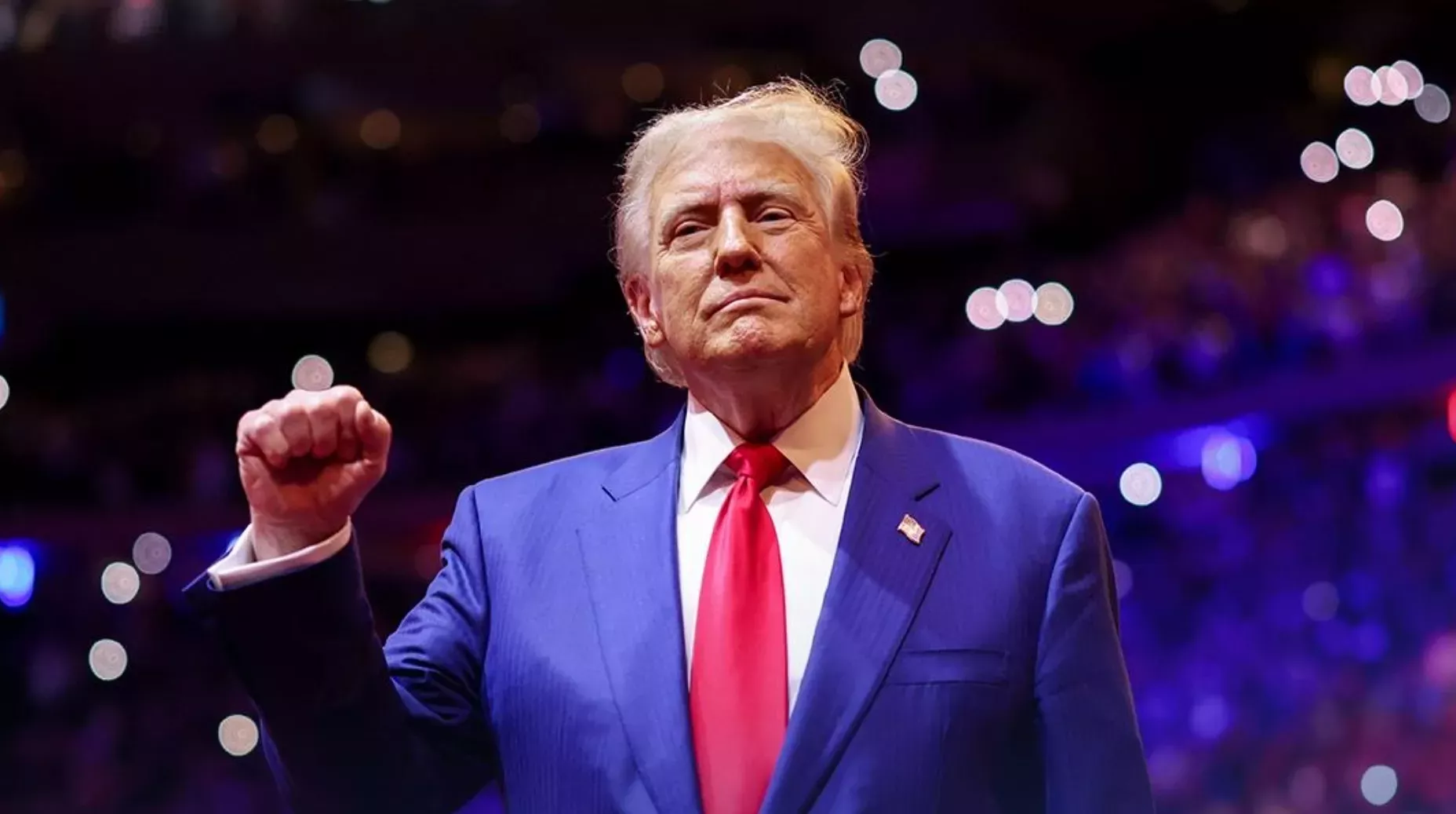
Trump will have his hands full when he takes office, with three priority issues being the war in Ukraine, the wars in the Middle East and strengthening Israel's position, and confronting China, which he began in his first term and which Barack Obama also announced.
Priorities and Allies
This list of topics is a continuation of Biden's agenda, as all three touch the core of America's strategic posture. The war in Eastern Europe, on NATO's borders, as a test of the West's alliance reliability, is a topic that the media most associate with Trump's priority moves. Trump himself has contributed to this by promising to end the war very quickly.
There is no doubt that Trump can end or at least accelerate its end if he stops US aid to Kyiv. Likewise, Trump can prolong the war if he partially withdraws the United States from this crisis by shifting some of his country's responsibilities to European allies.
Therefore, in negotiations with Russia, Trump will not have only one plan option. This is also clear to Russia, which wants the lifting of sanctions and is struggling with economic difficulties, and the current battlefield situation gives Moscow hope that the Ukrainian army will be destroyed before the Russian economy collapses.
But the war in Ukraine is not the most important thing for Trump. Moreover, it is not nearly as important to him as it is for America's greatest ally - Israel - to get what it wants in the Middle East. It seems that Trump's administration will be filled with pro-Israeli personnel like no other in Washington's history. These people will, no doubt, stand behind Israel and try to help it in every way.
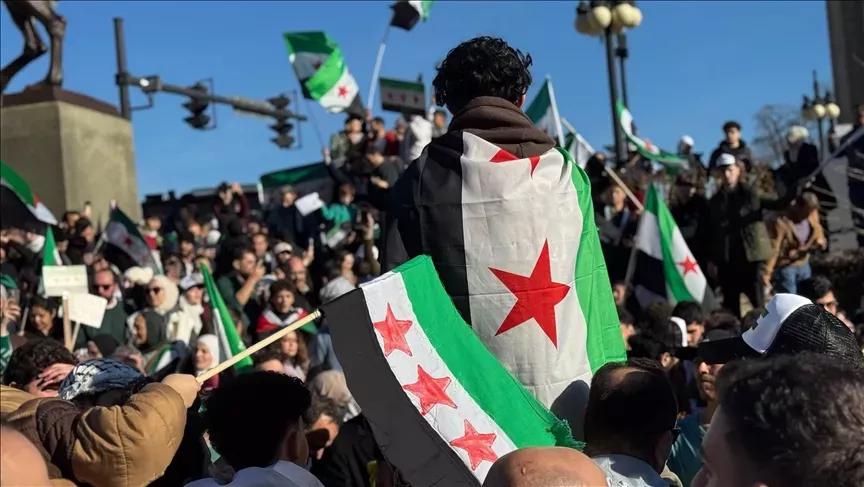
That help could be crucial, as the Assad family dynasty has been removed from power in neighboring Syria, and the Middle East is no longer the same. Damascus is now run by Hayat Tahrir al-Sham (HTS), the former Syrian Al-Qaeda, and Washington has shown in recent weeks that it is not averse to their services.
In this specific case, HTS is expected to leave Israel alone, attack Iran and pro-Iranian forces in the region, and in return receive the lifting of sanctions on Syria and acceptance by the West. Biden has already initiated this narrative, and Trump showed in his first term that he knows how to play by these rules. Just remember his meetings with North Korean leader Kim Jong Un.
Stabilizing the situation in the Middle East, or rather, the redistribution of spheres of influence, will be an important part of Trump's policy. His relationship with Iran and Tehran's behavior will dictate the dynamics of relations in the Middle East in the coming year, while Turkey will play an important role. At the same time, a group of Arab countries will closely monitor the moves of the new authorities in Damascus.
Although it seems that the cards are aligning for the West to completely dominate the Middle East, things are different. Major wars in the Middle East would divert American focus from China, and Beijing would have more time to prepare for a confrontation with Washington. That is why Trump needs peace in the Middle East, and Israel needs guarantees that it will be the leading power.
European Problems and the Rest of the World
In 2025, Europe will continue to struggle with the same problems as in previous years, while adhering firmly to previous policies. An exception is migration policy, which could undergo significant changes. Otherwise, right-wing and anti-establishment parties will strengthen further.
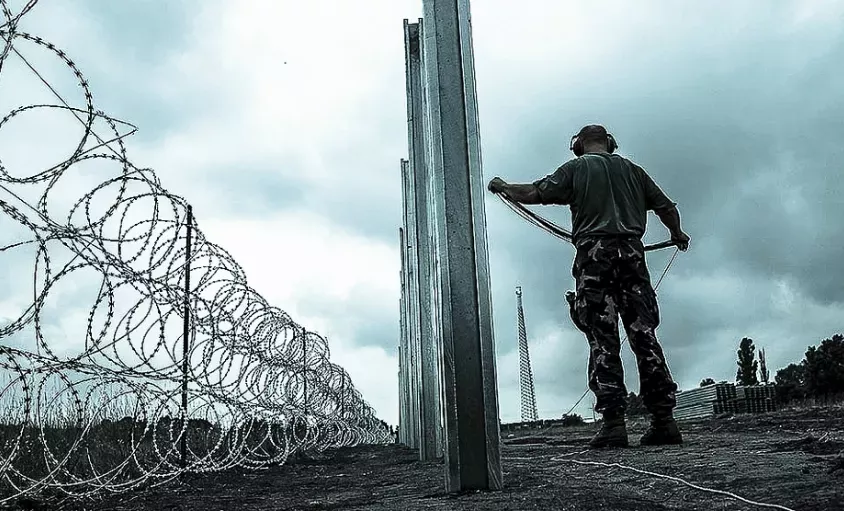
However, Europe will be most concerned with Trump's policies, i.e., how to protect its interests alongside the unpredictable tenant of the White House. This could create two blocs: those who are unequivocally for Trump and his policies, and those who would like the voice of European powers to be heard.
Outside of Europe, this division already exists, and four years of Trump's term will not be enough to break all of America's opponents or reach agreements with all of them. The confrontation with China, Russia, Iran, North Korea, Venezuela... remains in Washington's focus.
In addition, Trump faces domestic challenges: a fight for a new economic and political model that billionaire Elon Musk will address, the issue of illegal immigration, combating drug addiction, and building an economy that will be less dependent on foreign partners.
The answer to these questions will also be important for India, an emerging power. The role of BRICS, whose growth is desired by many countries, will depend on how Trump positions himself towards the most populous country in the world, which Russia and China want on their side. In addition to the three mentioned, there are Brazil, South Africa, Iran, Ethiopia, Egypt..., and there is also the attempt at 'de-dollarization' of the world economy and Trump's threat not to attempt it.
Musk's performance will also be interesting to watch within the framework of the political and economic experiment that Javier Milei is conducting in Argentina, and for which he has the support of parts of the American political and business community. Milei's (non)success will be an important moment for relations in Latin America.
Trump's Year
All in all, this could be Trump's year, or a year in which the world's largest power makes the first moves, and others adapt to them and create their own policies. The experience of his first term suggests that almost anything is possible with him now, but in the meantime, the world has changed, and Trump is aware of this, so the success of any policy is not guaranteed.
Technology is increasingly entering every aspect of our lives. The use of artificial intelligence this year will be greater than ever, and it is already used from the simplest tasks to the battlefield, communication, political struggle...
Advanced technology could help the world combat climate change. For decades, Western countries have been leaders in this area, but Trump's return to the White House compromises the plan. To put it mildly, Trump does not care about climate change.
The fact that mistrust is not only present among Western allies is shown by this week's reports that 2025 will be a record year for arms spending. The world is expected to spend 2.5 trillion US dollars, with the United States, China, and Russia spending the most.
In the past few weeks, these three powers have shown the world advanced missile systems (which Russia claims are undefendable), then sixth-generation aircraft (which China claims are unmatched in the world, while rivals rarely use fifth-generation aircraft), and Trump has already announced the conquest of space (which would revolutionize the US military).
In a year when the world looks to Trump, world powers look to weapons as a guarantee that their interests will be realized. After that, perhaps the interests of ordinary people around the world could come into play.
Komentari (0)
Prijavite se za komentiranje
PrijavaJos nema komentara. Budite prvi!
Minuta
Sve →Iz drugih kategorija

High Representative Not Elected: Germans, French and British Against Americans, New Attempt at End of June

ČOVIĆ WITHOUT MERCY: How Those Who Brought Ademović to Office Created a Political Hell for Him



Sunny Saturday, quite warm



Tragedy in Albanian resort: Two minors drown












