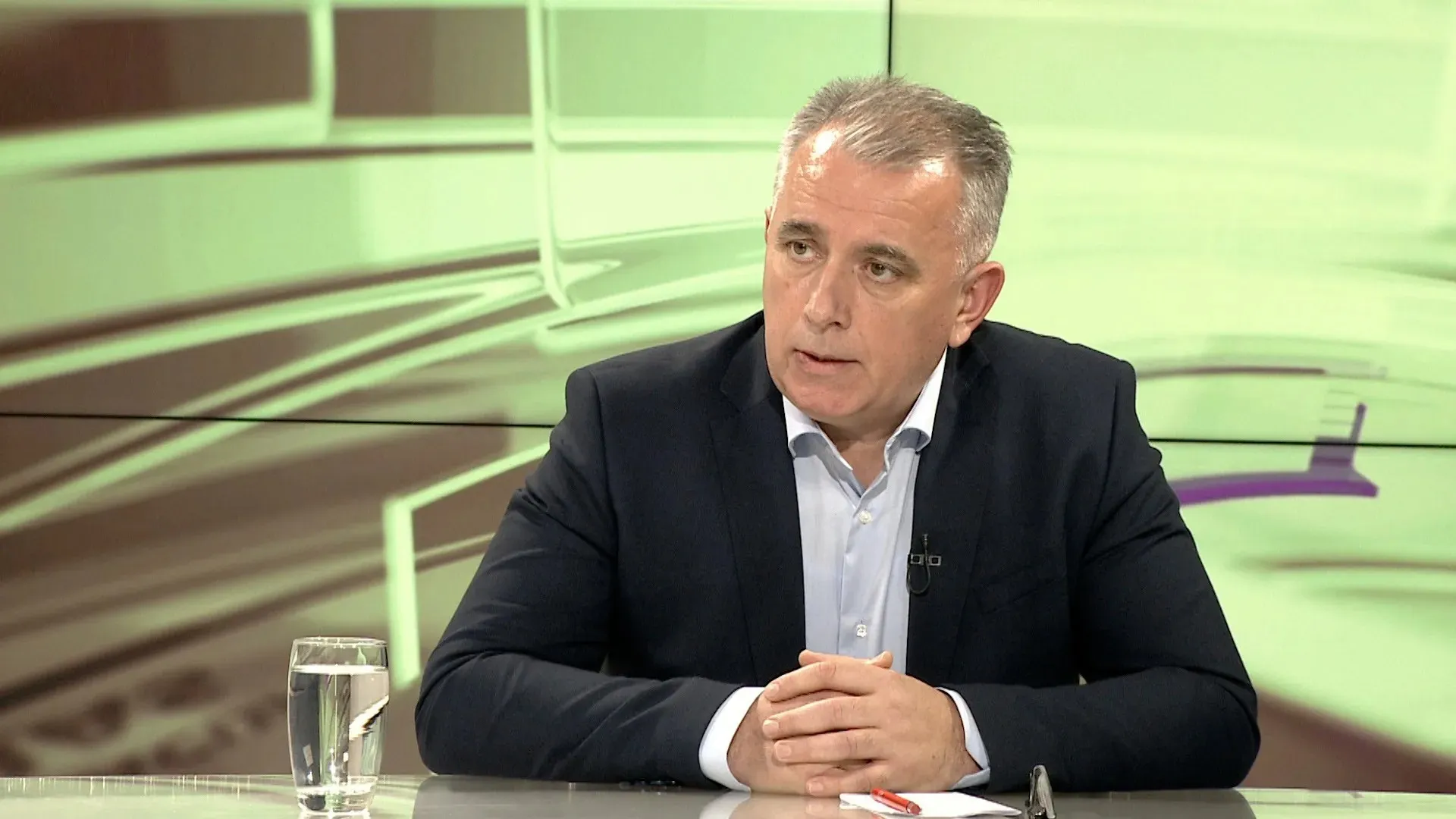
I am not optimistic that anything will move in a positive direction before the General Elections. The consequences of the current government's inaction and incompetence will be felt by institutions, the economy, and citizens for years to come, said the head of the SDA Club in the House of Representatives of the BiH Parliament, Šerif Špago, in an interview with Patria.
Špago discusses the crisis in the functioning of state government, the subservient attitude of the Trojka parties (SDP, NiP, Naša stranka) towards coalition partners SNSD and HDZ, the drawing of new maps in Zagreb, the (in)action of the international community, and also touches upon current events in the city on the Neretva river.
In recent months, we have witnessed an unprecedented crisis in the functioning of state government on the BiH political scene. The Council of Ministers of BiH can hardly agree on anything, the House of Representatives of the BiH Parliament occasionally holds a session, while the House of Peoples is in constant blockade due to obstructions by delegates from HDZ and SNSD. Do you see a way out of this crisis?
Špago: In recent months, the crisis of state government, which has been ongoing for almost three full years, has culminated. It is known that the Trojka, when forming the current Council of Ministers of BiH, agreed to all the demands of SNSD and HDZ in order for Konaković, Forto, and other incompetent officials to take their seats. Their coalition was established hastily without clear goals and programs, without precise plans for fulfilling obligations on the European and NATO path of Bosnia and Herzegovina.
When one of Dodik's most important demands was met – to place his cadre at the head of the Indirect Taxation Authority (UIO) of BiH on May 18, 2023, just one month later we had the first tremors and Dodik's shameful cursing of the genocide in Srebrenica at a meeting in Konjic. Unfortunately, despite a series of other anti-European and anti-state activities, the Trojka continued to believe and convince citizens that Dodik had changed, and they continued to fulfill his personnel and financial demands.
The appointment of Minister of Finance Amiđžić occurred after that event, and Trojka ministers voted for the appointment of SNSD cadres even after the alleged breakup of the coalition at the beginning of 2025.
There are numerous other decisions that the Trojka agreed to, which were exclusively in the interest of Dodik and SNSD. Let's recall the change in coefficients for the distribution of revenue from the UIO in favor of the Republika Srpska entity, which are still in effect today and have caused the FBiH budget to be damaged by hundreds of millions of KM annually, the allocation of over 100 million KM for the purchase of the "godfather's building" in Banja Luka, the "Viadukt" affair, which also cost over 100 million KM...
The incompetence of the state government in fulfilling our obligations on the European path, the non-implementation of reforms that the government itself defined in the Reform Agenda, has led to us losing 108 million euros from the Growth Plan so far and the permanent loss of an additional approximately 374 million euros due to the non-implementation of reforms.
In implementing the anti-state activities of SNSD and Dodik, support in various ways came from HDZ, to which the Trojka had no adequate response.
The lack of activity from the ruling parties has led to BiH experiencing the greatest political crisis since Dayton. We have a blocked Council of Ministers, a blocked House of Peoples, so even what the House of Representatives does has no effect due to the blockade of the House of Peoples. This crisis in the functioning of state government has led to a series of problems in the work of state institutions, including the financial collapse of the public broadcaster BHRT, the shutdown of Nova željezara Zenica and the loss of thousands of jobs, as well as problems for BiH transporters entering the EU.
It is very likely that BiH will also end up on Moneyval's grey list due to the failure to pass necessary laws, which will have a very negative effect on the financial system in BiH.
Unfortunately, citizens are paying the highest price for this situation, because due to all of the above, the country is stagnating on its European path, reforms are delayed, the trust of international partners is weakening, and economic and social issues remain on the sidelines. Institutional blockade produces a long-term sense of hopelessness and further encourages people to leave the country.
I am not optimistic that anything will move in a positive direction before the General Elections this year. The consequences of the current government's inaction and incompetence will be felt by institutions, the economy, and citizens of Bosnia and Herzegovina for years to come.
How do you view the latest ideas of ethno-territorial divisions and the drawing of new maps of Bosnia and Herzegovina in Zagreb? Our western and eastern neighbors, as well as their "satellites" within Bosnia and Herzegovina itself, are increasingly openly showing and proving that they have not given up on territorial aspirations towards our homeland. How seriously should such actions be taken and how can they be responded to most adequately institutionally?
Špago: It is evident that our neighbors remain consistent with the policies pursued in the 1990s, which were particularly evident during the aggression against BiH from 1992-1995. Today, they are trying to achieve their goals from that period in a more subtle way through various international lobbyists and various other intermediaries, using the current international circumstances and the overall geopolitical situation, thereby trying to render international law a dead letter on paper and to derogate any rules in diplomatic relations.
Such an example is the recent conference in Zagreb, attended by representatives of the Government of the Republic of Croatia, which openly called for the overthrow of the constitutional order of BiH, the violation of the international peace Dayton Agreement, and presented some maps that take us back to the times when many citizens of BiH, primarily Bosniaks of Herzegovina, were victims of the sick goals of convicted perpetrators of the Joint Criminal Enterprise. These policies, with the support of the Croatian state leadership, attempted to establish the para-state of so-called Herceg-Bosna on the territory of BiH.
Similarly, and in a more detailed and sophisticated manner and continuously, the leadership of the Republic of Serbia is doing this through its "satellites" in Banja Luka. Here, I only recall the conclusions of the so-called "all-Serbian assembly" from June 2024 and the plans of the leadership of the Republic of Serbia to, through various joint activities with the institutions of the smaller BiH entity, violating the provisions of the Dayton Peace Agreement, integrate that entity into its constitutional system, with the primary goal of destabilizing the state of Bosnia and Herzegovina and gradually creating conditions for the annexation of part of its territory to Serbia.
Such actions by neighboring countries are a very serious alarm, primarily for the political representatives of Bosniaks and all patriots of BiH, for final gathering, defining clear red lines in the protection of BiH's territorial integrity and sovereignty, and continuous cooperation and coordination with the countries friendly to Bosnia and Herzegovina is particularly necessary.
There are many more activities that should be undertaken, from creating a quality diplomatic network to coordinating with our people who live and work abroad and are politically active in their countries of residence. But what is most important is that in Bosnia and Herzegovina, there are far more patriotic citizens who love their country than those who work against its interests, and who are ready to resist the aggressive activities of our neighbors.
Somehow, we have become accustomed to the fact that in this mandate, the reaction of Bosnia and Herzegovina's institutions to the most important issues concerning our country is regularly absent. But why, in your opinion, has there been no reaction from the institutions of the European Union, considering that in the capital of one of its member states, they are clearly still thinking about how to "carve off" a part of the territory of their neighbor, whom they "wholeheartedly help to become part of the European family"?
Špago: Unfortunately, the reaction of the competent authorities of the state of BiH to obvious gross attacks on the sovereignty of our country has often been absent and mild, and it is particularly concerning that the competent judicial bodies have not taken any action against various officials at the entity or state level who have openly undermined the constitutional order and supported the activities of politicians from neighboring countries who have questioned the sovereignty and territorial integrity of the state of BiH.
I am personally skeptical that the EU institutions will have any concrete and effective reactions to all of this, primarily due to the complicated decision-making system, but also due to the positions of certain EU member states that openly support the interference of our neighbors in BiH's internal affairs. Proof of this is that the EU has not been able to impose any sanctions on Dodik and other officials from Republika Srpska who, with the support of the Republic of Serbia, carried out activities to overthrow the constitutional order of BiH.
The Party of Democratic Action (SDA) has repeatedly appealed to the BiH Court to revoke Milorad Dodik's mandate as president of SNSD, in accordance with the verdict that prohibits him from political activity for six years. However, we see that this has not happened yet, and it seems that Dodik is still pulling all the strings of politics both in the smaller BiH entity and in the state. How do you comment on this?
Špago: We return again to the issue of the functioning of judicial bodies in Bosnia and Herzegovina, primarily the Prosecutor's Office of BiH, headed by Mr. Kajganić, and his selective approach in enforcing the law, by abandoning the indictment against Dodik, Višković, and Stevandić for attacking the constitutional order at the time of adopting unconstitutional laws on prohibiting the functioning of BiH institutions in the territory of the Republika Srpska entity. Of course, this also encouraged the competent court in Banja Luka not to respect the verdict of the BiH Court on removing Dodik from the position of SNSD president, which allows him, regardless of not holding a position in the Republika Srpska entity, to continue pulling all the strings in that entity.
SDA will continue to insist through the HJPC BiH on the enforcement of the verdict and on the sanctioning of all those who do not comply with the verdict of the BiH Court, and I expect that things will be set right in this regard as well.
What is your stance on the (in)action of the international community in BiH. One gets the impression that the High Representative Christian Schmidt is almost not there at all. Why, then, does the Office of the High Representative (OHR) exist, for which we can hardly remember the last time it made a decision that benefited our country?
Špago: I fully support the institution of the OHR in BiH and its role in the implementation of the Dayton Agreement. We are witnessing that the High Representative Christian Schmidt has made various decisions and resolved certain issues that could not be resolved within the institutions of the state.
The decisions made by the High Representative on election day in 2022, as well as the decision to suspend the Constitution of FBiH for one day – in order for Trojka and HDZ with their satellites to form a government in FBiH – are something that should not have happened and that nullified the will of the citizens expressed in the 2022 elections. The justification of the decision by "unblocking the functioning of FBiH" falls apart in a situation where SNSD and HDZ have been blocking the House of Peoples and the PSBiH for over a year by breaking the quorum. Unfortunately, this passes without a reaction from the High Representative and the international community, even though it is clearly a violation of Dayton.
I, coming from Mostar, am particularly concerned by the ignorant attitude of the High Representative towards the current events in Mostar. Although OHR representatives in Mostar previously took activities to protect the central zone of the city from illegal construction, the current OHR structure is doing nothing regarding the requests of the Islamic Community of Mostar and the Bosniak Club in the City Council to stop the construction of the Croatian National Theatre building on the site of the former Lakišić cemetery, due to the lack of legal spatial planning documentation and valid permits, or to allow the Islamic Community to build the Intercultural Center "Mevlana". Unfortunately, the High Representative's selective approach towards different entities in these processes is evident.
The political crisis has unfortunately spilled over from the state to the local level, and since the war, we have witnessed a Mostar more divided than ever. Numerous issues have caused friction between Bosniak and political representatives in the city on the Neretva in recent weeks. First and foremost, as you have already mentioned, is the issue of the construction of the Croatian National Theatre, then the confiscation of Waqf property in Vrapčići, as well as the controversial decision of the Cadastre Service, which has registered a significant portion of state property as belonging to Elektroprivreda HZ-HB. Your comment?
Špago: It should be noted here that Mostar functions according to the Statute adopted by the High Representative in 2004, and that Mostar has a special chapter in both the Constitution of FBiH and the Election Law of BiH.
Mostar is a paradigm of the functioning of the Federation of BiH and, along with Brčko District, a unit of local self-government that should be under special attention from both domestic institutions and the international community, especially the OHR.
In the previous answer, I mentioned the OHR's lack of interest in the functioning of the City of Mostar, which has prompted HDZ representatives, especially the current mayor Kordić, to try to rule Mostar without any agreement with the Bosniak representatives in the City Council. It is particularly concerning that in all of this, he does not shy away from illegal activities.
The activities of Kordić and his subordinates in the city administration have recently turned Mostar into a "case city" again, which inevitably leads to blockades, the halting of certain positive processes after the 2020 elections, and damages the achieved level of trust.
How to characterize the procedure by which the head of the Department for Urban Planning, a certain Dragana Parmać, without any legal basis (a final court decision or other competent authority, a contract certified by a court, etc.), changed the registration of the right holder for 700,000 m2 of land from Hidroelektrane na Neretvi (a branch of JP EP BiH Sarajevo) to JP EP "HZ-HB" in the city of Mostar, if not as an act of usurpation of property through administrative means, which was the practice of HVO in Mostar during the period 1992-1995, when many legal and natural persons were left without space and property through changes in land registries.
The aforementioned 700,000 m2 also relates to waters and water resources, forest and agricultural land which is subject to restrictions on disposal as state property, it also relates to the property of the City of Mostar which is being transferred to another legal entity without any compensation, and it also relates to the cemetery in the Vrapčići settlement which is in the possession of the Islamic Community of Mostar. If these illegalities are not stopped, of course through legal means, is the Waqf property in the Old Town next, which is suggested by the public statements of the mayor in recent times concerning the Old Town?
How to characterize the actions of Kordić, who appoints Croats to previously agreed leadership positions in public companies of the city instead of Bosniaks, thereby violating procedures? Should the Bosniak representatives in the City Council remain silent in the face of Kordić's activities of taking over leadership positions of state officials from Bosniaks, including the position of head of the cadastre service in the City Administration…
Of course, this deserves an adequate response, and the "Stolacization" of Mostar will not be allowed, regardless of the consequences. Therefore, I once again call on the OHR and representatives of the international community to understand the seriousness of the situation and react adequately. I also call on the leaderships of pro-Bosnian-Herzegovinian parties, especially those holding power in the Federation of BiH and the state of BiH, not to turn a blind eye to the obvious problems in Mostar, which can also have consequences for the functioning of the FBiH.
A few days ago, you sent a request to the state attorney to protect state property, which, as you stated, is being completely illegally usurped by Mostar's urban planning department on the orders of Mayor Kordić. When and what kind of response do you expect?
Špago: Yes, through a parliamentary initiative, I asked the BiH Prosecutor's Office to get involved, because it is an obvious violation of the Law on Prohibition of Disposal of State Property, considering that many land parcels that were the subject of the Decision of the Head of the Department for Urban Planning of the City of Mostar are state property and that this is the exclusive jurisdiction of the state of BiH, and the obligation of the state Prosecutor's Office is to protect it from abuse.
I am sure that the Prosecutor's Office will react quickly and adequately, file lawsuits with the competent court to restore the situation to its previous state, and I, as a representative, will regularly request information. There is also great responsibility on the management of EP BiH, which must react procedurally adequately through its legal team, and of course, I expect them to file criminal charges against the responsible persons in the City Administration of Mostar as soon as possible due to illegal actions in the Cadastre Service.
Komentari (0)
Prijavite se za komentiranje
PrijavaJos nema komentara. Budite prvi!
Minuta
Sve →Iz drugih kategorija

High Representative Not Elected: Germans, French and British Against Americans, New Attempt at End of June

ČOVIĆ WITHOUT MERCY: How Those Who Brought Ademović to Office Created a Political Hell for Him



Sunny Saturday, quite warm



Tragedy in Albanian resort: Two minors drown












