
By Armin Sijamić
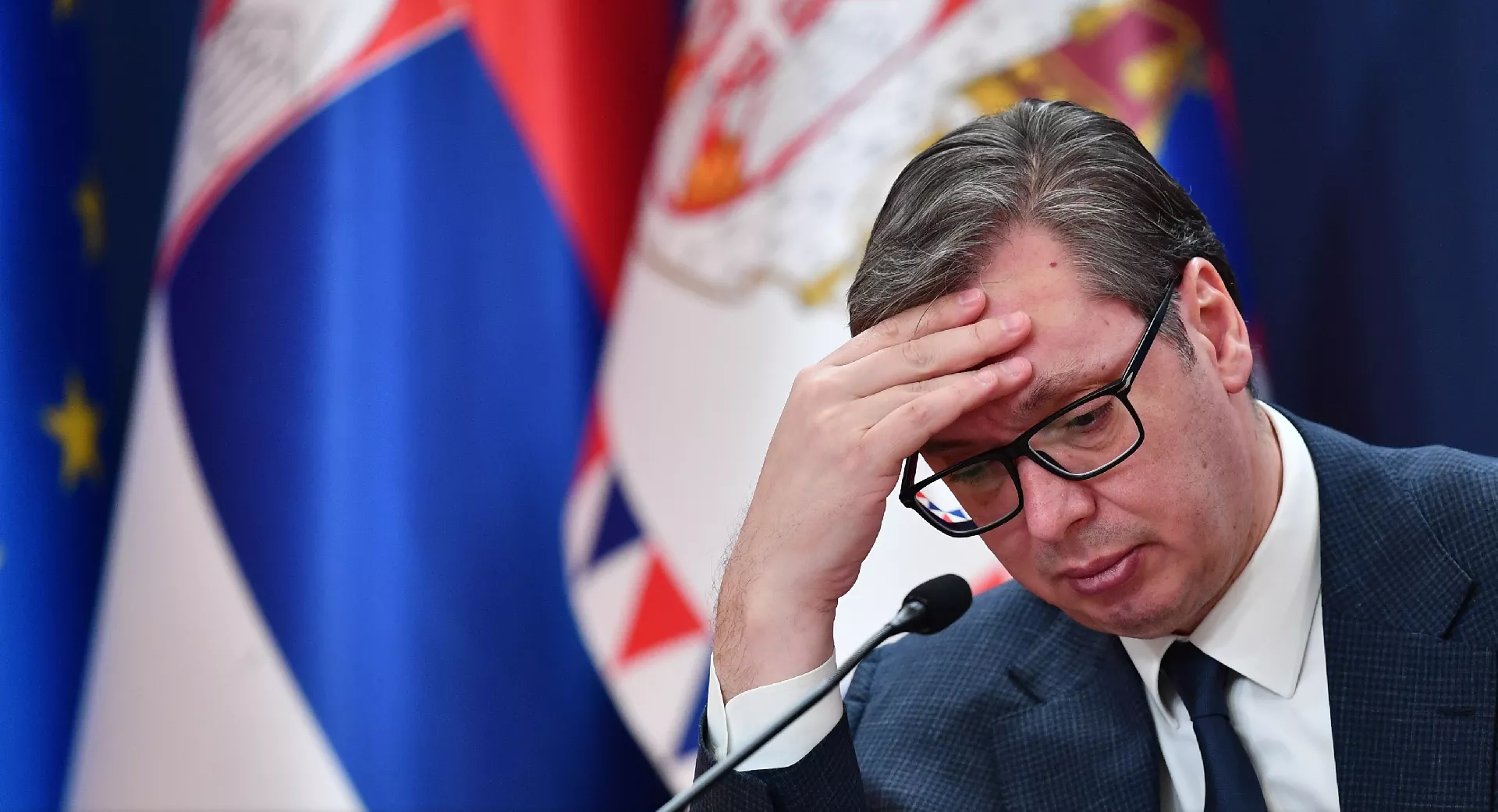
Since last week, the Serbian Oil Industry (NIS) has been under threat of American sanctions. Serbian President Aleksandar Vučić had been announcing this for months, and the government was preparing for a scenario of severing ties with Moscow in the energy sector. A maneuver worth the unreserved support of the West.
Given that Aleksandar Vučić is likely the most prominent figure in Serbian public life and that he makes statements almost daily through the media and social networks, his announcements that NIS would be sanctioned by the United States did not seem realistic to many.
The American Ambassador in Belgrade, Christopher Hill, a strong supporter of Vučić since taking office, stated that no sanctions would be imposed on Serbia or its companies.
The closeness between Hill and Vučić further confused the public, as they claimed completely opposite things about the same issue. These days, while Serbia is shaken by protests due to the collapse of the canopy at the railway station in Novi Sad and a series of other related affairs, Hill is attending basketball games and enduring insults from fans, who chant the most derogatory slogans at him and Vučić.
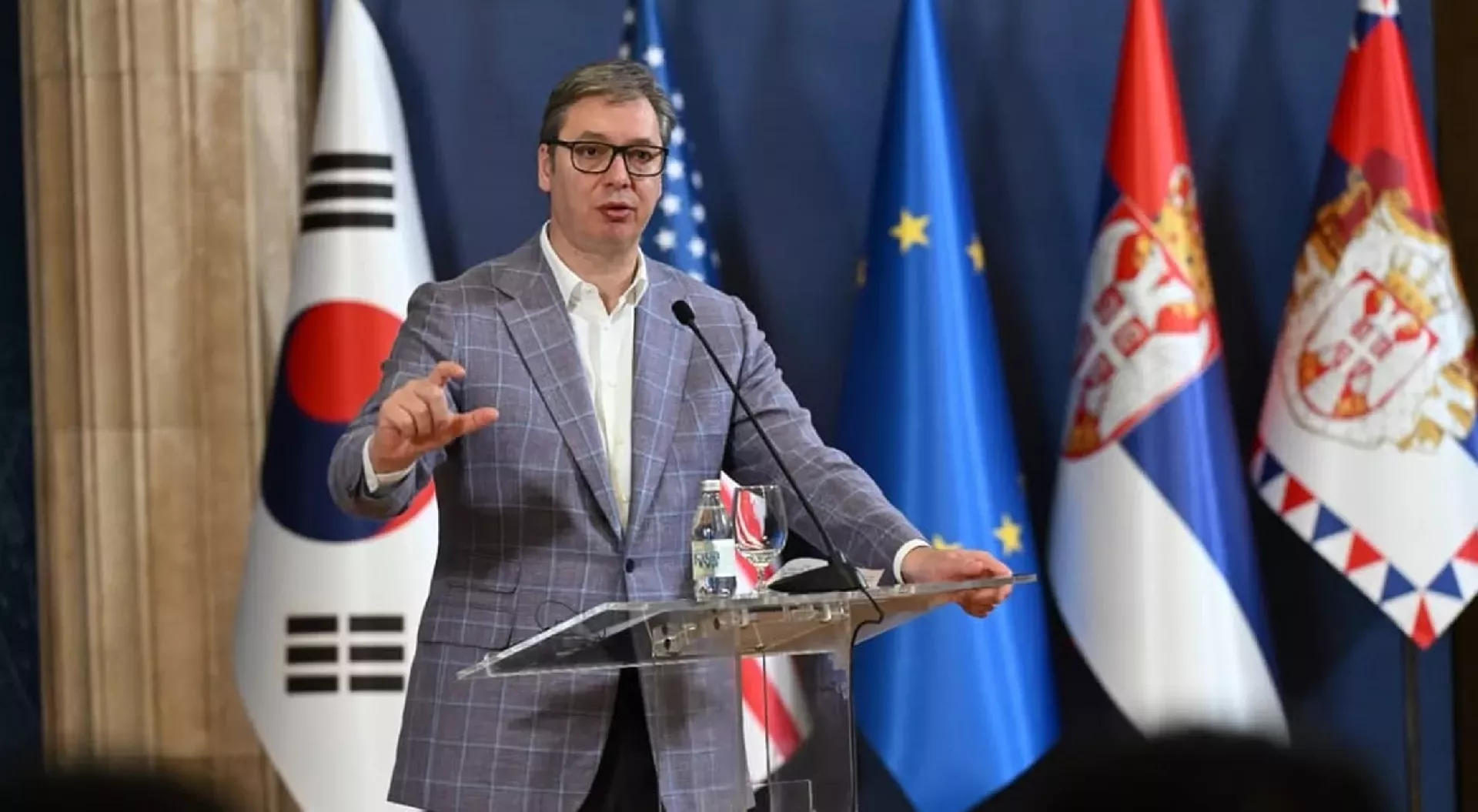
Russian NIS and American Vučić
The sanctions were conditionally imposed on January 10. The US Treasury Department imposed sanctions on Russian Gazprom and its subsidiaries. Washington says NIS is a subsidiary of Gazprom. The US wants to punish Russian companies that aid aggression against Ukraine. Belgrade must expel Russians from NIS ownership, or the company will face American sanctions in less than two months, which would lead to a series of problems for Serbia's economy.
Serbia has once again become a battleground for Washington and Moscow. It should be remembered that NIS was cheaply handed over to the Russians during Vojislav Koštunica's government, and in return, according to media reports, Moscow would protect Serbia's positions on the international stage. For 400 million euros in 2008, Gazpromneft, a subsidiary of Gazprom, acquired a 51 percent stake in NIS.
Following Russia's aggression against Ukraine, Belgrade is being asked to protect its international position, as it had previously committed to following the European Union's policies with the intention of eventually joining it. This is something that has been expected of Serbia since February 2022.
Vučić was preparing for sanctions, or more precisely, for the planned takeover of Russian capital in NIS. Serbian Foreign Minister Marko Đurić, who is very close to Vučić, signed an Agreement on Strategic Cooperation in the Field of Energy in Washington in mid-September. The agreement, among other things, provides for the possibility of American companies investing in Serbia's energy sector.
Before becoming head of diplomacy, Đurić was the ambassador to Washington. The pro-Russian opposition in Serbia resented the fact that Đurić traveled on an American military plane on one of his returns to Belgrade. Speaking of Serbia's ambassador to Washington, it should also be noted that the new ambassador will be Dragan Šutanovac, former leader of the Democratic Party, which Serbian tabloids call "yellow thieves." Šutanovac was a pro-Western oriented politician.
Favor of the West
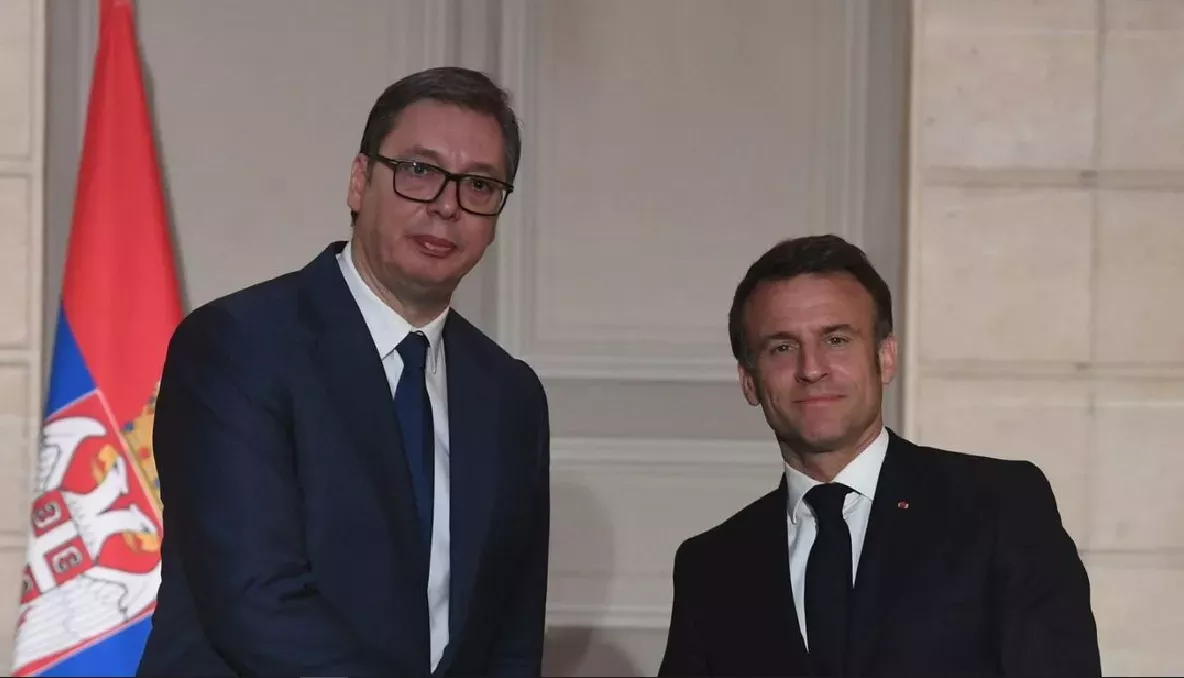
The agreement signed by Đurić was, in a way, a prelude to sanctions. For the agreement to be implemented, the official Belgrade must expel Russian companies from Serbia, and Western companies would fill the space. This is a similar scenario to when Vučić committed to buying French fighter jets, developing nuclear energy with Paris, and consequently distancing himself from Moscow.
At the same time, Vučić accuses those who oppose him of working for the West, of being part of a foreign conspiracy to overthrow his government, and a special place in his closely aligned tabloids is given to "Ustashas" who periodically appear during every major political crisis in Serbia in the last decade.
However, there is no doubt that Vučić is the one who has the support of the West, which he will need more than ever in the coming period. He is expected to resolve the issue of Kosovo in a way that satisfies Western interests, which most Serbian citizens oppose. If these citizens were to join the student protests, Vučić would find himself in an even more difficult political situation.
To survive politically, Vučić needs external support, especially if Russia refuses to cede ownership in NIS. Serbian media report that there are options for the Russians to sell their stake to a company from Azerbaijan or another company favored by the West, or for the government in Belgrade to take over the company. In the event that Russia rejects the sale offers, the government would choose between seizing the company from its current majority owners and bringing the company under American ownership.
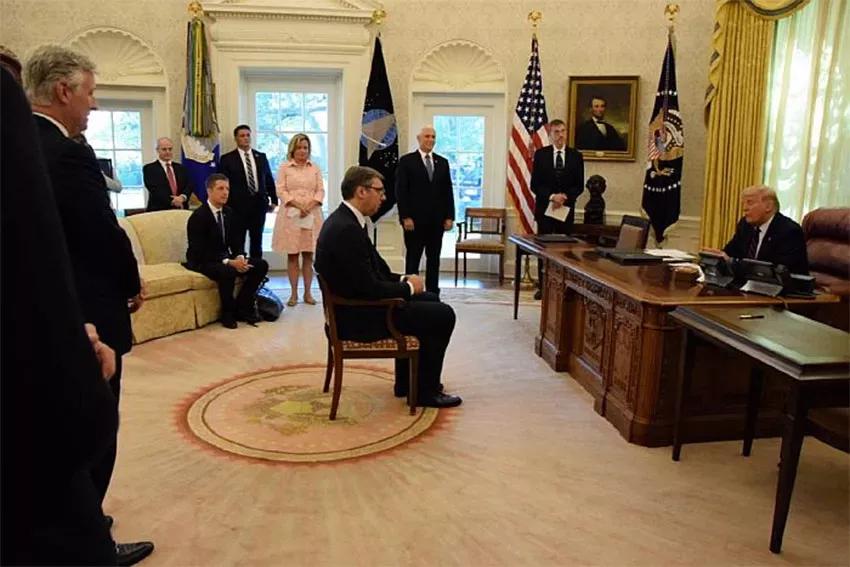
Vučić is counting on possibly having the understanding of Donald Trump and his associates, with whom official Belgrade has been trying to establish political and business ties.
Some analysts from Serbia fear that Vučić could become a "velvet dictator," who will rule the country for a long time with Western support, and in return will fulfill orders. In addition to granting concessions for lithium mining, concessions in policy towards Kosovo, and the aforementioned arming in the West, a new card could be Serbia's energy sector, which also has business dealings in neighboring countries. Analysts add Chinese investments and highway construction by American companies to this.
But even without these claims expressed through fears, there is an obvious inclination of the West towards Vučić. On this occasion, let us mention Serbia's interference in Montenegro's political and religious life, support for separatism in Bosnia and Herzegovina through the so-called "Serbian world," electoral irregularities in Serbia according to the assessment of European Union institutions, and the fatal attack in Banjska which has no judicial epilogue. The understanding that the West has shown towards Vučić for years has cost the surrounding countries dearly, and if there are no red lines, new incidents are a matter of time.
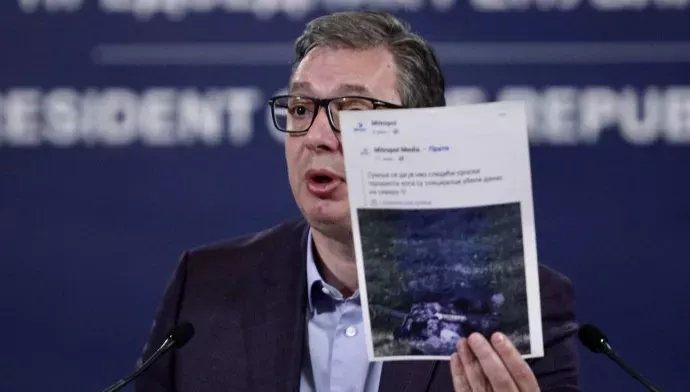
These days, resistance in Serbia is growing. As citizens declare that they want a different Serbia, the West's behavior is crucial. Driven by geopolitical reasons, the choice is Vučić, because Serbia is one of the few countries where the opposition offers less than the government.
But the citizens are not giving up, and Vučić has fewer and fewer ways to suppress the rebellion, especially the student one. If many in the neighborhood are tired of Vučić's thirteen-year rule, then imagine the feelings of people who have watched for almost their entire lives, daily on television, a man who in his appearances is a friend and enemy of the West, Russia, China, the region..., while announcing cataclysms and promising economic and all other prosperity.
Then, when the television is turned off, only the distribution of zones of interest and the conduct of politics far from the public eye are visible.
Komentari (0)
Prijavite se za komentiranje
PrijavaJos nema komentara. Budite prvi!
Minuta
Sve →Iz drugih kategorija

High Representative Not Elected: Germans, French and British Sabotaged Americans, New Attempt at End of June

ČOVIĆ WITHOUT MERCY: How Those Who Brought Ademović to Office Created a Political Hell for Him



Sunny Saturday, quite warm



Tragedy in Albanian resort: Two minors drown












