
By Armin Sijamić
This week, Venezuelan President Delcy Eloína Rodríguez Gómez dismissed Álex Saab, Minister of Industry and National Production. Saab is an example of politics conducted in secrecy.
Álex Naib Saab Morán, a Colombian-Venezuelan citizen of Lebanese origin, is little known to our public. The story of Saab in secret Latin American and world politics began in the final years of President Hugo Rafael Chávez Frías's rule. Under Nicolás Maduro Moros, Saab was at the height of his power, and interim President Rodríguez is now removing him from the government in Caracas.
The Saab case, or rather the actions of the United States as a great power towards him, demonstrates the public and secret agreements between the main political actors in a certain part of the world.
The fact that his expulsion from Venezuelan politics occurred in the first days of interim President Rodríguez's administration and immediately after John Ratcliffe, head of the US CIA, arrived in Caracas, speaks to his importance for the relations between the two countries and his power, but also about what is expected of Rodríguez after Maduro was abducted and transferred to a US prison.

Saab's work, his arrest in Cape Verde and extradition to the United States, then his release and return to Maduro's Venezuela, and finally his removal from office, illustrate the complexity of relations between great powers and states that wish to pursue policies outside established frameworks.
Criminal or Hero?
To understand why Saab was swiftly removed from the government in Caracas, one must go back about twenty years and shed at least some light on the role of a man whom Washington and Interpol pursued worldwide, while simultaneously being declared a "hero" by the Venezuelan authorities.
Simply put, Saab was responsible for circumventing US sanctions and for Venezuela's trade. Many believe Saab was more important to Maduro than any minister and that he enabled the country to survive despite sanctions. On the other hand, Saab was accused by authorities and media of financial fraud, illegal transactions, cocaine trafficking, money laundering, oil smuggling, and creating channels for illegal activities in several European and Asian countries...
The extent to which Saab was both secretive and omnipresent is shown by the meeting between Chávez and his Colombian counterpart Juan Manuel Santos in 2011. The two countries agreed on a housing construction project worth $530 million, with Saab as the contractor. According to media reports, Santos was unaware that Saab, who was part of Chávez's delegation, was also a Colombian citizen.
During those years, public interest in businessman Saab began to grow, and he would become a key figure in Venezuelan trade for the next fifteen years, whether in legal or illegal dealings.
From then on, US agencies monitored Saab and worked towards his arrest. Years of evading US pursuits ended in mid-2020 when his plane, returning from Iran, landed in Cape Verde for refueling. Saab landed on the island of Sal, and Washington, through Interpol, requested his extradition and sent a warship to prevent his escape. It was a mistake unbecoming of a person of his status and image.
In October 2021, Saab was extradited to Washington, which Maduro called an "abduction." In protest, Maduro withdrew from negotiations with the Venezuelan opposition in Mexico, where the lifting of sanctions was at stake, and arrested two US citizens working for the oil company Citgo.
Biden's Exchange and a Trump Who Doesn't Forgive
Many in Venezuela feared that Saab, like some other fugitives from the country, would reveal secrets and align with Washington's policies. However, according to Maduro, his trusted man did not do so, even though he appeared before a US court under threat of a long prison sentence. In December 2023, in a prisoner exchange with President Joseph Biden's administration, who pardoned Saab, he was returned to Venezuela, and in October 2024, he became a minister.
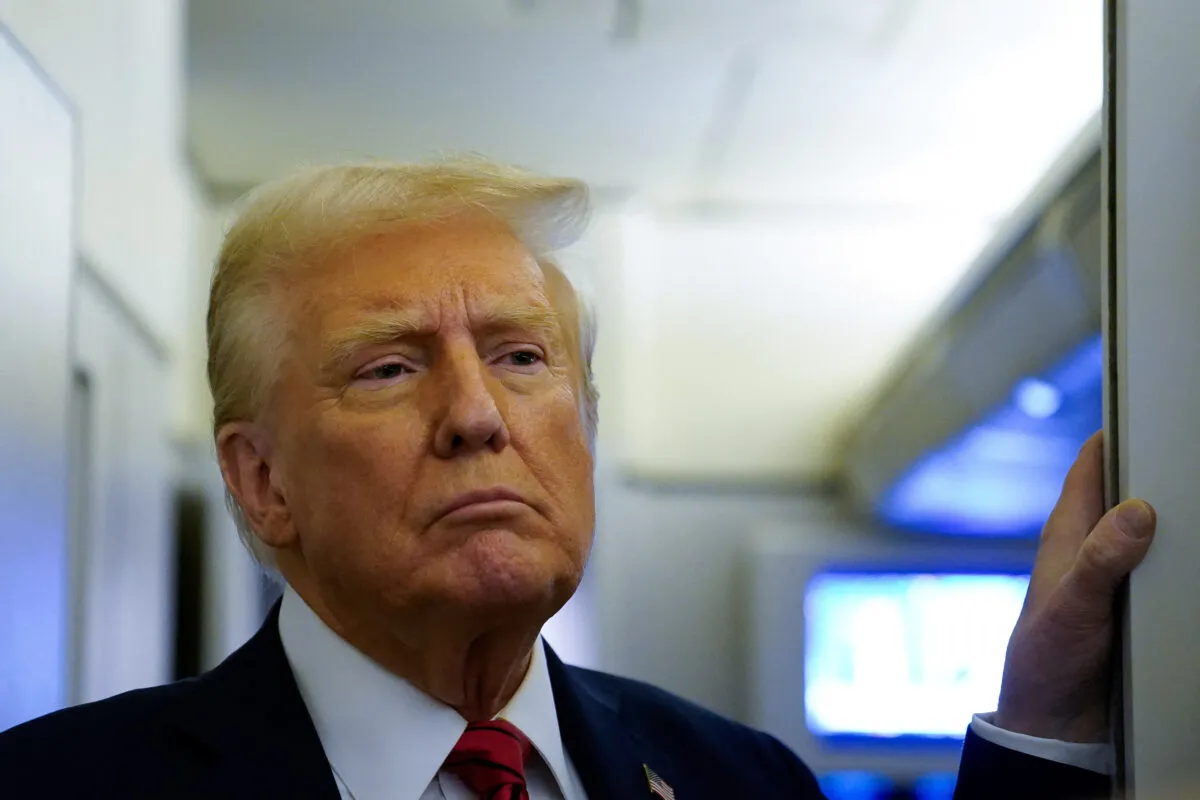
After Trump removed Maduro from Venezuelan politics on January 3rd, some of his associates are now also departing. Delcy Rodríguez has few options if she wishes to avoid new US attacks on Venezuela and must comply with Washington's demands, at least the main ones.
Ratcliffe visited Caracas last Friday and requested "confidence-building measures," as an unnamed Trump administration official formulated it for the media. He added that Ratcliffe and Rodríguez "discussed potential opportunities for economic cooperation and that Venezuela can no longer be a safe haven for US adversaries, especially drug traffickers."
On Sunday, Rodríguez stated on social network X that Saab had been dismissed and the ministry he led was merged with the Ministry of Trade. "I thank colleague Álex Saab for his work in the service of the homeland," she wrote, adding that he would be given "new assignments," without specifying.
Part of the business that Saab managed in the investment sector has been handed over to a former US student. Calixto Ortega Sánchez is a former head of the Venezuelan central bank and a diplomat in the Venezuelan mission in Houston – the American oil refining center.
Can the Left in Venezuela Survive Trump?
The removal of Saab and the appointment of a man well-known to the Americans is a clear signal from Caracas that it desires better relations with Washington. Yesterday, for example, Rodríguez carried out 28 dismissals and new appointments in the military leadership, and has been reconstructing the government and government bodies for days.
Rodríguez desires good relations with Washington and business with American oil companies. This does not necessarily mean betraying the interests of Maduro's policy, which offered cooperation to the American side in exchange for Venezuela's political independence. The question of the limits of freedom in the actions of Latin American leftists thus remains open.

The fate of Saab, who conducted legal and illegal business for the government, fits into this dilemma. In about fifteen years, he managed multi-billion dollar deals, was then arrested and taken to the United States, and subsequently returned to Venezuela where he became a minister.
And he is not the first with such a biography. Recently, Trump released Juan Orlando Hernández, former president of Honduras and a convicted drug trafficker in the United States. This release was used as assistance to the opposition to win the presidential elections against the local leftists.
Therefore, it is not surprising that some believe that Maduro and his wife Cilia could one day be returned to Venezuela if Rodríguez and others do the job as Washington demands.
The Álex Saab case shows that almost anything is possible in politics and that secret communication channels often have a decisive influence on the outcome of certain processes. Saab did what his government asked, and now he has been removed from the top of the Venezuelan government as a sign of rapprochement with the former enemy.
Whether this is another political trick by Venezuelan leftists, aimed at saving what can be saved from the rampaging Trump, or if Rodríguez is changing political allegiance, will soon be known. Saab's career, as well as numerous examples in Latin American history, suggest that both options are possible.

Komentari (0)
Prijavite se za komentiranje
PrijavaJos nema komentara. Budite prvi!
Minuta
Sve →Iz drugih kategorija
High Representative Not Elected: Germans, French and British Sabotaged Americans, New Attempt at End of June
ČOVIĆ WITHOUT MERCY: How Those Who Brought Ademović to Office Created a Political Hell for Him


Sunny Saturday, quite warm
Tragedy in Albanian resort: Two minors drown