
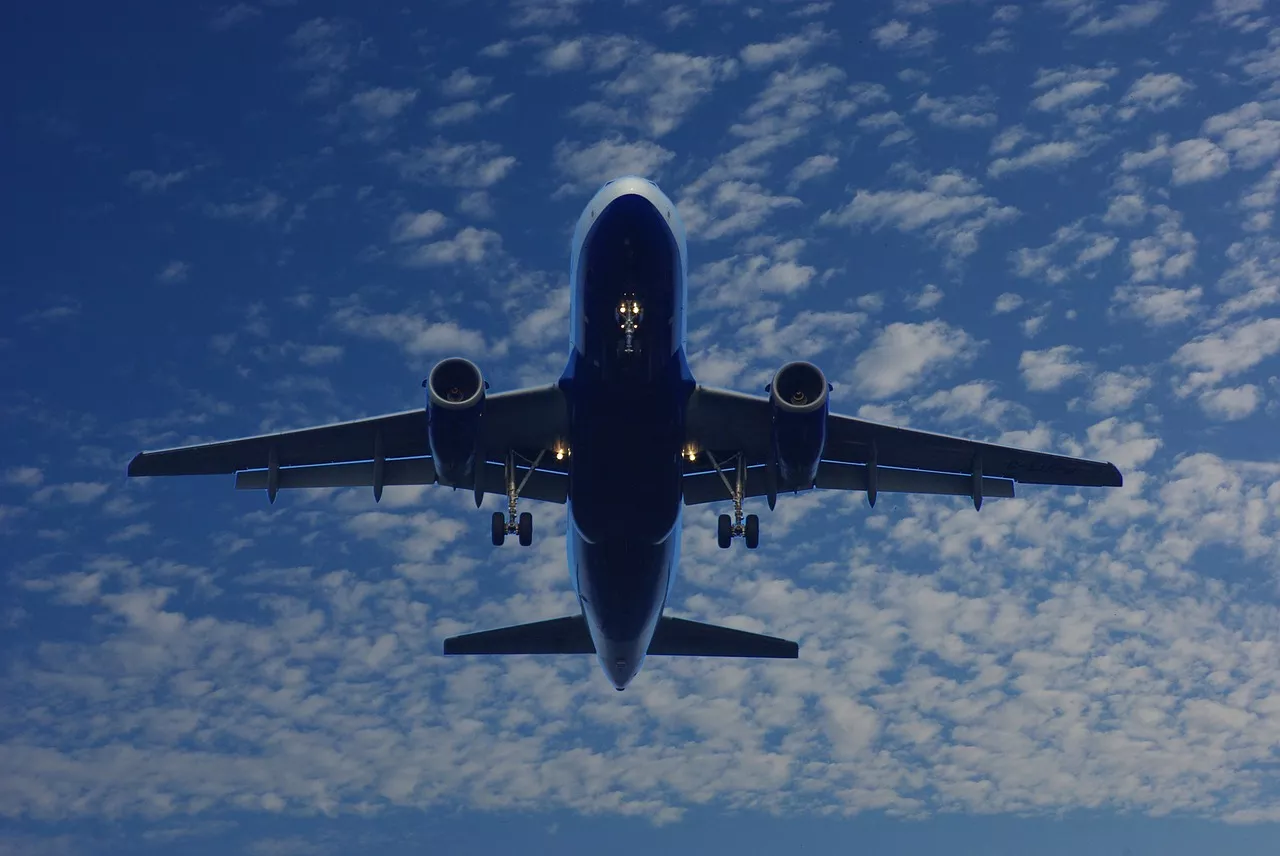
SARAJEVO, (Patria) - A new form of tourism is spreading in East and Southeast Asia, known as the "trip to nowhere", brought about by restrictions on the movement of people between countries due to the coronavirus pandemic.
This is a trip in which the means of transport, instead of going to a specific destination different from the starting point, simply makes a circle and returns to where it started, or a trip whose main goal is not to go to a new destination, but to enjoy the service provided during the ride.
In the second half of August, the largest Japanese airline ANA boarded 334 people onto its giant "Airbus A-380" aircraft at Narita Airport and took them on a circular flight over Japan's largest island, Honshu, simulating a trip to Hawaii.
Although the plane never left Japanese airspace, the crew and passengers pretended they were going to Honolulu - the crew wore Hawaiian-style shirts, music and recordings from the volcanic islands were played, and food was served that is normally offered on flights to that Pacific archipelago in the United States.
Romance in the air
The Japanese company, however, is not a pioneer of trips to nowhere. Earlier that same month, Taiwanese airline "EVA Air" conducted a three-hour flight that began and ended at Taoyuan Airport in the capital, Taipei. The main attractions of this flight, which was advertised as an "alternative travel experience" and for which tickets cost between 180 and 215 US dollars, were observing the coastal landscape and exquisite dishes prepared by renowned Japanese chef Motokazu Nakamura.
The exterior of the plane, painted with the very popular Japanese cartoon character Kitty-chan in East Asia, also served as a magnet for parents with young children.
For Catholic Christmas (which is considered a romantic day for couples to go out together in East Asia) and New Year's, the same Taiwanese company also organized three "love flights" to nowhere, aimed at introducing people of the opposite sex.
Only young people in their twenties and thirties could buy tickets for these circular flights. For nearly 300 US dollars, in addition to the three-hour flight, they received two more hours of entertainment at the airport, giving them more time to find a new partner among the passengers.
Trip to nowhere as a spiritual experience
A great innovator in epidemic conditions is also the Thai airline "Thai Airways", popular in Asia and beyond for its service and attractive flight attendants, but heavily burdened by debt.
At the end of November, it organized a three-hour flight in which its plane simply flew over important Buddhist temples and monuments in the country, as many as 99, to give believers the opportunity to offer prayers to these holy places and recite excerpts from Buddhist sutras. Along with printed prayer books, passengers also received talismans as souvenirs from the trip, intended to protect them from misfortune.
The management of the Thai airline, which is facing bankruptcy, in order to alleviate the financial difficulties caused by the COVID-19 epidemic, had previously, in September, opened a restaurant-cafe at its company headquarters in Bangkok, where flight attendants serve, and guests, sitting in seats typically found in economy and business class, can consume food served during flights and enjoy displayed aircraft models.
Interestingly, "Thai Airways" also introduced a food delivery service for meals normally served on its flights to customers' homes. The company even offers a virtual flight experience in simulators used to train its pilots. Interested individuals can choose from as many as four different simulators - for "Airbus A-380", "Boeing-777", 747, and 737.
Cruising to nowhere
A trip to nowhere, of course, doesn't have to be exclusively by plane. Why not by ship? The managers of "Genting Cruise Lines" and "Royal Caribbean" realized that the possibilities are endless, as they have recently been organizing cruises to nowhere from the port of Singapore.
As part of the local government's initiative to revive tourism, Royal Caribbean's giant vessel with 1,148 crew members and entertainers set sail from the port of Singapore on December 3rd for a four-day trip to nowhere.
The idea was that this cruise ship, whose task under normal circumstances is to cover thousands of nautical miles, would simply drop anchor not far from the coast of the city-state and, while anchored or slowly cruising, satisfy the passengers eager for entertainment and tired of the restrictions imposed by the coronavirus epidemic by showering them with diverse activities: good food, a swimming pool, a gym, an ice rink, concerts, and games of chance.
This concept was met with an excellent response, as the ship carried as many as 1,688 passengers, with strict hygiene and epidemiological measures - among other things, all crew members and guests had to be tested for the virus a maximum of 72 hours before departure, and continuously wear masks and phones with tracking applications.
Thus, at the beginning of this month, nearly 3,000 people boarded the "Royal Caribbean" ship in Singapore to enjoy a new, one might say, surreal type of travel. This is despite the fact that, as is well known, at the beginning of the year in Japan, the cruise ship "Diamond Princess" was quarantined for weeks and was in the media spotlight due to a mass infection with the new coronavirus, as was the ship "Grand Princess", which became a floating hotspot for the COVID epidemic near the US West Coast in early March.
Komentari (0)
Prijavite se za komentiranje
PrijavaJos nema komentara. Budite prvi!
Minuta
Sve →Iz drugih kategorija

High Representative Not Elected: Germans, French and British Sabotaged Americans, New Attempt at End of June

ČOVIĆ WITHOUT MERCY: How Those Who Brought Ademović to Office Created a Political Hell for Him



Sunny Saturday, quite warm



Tragedy in Albanian resort: Two minors drown












