
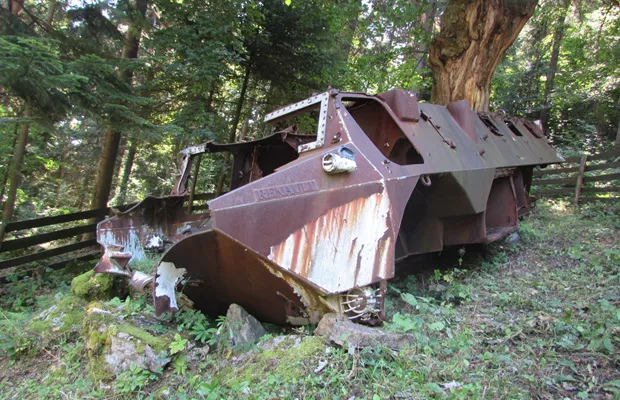
On this day in 1995, three American diplomats and a French soldier transporting them in a military vehicle were killed on Mount Igman. The deceased were Joe Kruzel, Nelson Drew, and the US envoy for the former Yugoslavia, Robert Frasure, Patria reports.
Frasure was the key man who 'broke' Serbian President Slobodan Milošević, pushing for peace as soon as possible and offering the lifting of sanctions in return. He was a political heavyweight, admired even by then-US Secretary of State Warren Christopher.
The deceased French soldier was Stephan Reault. At the memorial service and funeral for the diplomats in Washington, US President Bill Clinton called the fallen American heroes:
"Bob, Joe, and Nelson were in Bosnia because they were driven by the terrible injustice prevailing there."
The fallen American diplomats were buried at Arlington National Cemetery, where fallen soldiers are laid to rest. The final resting place of the three diplomats is on a hill in Arlington, just above and across from Washington. US President John F. Kennedy is also buried in this cemetery.
French President Jacques Chirac, on February 1, 1996, in Washington, awarded the three American diplomats the French Medal of Honor. He wept during the ceremony. Jacques Chirac was one of the most persistent advocates of military intervention in BiH.
After this tragedy, Christopher Hill was appointed as the chief US negotiator for the Balkans, replacing Robert Frasure. The Americans then intensified their diplomatic offensive to find peace in Bosnia and Herzegovina.
The new negotiator, Hill, and Richard Holbrooke forced Slobodan Milošević to remove the Bosnian Serb leaders from Pale from the negotiations.
While Milošević was reading that demand, Holbrooke writes in his memoirs "To End a War" that he whispered to Hill: "If only Bob Frasure could see this. Chris later told me he had the exact same thought at the same moment."
On September 8, 1995, in Geneva, about twenty days after the accident on Igman, all the foreign ministers of the states involved in the war met at the negotiations. And then Holbrooke writes about an almost identical feeling: "When we entered the room and found the foreign ministers of Bosnia, Croatia, and Serbia together for the first time in so many months, our first thought was that they were willing to shake hands and reach a joint agreement, which, though limited, would lead us toward peace... The first thought—of all of us—was: If only Nelson, Joe, and Bob could have seen this day."
It was clear that the Americans would not allow all the effort and sacrifices of their diplomats in Bosnia to be in vain. It was also clear that precisely because of this tragedy, they would see peace in BiH through to the end.
This was demonstrated once again, at the height of the Dayton negotiations at Wright-Patterson Air Force Base, on November 12, when the families of the fallen diplomats visited the base and the negotiators. Catherine Frasure, Gayle Kruzel, and Sandy Drew, the widows of the deceased, arrived with six children who had lost their fathers, and then each family individually met and spoke with the three presidents of the states of Bosnia and Herzegovina, Croatia, and Serbia. After Dayton, it was said that the families had begged them for reason and peace.
Komentari (0)
Prijavite se za komentiranje
PrijavaJos nema komentara. Budite prvi!
Minuta
Sve →Iz drugih kategorija

High Representative Not Elected: Germans, French and British Sabotaged Americans, New Attempt at End of June

ČOVIĆ WITHOUT MERCY: How Those Who Brought Ademović to Office Created a Political Hell for Him



Sunny Saturday, quite warm



Tragedy in Albanian resort: Two minors drown












