
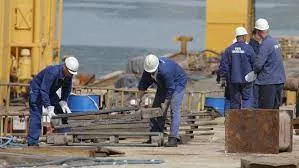
Mass departure of workers from our country has resulted in the import of labor from other countries. And while employers are seeking further liberalization of imports, unionists warn: This could lead to the collapse of the system.
Construction, industrial activities, transport service providers, and the hospitality and tourism sector are most affected by the labor shortage. The reason is well-known: BiH workers, whether seasonal or permanently employed, are leaving our country in droves, and data shows that around 30,000 workers in deficit professions are missing in Bosnia and Herzegovina. Therefore, employers are turning to importing foreign labor and seeking simplified procedures. They say the quota of about 1,400 workers at the state level is insufficient. Therefore, they urge to follow the example of neighboring Croatia.
"They abolished quotas and introduced an annual labor market survey. They declare professions that are in deficit, and for these professions, you can import labor without the employment bureau, without any procedures. Of course, you register according to the procedure with the Ministry of Internal Affairs, the Bureau for Foreigners, to obtain a residence permit, but for these professions, import is free," states Adnan Smailbegović, president of the Employers' Association of FBiH.
If we are not to follow Croatia's example, our interlocutor points out, then we can, at least for starters, apply the practice from Republika Srpska in the Federation as well. Namely, in RS, procedures are simplified, among other things, by the fact that there is no diploma nostrification. Edin Dacić, owner of a furniture factory in Prnjavor, hired six workers from Bangladesh this year because last year, despite salary increases, he lost 10 percent of his employees. He now expects four more foreign workers and emphasizes:
"This is not an attempt for us to pay them less now in order to reduce salaries, but we are simply filling vacant positions, and our new colleagues do not receive lower salaries than our domestic workers. We also ensure that taxes, contributions, and all obligations to the state are settled for them."
The Federal Employers' Association claims the same. However, skepticism is evident in the Alliance of Independent Trade Unions of BiH. They point out that liberalization would pose a danger to domestic labor and that, for starters, instead of importing foreign workers, we should focus on retaining domestic ones.
Referring to RS, they say that procedures may have been simplified there, but also, unlike in the Federation, contributions have been reduced, which has enabled salary increases.
"There is precisely a fear that a status quo will be reached, especially regarding the payment of labor and the cost of labor. For now, as far as I can see, only qualified labor is preferred, we are talking about professions that the economy needs, especially the real sector. This can be understood to some extent, but without clear indicators, without clear dialogue and discussion, especially within the tripartite – employers, government, and unions – without that, we will not have any agreement, and we will continue to oppose such a move," warns the president of the Alliance of Independent Trade Unions of BiH, Mevludin Bektić.
Because our country possesses widely known quality labor, which unfortunately it loses month by month, and workers are only asking for the basics – income with which they can cover basic living costs. Therefore, the Union says it is time for the state and all levels of government to turn to domestic workers, and only then can we talk about foreign ones.
Komentari (0)
Prijavite se za komentiranje
PrijavaJos nema komentara. Budite prvi!
Minuta
Sve →Iz drugih kategorija

High Representative Not Elected: Germans, French and British Sabotaged Americans, New Attempt at End of June

ČOVIĆ WITHOUT MERCY: How Those Who Brought Ademović to Office Created a Political Hell for Him



Sunny Saturday, quite warm



Tragedy in Albanian resort: Two minors drown












