
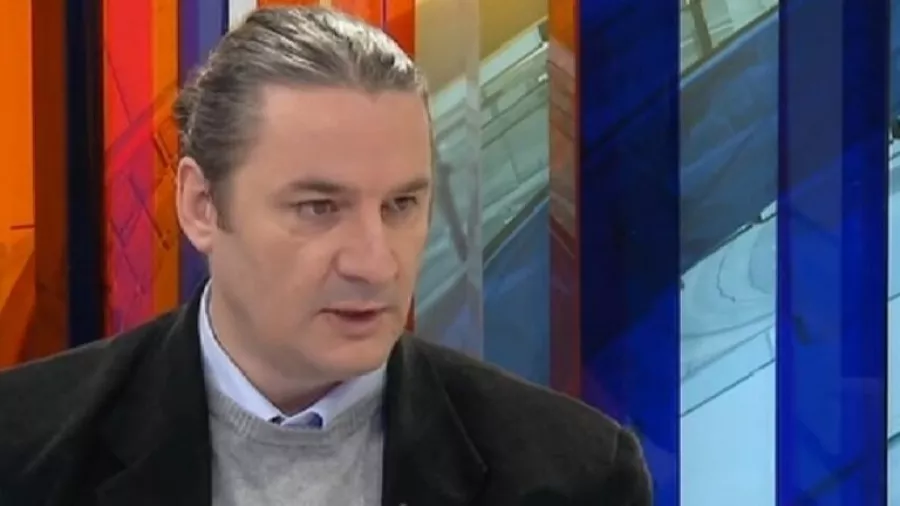
SARAJEVO, (Patria) - Professor Goran Šimić announces a database of those convicted of war crimes, after which, as he says, nothing will be the same as before.
"The only good thing about wars is that they end. Sometimes it takes longer, but eventually, one day, in every conflicted society, the conflict comes to an end," says Goran Šimić, professor of criminal law, as reported by Slobodna Bosna.
And when that happens, he continues, victims cry out for justice, while perpetrators try to flee.
"Society seeks a way to rebuild and create common foundations for a better future. There are many, but only truth and justice are the real foundations," believes Šimić, noting that these foundations are strongly contested in post-conflict societies.
"Both by victims and perpetrators, so the question is how to create and rebuild them, because the reconstruction of society essentially depends on that," he emphasizes.
According to him, courts have an indisputable advantage over any other mechanism, because their decisions, he notes, are final and binding for everyone, both victims and perpetrators.
"However, that does not mean these decisions are not disputed or easily accepted. No matter how much they are disputed by politicians, genocide deniers, the media, perpetrators or victims, none of that disputing can even touch them," Šimić stresses.
He explains that no matter how difficult and painful the facts established "beyond reasonable doubt" in final court verdicts may be, these facts are a solid foundation for building new societies.
"If a post-conflict society does not find the strength for other forms of justice, verdicts are also the only solid ground. Facts! That is what this is about," says Šimić, announcing the War Crimes Trials Database (WCTD).
"The database aims to collect and present final verdicts from war crimes trials, rendered before international and domestic courts from around the world," he explains.
He adds that in the initial phase, the database will present verdicts of the International Criminal Tribunal for the former Yugoslavia (ICTY) and domestic courts for war crimes committed in Bosnia and Herzegovina during the armed conflict of 1992-1995. After that, he announces, verdicts from other countries will be collected and presented. This database, which will be presented today, he emphasizes, provides information for objective research and familiarization with the facts.
"All information is extracted from final verdicts and presented in the way they are presented in the verdicts without any changes or interpretations, creating an easily accessible and searchable database," says the professor, adding that there is an option to download the text of the verdict.
The database is publicly available and intended for use by researchers and the general public. It contains data categorized into 32 searchable categories, making it an unparalleled tool for finding all facts and information related to war crimes trials and verdicts," explains Šimić.
He adds that the database is intended not only for legal research but also for the general public.
Komentari (0)
Prijavite se za komentiranje
PrijavaJos nema komentara. Budite prvi!
Minuta
Sve →Iz drugih kategorija

High Representative Not Elected: Germans, French and British Sabotaged Americans, New Attempt at End of June

ČOVIĆ WITHOUT MERCY: How Those Who Brought Ademović to Office Created a Political Hell for Him



Sunny Saturday, quite warm



Tragedy in Albanian resort: Two minors drown












