
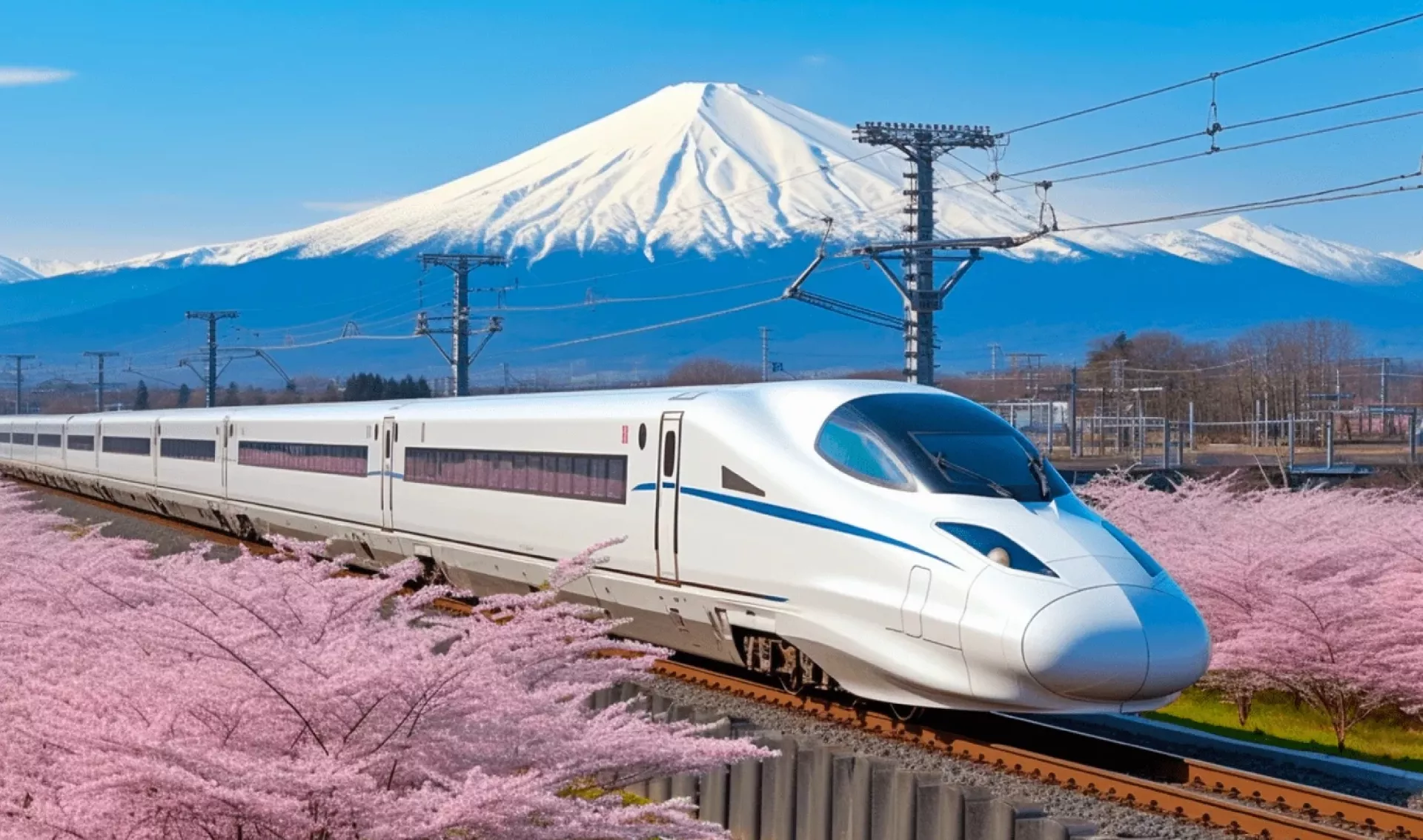
(Patria) - Sixty years ago, in the early morning of October 1, 1964, a powerful and elegant train quietly glided through the urban jungle of Tokyo towards the south, in the direction of Osaka. That historic day marked the beginning of the era of super-fast Japanese trains, known as Shinkansen.
The bullet train symbolized a new, positive chapter and a kind of recovery from the damage caused by World War II, reports Punkufer.hr.
Shinkansen, which translates to "new main line," has become synonymous with fast and efficient travel, and Japan remains a world leader in railway technology to this day.
Powerful conglomerates like Hitachi and Toshiba export billions of dollars worth of trains and equipment every year.
The network of Japanese high-speed trains is constantly expanding – railway routes lead from the capital north, south, and west, to cities like Kobe, Kyoto, Hiroshima, and Nagano.
Once, travel between the four main Japanese islands (Hokkaido, Honshu, Shikoku, and Kyushu), which stretch for approximately just under three thousand kilometers, was often tiring and arduous.
For example, in 1889, the train journey from Tokyo to Osaka took 16.5 hours, while in 1965, the same journey took only three hours and 10 minutes.
The secret to fast travel is the trains' speed, which reaches up to 320 km/h.
The country's challenging topography, as well as drastic temperature differences – from icy winters in the north to tropical humidity in the south, have significantly complicated life for Japanese engineers.
But the numerous challenges they had to overcome have made them leading engineers who tirelessly found new and more modern solutions to the complications they faced.
Seismic activity presented the biggest challenge for experts, as Japan is one of the most geologically active places in the world, prone to earthquakes and tsunamis.
Due to seismic activity, Shinkansens are equipped with automatic stopping systems and they react to even the smallest tremors.
Despite all the difficulties, in the history of the Shinkansen, not a single passenger has ever died or been injured due to a train derailment.
Interestingly, Japanese high-speed trains are known for their incredible punctuality, with an average annual delay of less than one minute.
Furthermore, they are extremely energy-efficient and consume less energy per passenger compared to cars or airplanes.
The Shinkansen is constantly being improved, and new trains have long noses to reduce noise when entering tunnels, especially in densely populated urban areas.
To date, the Shinkansen has transported over 10 billion passengers, making it one of the most successful and reliable railway systems in the world.
Over the past four decades, numerous countries have followed Japan's example and built high-speed railways, with France, which has proudly operated the TGV between Paris and Lyon since 1981, perhaps being the most famous.
Italy, Germany, the Netherlands, Taiwan, Turkey, and Saudi Arabia also connect major cities with trains and serve as an alternative to air travel.
In recent years, China has overshadowed Japan and the rest of the world by building the longest railway network on which trains achieve high speeds.
The total length of China's railway network is about 45,000 kilometers, and work is also underway to develop Maglev trains that float above the tracks using magnets and can reach speeds of almost 640 km/h.
Japan also has its experimental Maglev line and is currently building a 286-kilometer route between Tokyo and Nagoya, which is expected to open in 2034.
Ultimately, it is intended to extend to Osaka, reducing travel time to Osaka to just 67 minutes.
Komentari (0)
Prijavite se za komentiranje
PrijavaJos nema komentara. Budite prvi!
Minuta
Sve →Iz drugih kategorija

High Representative Not Elected: Germans, French and British Against Americans, New Attempt at End of June

ČOVIĆ WITHOUT MERCY: How Those Who Brought Ademović to Office Created a Political Hell for Him



Sunny Saturday, quite warm



Tragedy in Albanian resort: Two minors drown












