
By Armin Sijamić
Last week, Saudi Arabia and Pakistan signed a mutual defense agreement, which Pakistani Defense Minister Khawaja Asif sees as a NATO-like framework that would connect majority Muslim countries.
Hamas's attack on Israel on October 7, 2023, triggered a wave of changes across the Middle East. Israel used the war to try to achieve its regional ambitions, looking far beyond the Gaza Strip and the West Bank. The latest evidence of this is the attack on Hamas members in Qatar, which has served as a mediator for years in negotiations between that Palestinian organization and Israel and the United States.
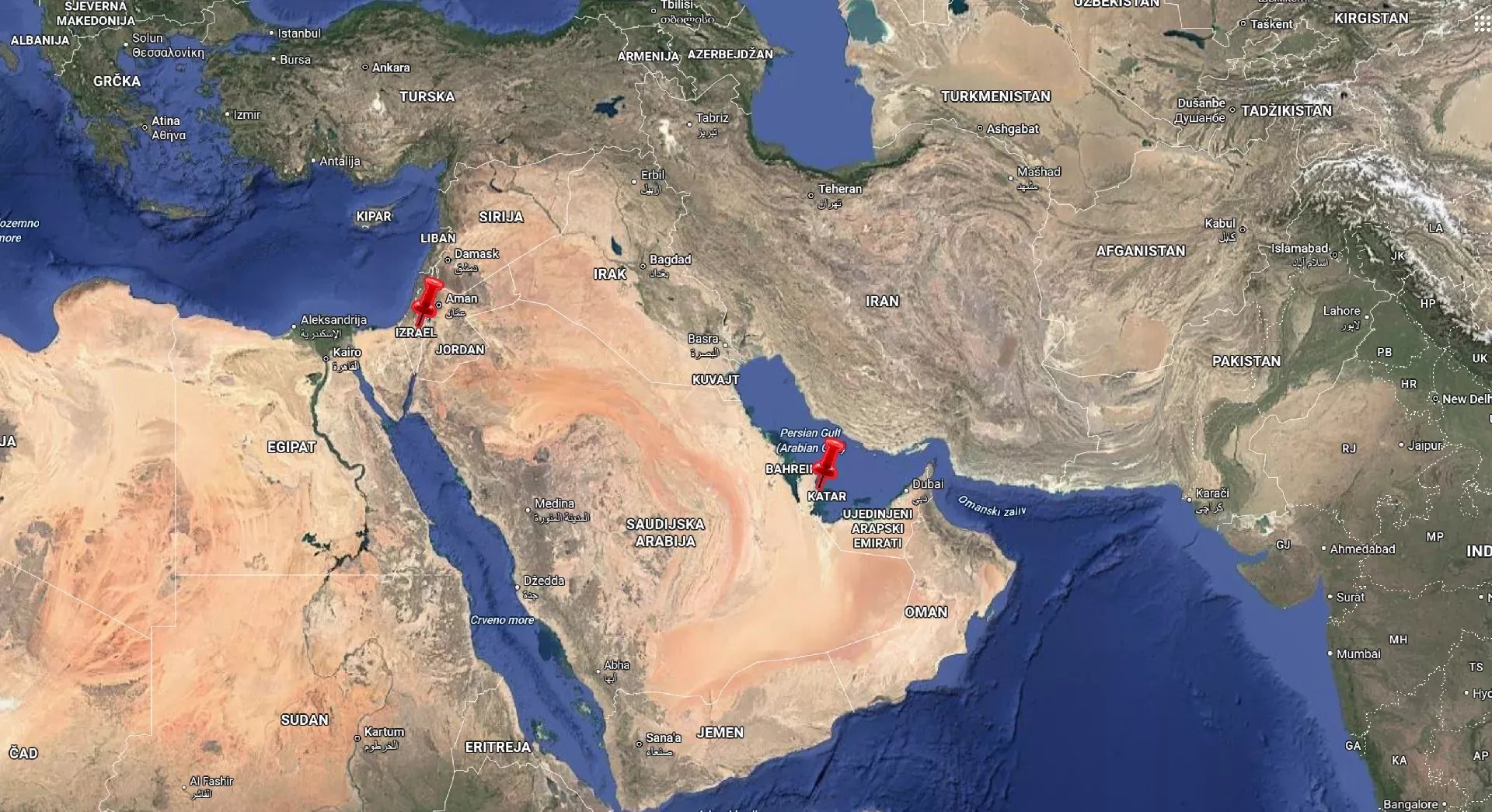
The attack did not sit well with the Arab states in the Persian Gulf. After Israel bombed Gaza, Tehran, Damascus, Beirut, Sana'a, and other places in addition to Doha, it is not difficult to conclude that other Arab cities are also within range and that Israeli Prime Minister Benjamin Netanyahu does not shy away from using force, and that the United States will support him in this.
US Ambassador to Israel Mike Huckabee reminded the Arabs last week of the situation: "Israel is our only true partner."
Riyadh's Response
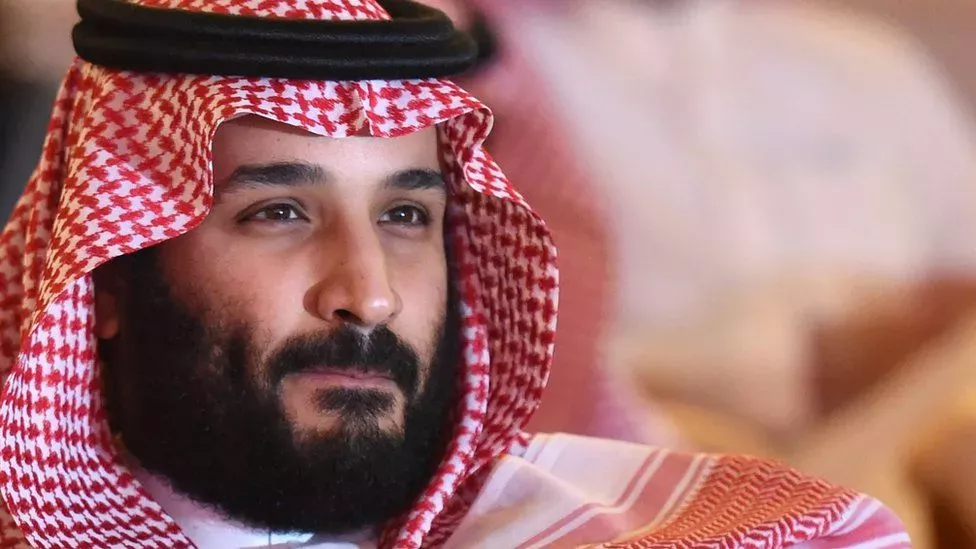
Saudi Arabia, with Prince Mohammed bin Salman, also known as MBS, is under double pressure since Hamas's attack on Israel. Arabs and Muslims around the world expected Riyadh to help civilians in the Gaza Strip and the West Bank, while the West pressured them to recognize Israel. Essentially, this disrupted MBS's plans to reform the country.
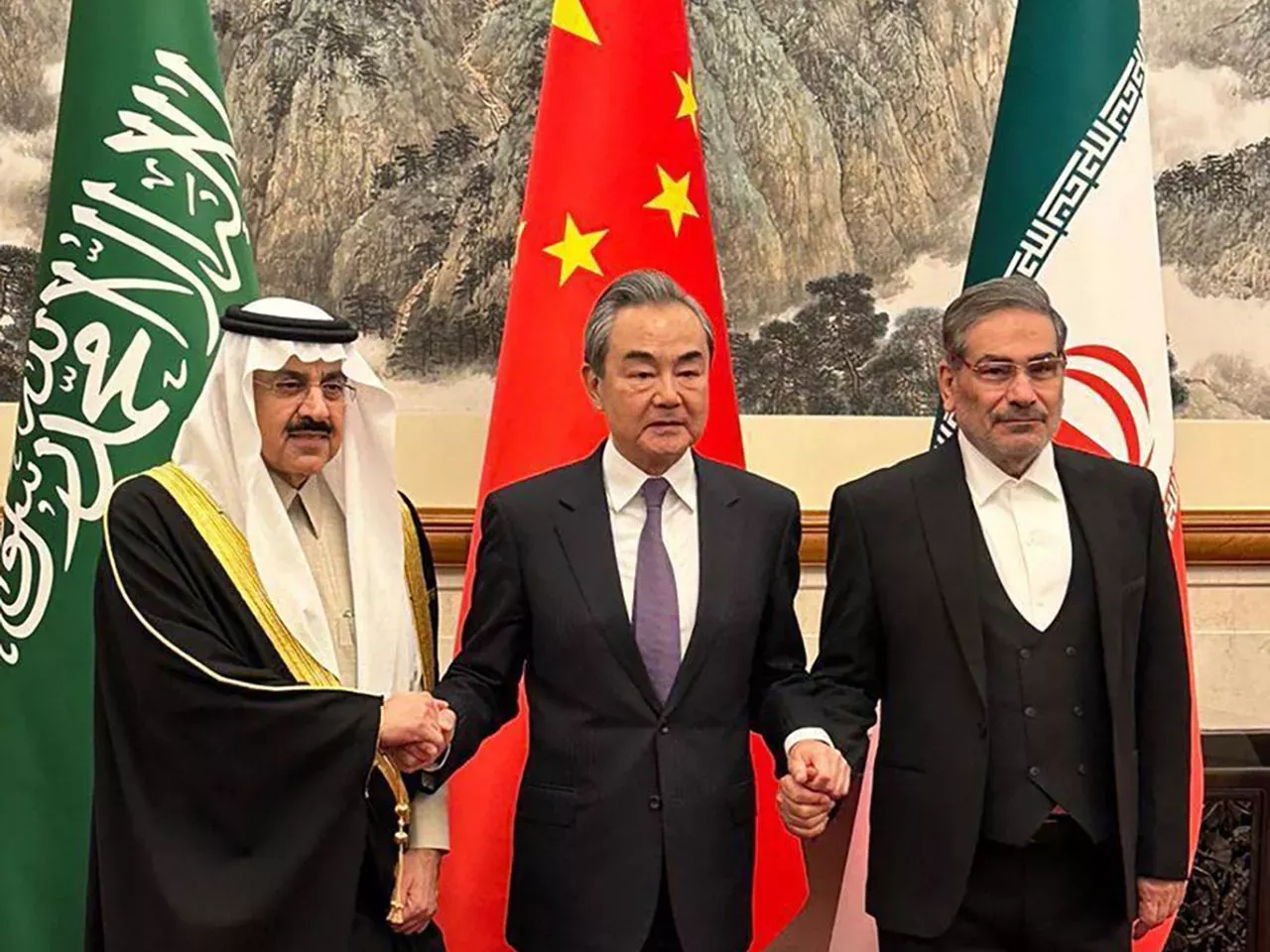
Part of those reforms included reconciliation in the region, which meant ending the war in Yemen and improving relations with Iran. That major victory for Chinese diplomacy threatened to disrupt the existing balance of power in the Middle East at the time, which did not please Israel and the United States.
However, after the events of the past twenty months, MBS realizes that his plan could be thwarted by a military attack, or even the assassination of the leader. Israel has carried out assassinations of Arab and Iranian leaders, and Lebanese Hezbollah allegedly hit Netanyahu's home with a drone.
Washington's unconditional support for Israel should be an alarm bell in the Arab world. Pledges of friendly relations, lucrative deals, and numerous US military bases across Arab countries are not enough for the Donald Trump administration to even take a neutral stance in the event of a clash between Israel and anyone in the region, on any basis.
Therefore, it was natural for Saudi Arabia to turn to Pakistan – a country with which they have excellent relations. Further tying Saudi Arabia to a nuclear power was only a matter of will, as good relations between the two countries already exist in almost all fields.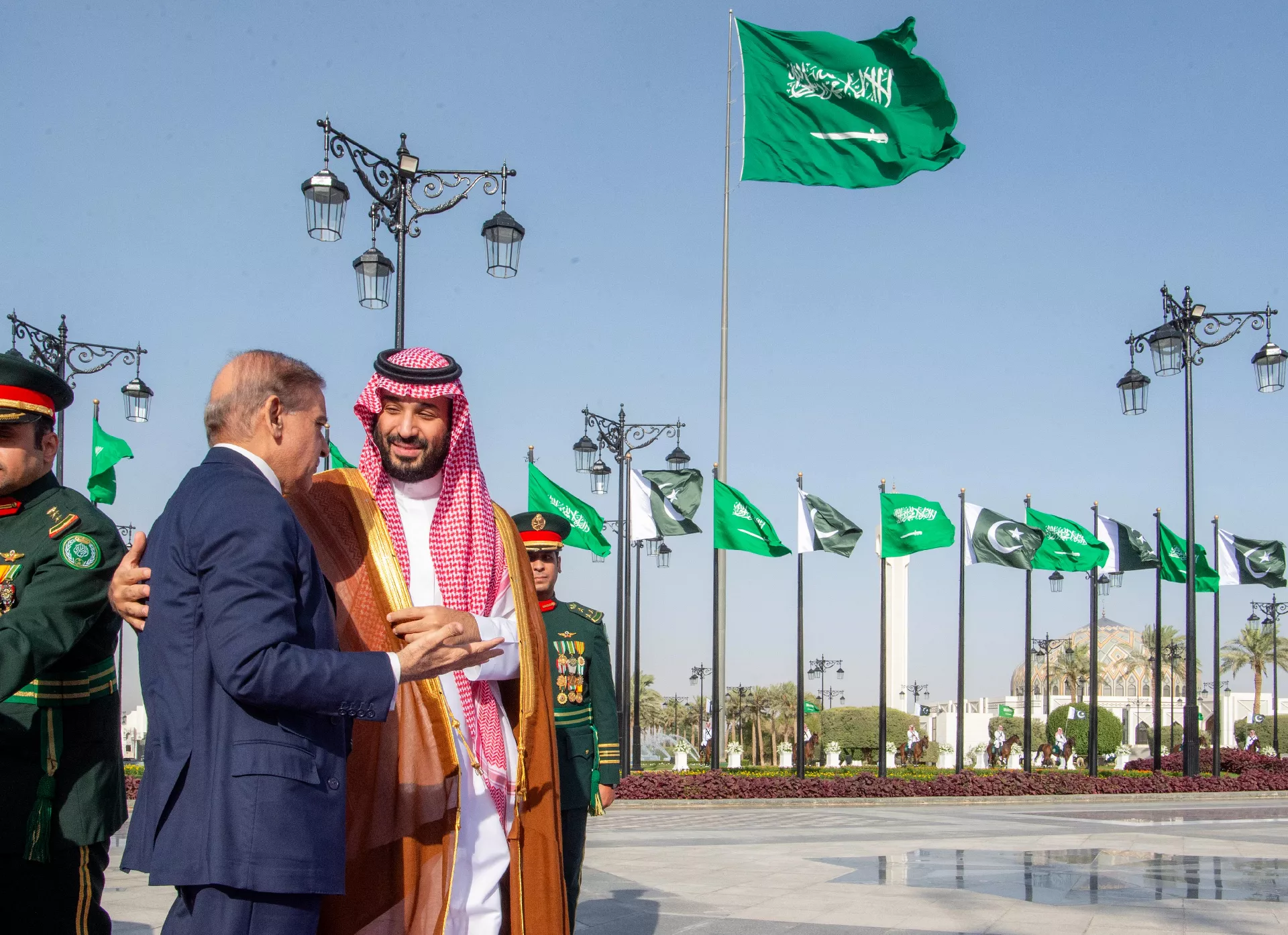
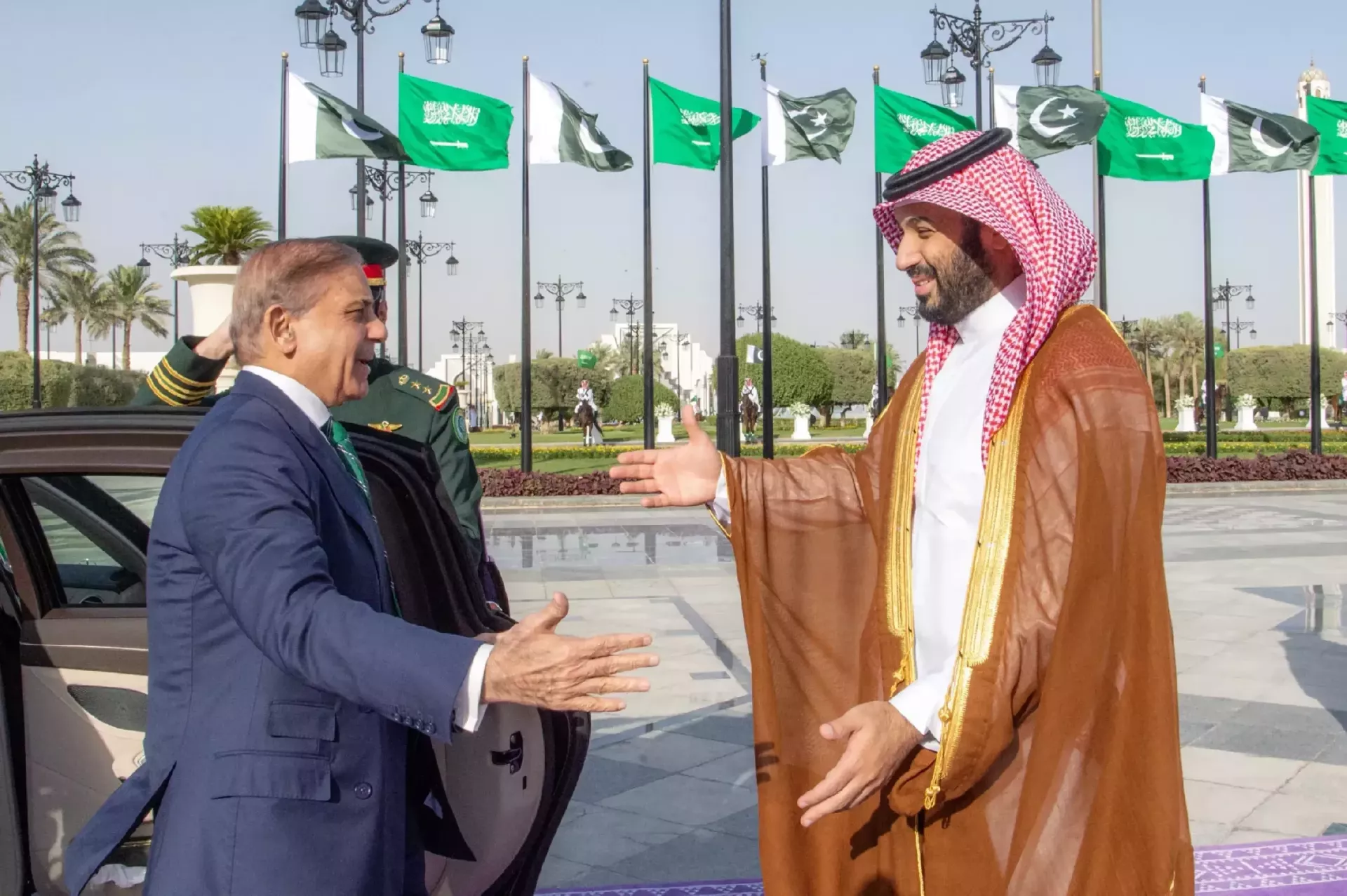
Mohammed bin Salman and Shehbaz Sharif in Riyadh
Mutual Defense
In the interpretation of a high-ranking Saudi official in a statement to Reuters, the agreement is "the culmination of years of discussions. This is not a response to specific countries or specific events, but the institutionalization of a long-standing and deep cooperation between our two countries."
This institutionalization of ties between the two countries means that they will defend each other in case of an attack by a third party. This was signed in Saudi Arabia by MBS and Pakistani Prime Minister Shehbaz Sharif. Officials said this means Pakistan would defend Saudi Arabia even with nuclear weapons.
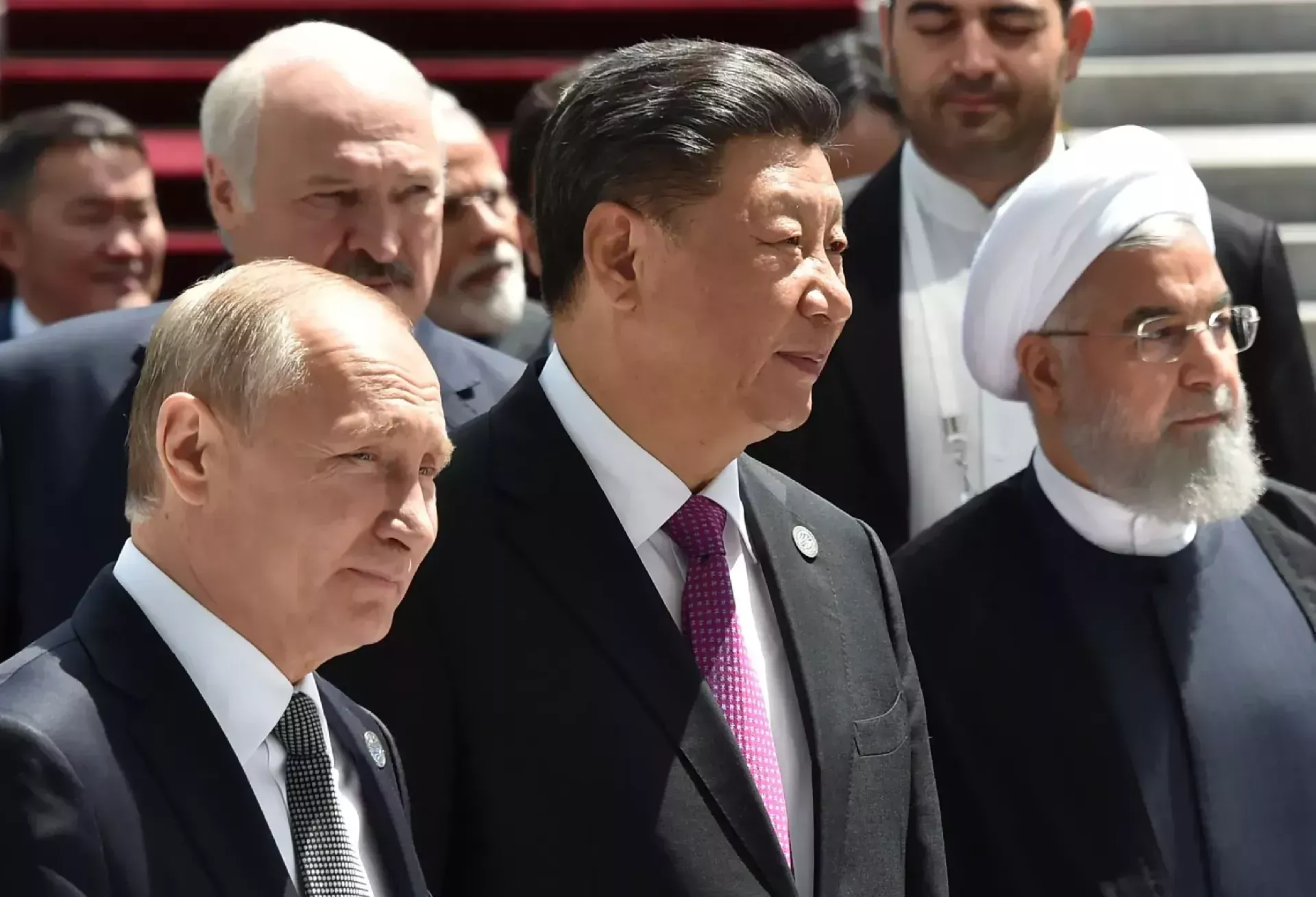
This agreement did not please the United States, as the signatories are US allies. Their connection in this way is a direct message to Washington that some now doubt their guarantees. Even worse news for Washington is that within these countries, there are those who seek further distancing from the United States. Opposition leader Imran Khan, arguably Pakistan's most popular politician, wants his country to connect with Russia and China.
Pakistan's concern for a Middle East dominated by Israel and the United States was also expressed during the Israeli-American attack on Iran. Official Islamabad did not hide its support for neighboring Iran at the time, and the media speculated that Tehran had received concrete assistance.
This complex geopolitical game of Pakistan is linked to the situation at its borders and consequently at home. Pakistan's rivalry with the most populous country in the world and nuclear power, India, a porous border with Afghanistan, and a difficult-to-control border with Iran, forces Islamabad to create friends and build stability wherever possible. American-Saudi interference in that part of the world, with the intention of defeating the USSR in Afghanistan and breaking the government in Tehran after 1979, led to some armed groups now being a threat to Islamabad.
Pakistan's vision for solving problems in the region was presented last week by Defense Minister Khawaja Asif in an interview, calling for the creation of an alliance of Muslim countries, modeled after NATO, which would be defensive. Asif also said that neighboring Afghanistan is an "enemy state" because the Taliban regime is arming groups operating in Pakistan.
Earlier, in one statement, Asif admitted that Pakistan is suffering the consequences from the 1980s when his country helped overthrow the USSR in Afghanistan and was supported by the United States in the 2001 attack. In a past interview, MBS, while consolidating power and justifying his positions to allies in Washington, said that the West encouraged radical Islam during the Cold War, which primarily refers to Afghanistan, and that he wants to change that.
Conflicts Are Not Over
The agreement between Pakistan and Saudi Arabia has encouraged many in the region. Some have suggested that other countries should join. Support comes for various reasons. It should be remembered that in June of this year, the Muslim Brotherhood sent a letter of support to Iranian Ayatollah Ali Khamenei, amid conflicts with Israel. Not so long ago, this organization and Iran were on opposite sides in the Syrian war. But both cases show that in the Middle East, often beneath the surface where only stable and long-standing rule is visible, various movements are boiling and plans are being hatched.
Washington is also aware of the Middle East, which is always on the verge of change. US Ambassador to Turkey, Trump's friend, and US President's Special Envoy for Syria, Tom Barrack, said this week that he does not believe in peace in the Middle East. "When we say peace, it's an illusion. There has never been peace in the Middle East. There will probably never be peace, because everyone is fighting for legitimacy."
Barrack's words have been spoken by many before. However, they come at a time when new alliances are being formed in the Middle East and wars are ongoing. Syria, under Ahmed Al-Sharaa, a former member of Al-Qaeda and ISIL, is preparing to move closer to Israel, after the two countries have had no relations for decades. Pakistan has pledged to defend Saudi Arabia with nuclear weapons, and Iran and (pro)Iranian forces in Lebanon and Yemen are preparing for a new round in the confrontation with the United States and Israel. Qatar, Jordan, and Iraq are not spared from instability, while Trump threatens the Taliban and demands that the US military return to Afghanistan. Palestinians continue to suffer.
All of this gives the agreement between Saudi Arabia and Pakistan additional importance, as it could be tested quickly. Almost everyone believes in new wars in the Middle East, and some hope that they will not be the next to have to use weapons. In Barrack's words, the Middle East remains between the "illusion" of peace and the struggle for its own survival and interests, and the events of the past twenty months show that no one is untouchable.
Komentari (0)
Prijavite se za komentiranje
PrijavaJos nema komentara. Budite prvi!
Minuta
Sve →Iz drugih kategorija

High Representative Not Elected: Germans, French and British Sabotaged Americans, New Attempt at End of June

ČOVIĆ WITHOUT MERCY: How Those Who Brought Ademović to Office Created a Political Hell for Him



Sunny Saturday, quite warm



Tragedy in Albanian resort: Two minors drown












