
By: Armin Sijamić
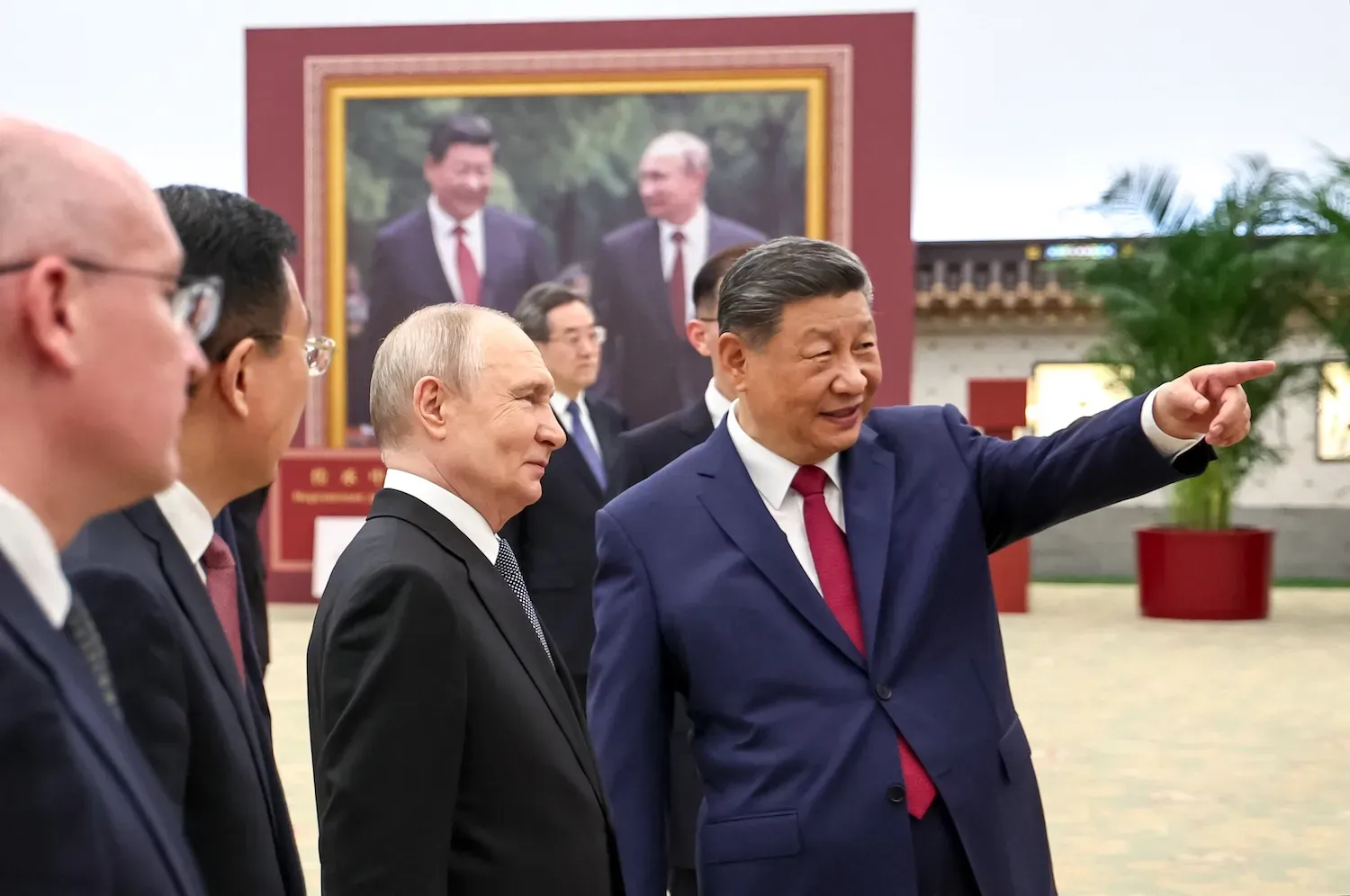
Russian President Vladimir Putin visited China on Tuesday and Wednesday. The reason for his latest visit to China was a meeting with President Xi Jinping and other Chinese officials.
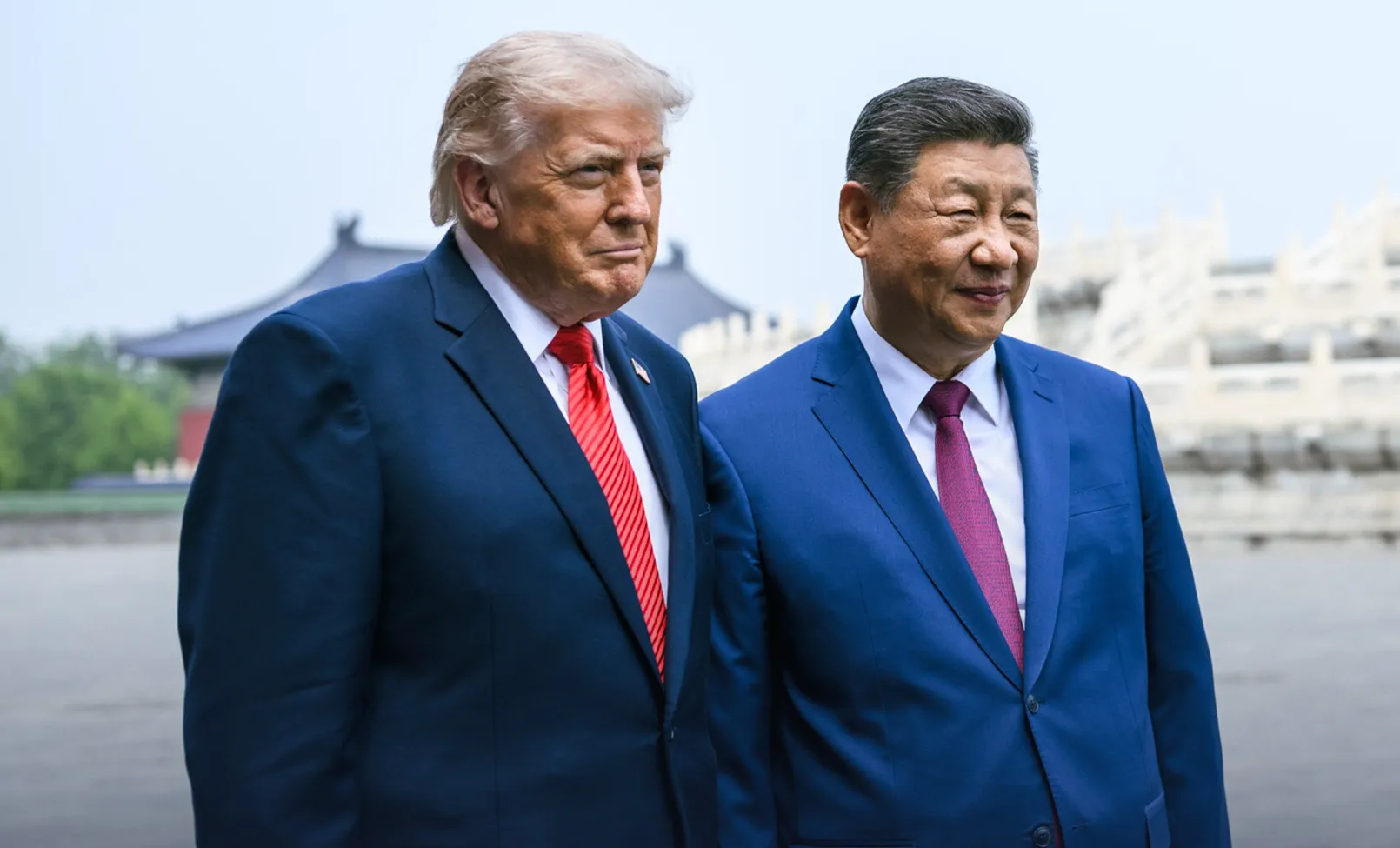
In the span of five days, Xi Jinping hosted U.S. President Donald Trump and Putin. Such a busy schedule for the Chinese president is a consequence of the postponement of the meeting with Trump, who delayed his visit to China due to the U.S.-Israeli war against Iran. Trump was supposed to come several weeks earlier, according to earlier plans.
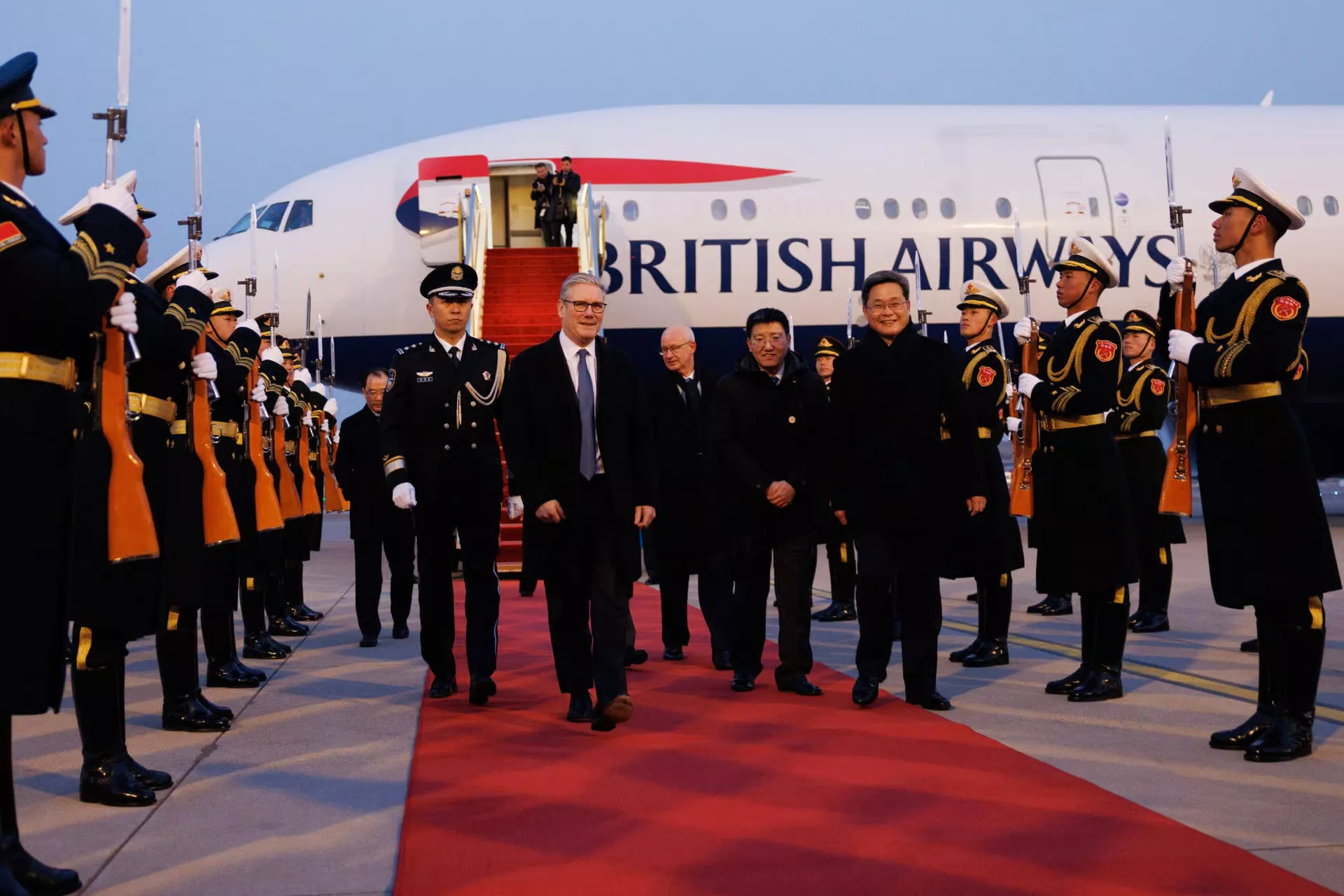
China has been an important destination for many this year. At the end of January, British and Canadian Prime Ministers Keir Starmer and Mark Carney visited, in early April their Spanish counterpart Pedro Sánchez Pérez-Castejón, and many others.
All these visits demonstrate China's strength and the growing prestige of its leader, Xi Jinping, who is positioning himself as a dialogue partner for both the West and what is termed the “global South.”
Putin's visit was timed to coincide with the 25th anniversary of the Treaty of Good-Neighborliness and Friendly Cooperation between China and Russia, which was extended with a new signature this week.
Putin's Visit
Although Putin is a wanted person internationally due to crimes in Ukraine, he received the highest level of reception in China. Some claim he received better treatment than Trump, as he spent more time with the Chinese leader, conversing over tea. Russian media particularly highlighted this detail, and Kremlin aide Yuri Ushakov called it “the most significant event of Putin's official visit, as such a friendly atmosphere is ideal for discussing sensitive issues.”
Reports from media in both countries, as well as a joint photo exhibition by TASS and Xinhua news agencies, Putin's meeting with engineer Peng Pai – a former student in Russia and a boy he met during a past visit to China, various agreements, and the fact that neither side highlighted problems in the relations between the two countries, also show that Putin was welcomed more warmly than Trump.
Putin's visit was qualitatively different from Trump's. Putin did not come for negotiations like Trump, but to confirm his commitment to Sino-Russian relations.
Putin is the first leader from Moscow to visit Beijing multiple times as the junior partner in Sino-Russian relations. This tendency for Beijing to assume the role of the stronger party in the China-Russia relationship could be observed earlier, and it has gained stable momentum following Russia's aggression against Ukraine and the beginning of Putin's diplomatic isolation in a large part of the world.
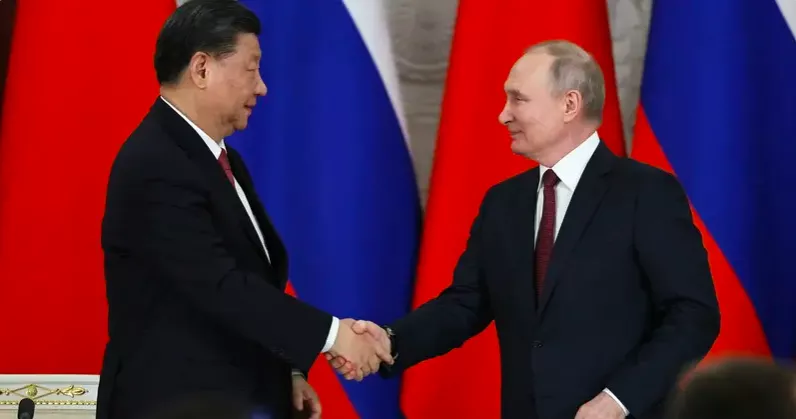
This success of Xi Jinping will be recorded in history, and this week's visit by Putin is another important Chinese victory. Some believed, although it was unlikely, that Trump would try to persuade Russia to change sides and turn towards cooperation with the West, a possibility that has been mentioned since he hosted Putin in Alaska.
According to classical geopolitical doctrine, Trump, as the leader of the world's largest power, should have sought a conflict between the second and third powers, namely China and Russia. Although India is not happy with the arrangement of being ranked behind Russia as a rising power, it is clear that Russia remains a geopolitical giant rich in resources and with nuclear weapons perhaps even superior to those of the United States, despite all of Putin's failures and defeats, from Ukraine, through Syria, to Latin America and other parts of the world.
China avoided that trap, and Putin's visit showed the course Russia will follow. Dozens of signed agreements and apparent unanimity on the world they wish to see are the main achievements of this summit. The Sino-Russian idea, nurtured since the collapse of the USSR, that the world should be multipolar, is gaining more supporters these days. China, with Russia's consent, is now the standard-bearer of this idea.
Evidence of this is the statement by the aforementioned Ushakov. Speaking about the geopolitical triangle involving Russia, the U.S., and China, he told the media that he knew nothing about the “spirit of Anchorage,” unlike the “spirit of Beijing,” adding: “You can not only feel it, but also sense it, in my opinion.”
Ushakov directed this statement to Washington and Beijing, as well as to some (pro-)Russian circles who believe that an agreement was reached in Alaska between Trump and Putin, and that the two countries are coordinating their political actions in the “spirit of Anchorage.” The statement by Putin's aide suggests that the Kremlin is closer to Beijing than to Washington, and to Xi Jinping than to Donald Trump.
Declaration of a New World
China and Russia signed various agreements, and the two presidents made statements that demonstrate the closeness of their policies. For example, they agreed to continue working on trade in national currencies, ensure the complementarity of the GLONASS and Beidou navigation systems, and jointly develop artificial intelligence.
Furthermore, political stances were expressed, such as opposing the use of artificial intelligence by some countries “to maintain dominant positions,” condemning unilateral sanctions and tariffs, expressing concern about the “militarization” of the U.S. and its allies, particularly Japan, and opposing NATO expansion into Asia, nuclear tests, and the proliferation of such weapons.
They called for respect for the United Nations and international law, but not an end to the attacks on Ukraine, and stated that immunity from prosecution for heads of state is a guarantee of stable international relations. They condemned actions in Latin America and the Caribbean that violate the UN Charter, which is a clear allusion to U.S. policy in that part of the world. They also condemned the U.S.-Israeli attack on Iran, calling it illegal and discriminatory towards developing countries under the guise of a “green agenda.”
Some of the positions seem a bit strange, such as calling on the new Syrian government, led by a former Al-Qaeda leader, to fight terrorism.
This is not an exhaustive list of demands, declarations, and appeals. It seems that Xi and Putin wanted to highlight as many policies as possible on which they agree, although the primary goal of the Russian side was to reach an agreement on the “Power of Siberia 2” gas pipeline, which would bring even more Russian energy resources to China. A final agreement on this has not yet been reached, and Russian officials have explained this by technical reasons. Despite this, Putin stated at the very beginning of the summit that Russia remains a reliable supplier of various energy resources to China, which seemed to be Moscow's only bargaining chip in the talks in Beijing.
Among all the agreements and declarations, one document was particularly highlighted by the Russian and Chinese sides, and it builds upon similar documents previously signed by these two states. This is the Sino-Russian vision for the future of the world, packaged in attractive phrases about equality and mutual benefit, in a world that should be multipolar.
China-Russia relations are “rightly considered a model for a new type of relationship between great powers,” Xi said, and Putin was likely pleased to hear this and share it with the Russian and global public.
However, the situation is different. It seems that China is taking on the role of leader in the multipolar world envisioned in Moscow and Beijing, in a manner similar to how the United States operates in the West with the aim of creating a unipolar world. Evidence of this is that, apart from energy resources, Putin could bring almost nothing else to the negotiating table, along with an appeal for respect for international law, which he has violated for decades in Ukraine and elsewhere, while seeking immunity from prosecution. For the victims falling before the proponents of a unipolar and multipolar world, this conceptual difference is likely not very significant, a point that China itself has emphasized for decades, condemning wars and conflicts around the world.
Ultimately, this summit was another victory for Xi Jinping, and Russia has once again positioned itself among those seeking ways to remain close to China and rely on its economy. It is evident that this is becoming China's trump card, just as Trump has been doing for months for different reasons and with different countries.
Komentari (0)
Prijavite se za komentiranje
PrijavaJos nema komentara. Budite prvi!
Minuta
Sve →Iz drugih kategorija

High Representative Not Elected: Germans, French and British Against Americans, New Attempt at End of June

ČOVIĆ WITHOUT MERCY: How Those Who Brought Ademović to Office Created a Political Hell for Him



Sunny Saturday, quite warm



Tragedy in Albanian resort: Two minors drown












