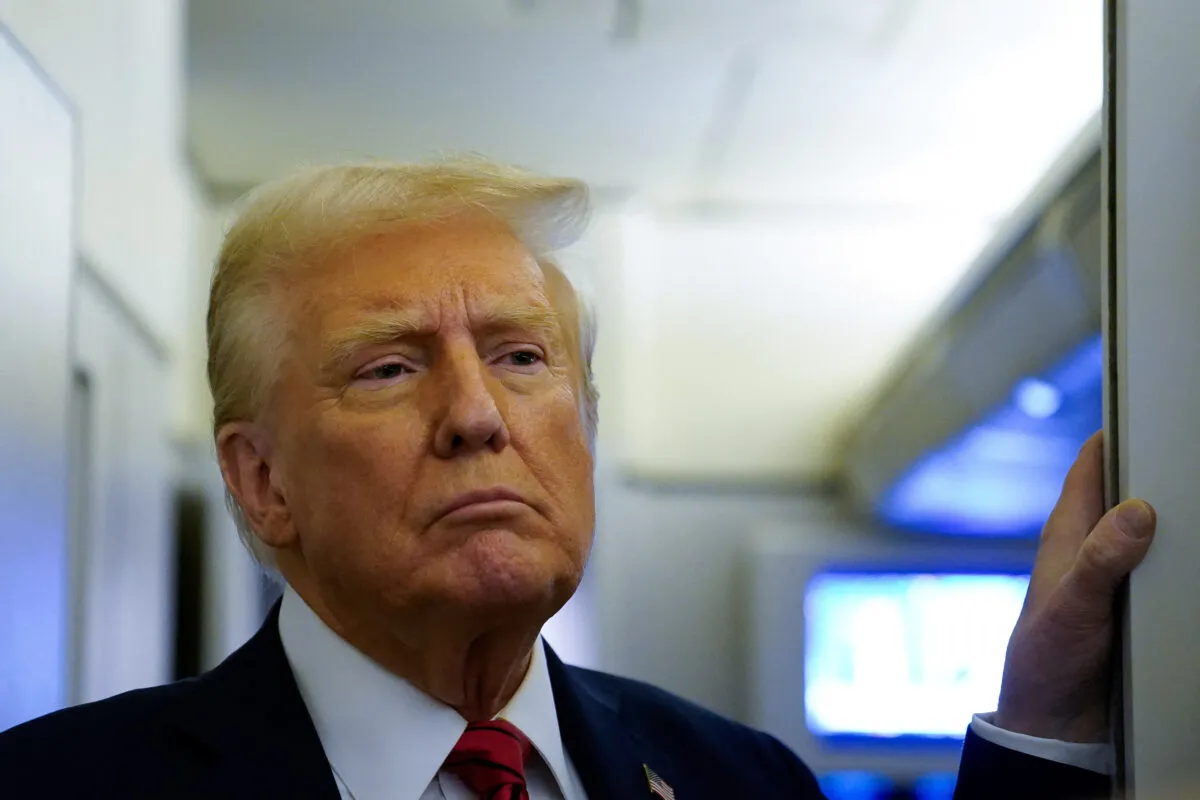

By: Armin Sijamić
The incredible success of the TikTok application, owned by the Chinese company ByteDance headquartered in Singapore, has impacted all segments of American society. In just a few months, the application has been discussed in the White House, Congress, intelligence agencies, universities, media, and elsewhere. This is not just a current political event where Washington disciplines China. It is a battle for influence over Americans of all generations.
In the United States, Joseph McCarthy is remembered for persecuting people based on their political affiliation, or suspicion of having sympathies towards communism. This senator from Wisconsin, at the beginning of the Cold War, persecuted Americans under the accusation that they were communists, spies for the USSR, and that they were undermining the state. That persecution of people, like any other, has been remembered in social sciences and political practice through the term "McCarthyism," after the senator's surname. Most of the accusations he made later proved to be false, so the political and social community of the US distanced itself from him and he was denounced as a villain.
Unreal Popularity
About seventy years later, similar accusations are being leveled against one company, or rather its application. However, this time the accusations are founded and real, and previous practices from China and other countries confirm this. US authorities have begun to be bothered by the TikTok application, which Washington believes "collects data" about users and sends it to China, which could later be misused, even compromising US security.
What is often not said publicly is that whoever controls the application has the ability to shape trends, opinions, and attitudes of children, youth, and adults. This especially applies to the US, where two years ago TikTok had more users than YouTube, and this year adult Americans (aged 25 to 54) spend only six minutes less on TikTok compared to Netflix. This group, in the most productive age, spends 56 minutes daily on TikTok, while those aged 18 to 24 watch the "equivalent of a feature-length comedy" on the application, according to a report by Insider Intelligence. At the same time, millennials and Generation X are spending less time in front of the TV and are likely watching programs alongside TikTok, the report states. American media conclude that TikTok has become the most popular social network in the US among young people.
In other words, the Chinese have built an infrastructure through which they can place information on Americans' devices, i.e., they have gained the opportunity to manage the feelings, opinions, and behavior of tens of millions of people. Many are children and teenagers, and in the future, some of them could manage the state or large companies. Therefore, the response of the American political and intelligence community, which wants to ban TikTok, is not surprising, just as China has restricted its citizens' use of internet search engines, numerous websites, social networks, and blocked access to information sources controlled by "hostile" organizations and states. According to Statista data, in January this year, TikTok had 113 million users in the US, making it first in the world. Other sources say that 150 million Americans use TikTok.
The American Response
Official Washington has been dealing with the TikTok issue for years. In mid-2020, Donald Trump banned TikTok, along with the WeChat application, which is popular in China and the Chinese diaspora, but US courts challenged this. Even then, it was clear that the US and China were seriously clashing in the field of information provision, internet infrastructure (5G network, for example), and chip production. Trump imposed sanctions on Chinese companies to weaken them, i.e., to maintain the American advantage in this field. The threat of China beginning to dominate in these areas is a nightmare for Washington, and it can be said that in this regard, Beijing has achieved more in a few years than Moscow did in several decades of the Cold War. Therefore, it is no wonder that the US sees only China as a global challenger and global power.
In recent months, US congressmen have been discussing banning TikTok, or selling it to an American owner. According to the Wall Street Journal, the Biden administration offered the Chinese to give up ownership, otherwise the application will be banned in the US. The White House did not comment on the WSJ's claims. The Deterring America's Technological Adversaries Act (DATA) has already been adopted by the House Foreign Affairs Committee under Republican leadership, but Democrats in the House and Senate must also weigh in.
About ten days ago, TikTok CEO Shou Zi Chew appeared before US lawmakers, facing sharp attacks from both Republicans and Democrats. TikTok Executive Director Vanessa Pappas condemned his hearing, which she said was "rooted in xenophobia." It seems to be becoming clear to everyone that TikTok could face a ban in the US. The ban will depend on the adoption of a law called the RESTRICT Act, a bipartisan law introduced in the Senate last month, which would give the US Department of Commerce the authority to ban foreign technology that threatens national security.
Small groups of people opposing the TikTok ban also appeared on Capitol Hill. Some claimed their businesses depend on using TikTok, while others said TikTok does nothing that other social networks don't do. However, it is difficult to expect politics to hear users' arguments, as it is, after all, about US "national security."
Battle for the Soul of Americans
Things have gone so far that in the last five months, Christopher Wray, the director of the FBI, has publicly spoken about TikTok at least twice. In early December, at the University of Michigan, he said that through TikTok, the Chinese government has the ability to control algorithms, giving them the ability to "manipulate content" and influence users, as well as collect data about them. Wray also spoke on the same topic last month during a hearing in Congress. He then said that China could use TikTok to create divisions in society and spread disinformation, which likely sounded to many like the accusation that Russia interfered in US elections and helped Trump win. At the hearing, Wray described TikTok as a "tool under the control of the Chinese government," which was supported by other intelligence agency directors.
TikTok is trying to defend itself against the accusations leveled against it, but it is becoming increasingly difficult, despite announcements of opening data centers in Ireland and Norway where they would store European users' data. The company announced that in the European Union, TikTok is used by 125 million people monthly, and together with those in the United Kingdom and Switzerland, about 150 million. Three years ago, India banned the application, and in recent weeks, Canada, the US, the EU, New Zealand, Denmark, Belgium, and yesterday Australia have done so on their officials' devices. In early March, Turkey fined TikTok for not taking sufficient measures to protect users' personal data.
TikTok's success is not the only one achieved by popular Chinese applications. Besides TikTok, three of the ten most popular applications in the US are owned by the Chinese: CapCut – an application for editing video materials, Shein – an application for fashion content and sales, and Temu, which in one year surpassed Walmart and Amazon in the number of application downloads and is intended for purchasing cheap goods directly from Chinese manufacturers.
The examples of the three mentioned applications show that the Chinese very quickly learned what Americans want, which is a prerequisite for spreading "soft power" and placing Chinese narratives. The ease with which the Chinese did this is astonishing and surprised even the ever-vigilant American officials who are trying to react now that Chinese applications have become an integral part of many Americans' lives. At the same time, China has banned all content for its population that opposes the official policy of that state and prevented the US from directly influencing local social processes through media content. Therefore, it is expected that the US will ban TikTok if it remains in Chinese ownership, despite resistance from the company, users, and China itself.
However, it is still unclear how the US, or countries in Europe and around the world, intend to implement this. Such plans will certainly be opposed in courts by the company itself or users of the application, as was the case during the Trump administration. But regardless, TikTok and other Chinese applications will be used in other parts of the world, which will give China additional tools to spread its influence, and not just through applications. This shows that China is developing in a way that many could not have imagined just a decade ago.
Komentari (0)
Prijavite se za komentiranje
PrijavaJos nema komentara. Budite prvi!
Minuta
Sve →Iz drugih kategorija

High Representative Not Elected: Germans, French and British Sabotaged Americans, New Attempt at End of June
ČOVIĆ WITHOUT MERCY: How Those Who Brought Ademović to Office Created a Political Hell for Him



Sunny Saturday, quite warm


Tragedy in Albanian resort: Two minors drown