
Written by: Armin Sijamić
The second Russia-Africa Summit was held in St. Petersburg on July 27 and 28. Vladimir Putin, a man on an international wanted list, hosted numerous heads of state and government and demonstrated that Russia is seriously counting on Africa in its confrontation with the West.
If there is a continent where most countries view Russian policy positively, it is Africa. Many African states remember Moscow, or the USSR, as a power that helped them drive out colonizers. The memory of such Moscow policy has not faded.
This was acknowledged in late February by U.S. Secretary of State Antony Blinken, who said that South Africa views Russia positively because the Kremlin supported forces fighting against apartheid, while Washington's policy, which "sympathized" with the regime, is remembered negatively. Blinken's statement indicates that some African states are rare places where Russian "soft power" has an advantage over American.
The current problem for the West is the post-colonial legacy and the attitude towards states that gained independence, the overthrow and liquidation of Muammar Gaddafi, and in recent decades, a lack of interest in maintaining good relations with many African states.
In recent decades, the West has shown interest in only a few African states. This opened space for China to establish excellent ties (political and economic) with numerous countries, and Russia strengthened its position, which had been shaken by the collapse of the USSR. Furthermore, the influence of Turkey, Saudi Arabia, the United Arab Emirates, Iran, India, and others is growing in Africa.
Putin's Multipolar World
The administration of Joseph Biden, after years of Washington's passivity in Africa, began creating policies to attract African states. Biden sent his wife Jill and various delegations to Africa. He hosted African leaders at a summit similar to the one in Russia.
The speech Putin delivered to his guests from Africa was perhaps the best summary of the summit's events, or the best description of what Russia seeks from African states and what it offers them in return. He stated that Russia and Africa want to fight for a "multipolar world order," against "neocolonialism," and against "illegal sanctions."
Such formulations found a place in the joint declaration after the summit, which was attended by 49 delegations, including 17 heads of state, stating that the signatories advocate for "the establishment of a fairer, more balanced, and sustainable multipolar world order, with resolute opposition to any form of international conflict on the African continent."
Putin promised African states help in obtaining "compensation for the economic and humanitarian damage caused to them by the colonial policies of the West" and that he would advocate for the return of stolen cultural property to Africa. He also promised investments, cooperation, technology and knowledge transfer, the fight against terrorism, nuclear energy, port construction, and opening the Russian market to African products, saying that Moscow is working to establish a corridor to Russia via the Persian Gulf and Iran.
The speech irresistibly resembled the appearances of Western politicians who offered similar things to Africa, with the difference that Putin did not mention human rights.
He promised that Russia would provide free grain to six African states and offered experts and technologies to develop food production in Africa. Earlier, he gifted his presidential helicopter to Zimbabwean President Emmerson Mnangagwa. These two gestures show the condition of many African states.
Russian Influence in Africa
The second Russia-Africa Summit came at the worst possible time for many African states, especially those seeking good relations with the West. African states have largely refused to choose sides in the war between Ukraine and Russia, as well as to impose sanctions on Moscow. The first summit was held in 2019 with the presence of 45 heads of state and in a different atmosphere.
"Russia's attention to Africa is constantly growing," Putin said at the summit, as evidenced by the visits of Foreign Minister Sergey Lavrov, who has been on two diplomatic tours of the poorest continent since January. Russia's goal is to break the diplomatic isolation that the West has tried to impose, and in Africa, they have been quite successful in this.
Last summer, Russia managed to break up the "G5 Sahel" group, which consisted of Mauritania, Burkina Faso, Chad, Niger, and Mali, and was held together by NATO. Mali was the first to leave the group, expelling French troops and turning to Russia. Recently, Mali abolished French as an official language and declared 13 local languages as official. French is now only a "working" language.
Military coups have taken place in Mali, Burkina Faso, and recently in Niger. Ukrainian officials say Russia is behind them. Mali and Burkina Faso are now pro-Russian oriented, and a few days ago, the two countries announced they would consider it a "declaration of war" if anyone sends troops to Niger. In Niger, media reported that Russian flags and messages telling France to leave the country appeared on the streets. The overthrow of Nigerien President Mohamed Bazoum is a major blow to the West. In that region, Bazoum was the main pillar of the West.
Mercenaries from the Wagner Group, which Putin admitted are state-funded, were present, or still are, in several countries. Libya, Mali, the Central African Republic, Sudan, and Mozambique are states that have witnessed various Wagner operations, from classic combat operations to guarding diamond and gold mines.
In addition, Russia is traditionally present in Africa through arms exports. The Swedish institute SIPRI announced in March that 12% of Russian arms exports go to Africa. Some other estimates say this export is much higher, even 30 to 40 percent. Numerous African countries use Russian weapons. Some because they cannot afford others, and some by their own choice. One of them is Algeria, with which Russia has excellent relations, followed by Egypt, Angola, Nigeria...
In addition to free grain for poor countries, Russia recently appeared in Africa with an offer to build small floating nuclear power plants, with potential users being Nigeria and Rwanda.
A Different Africa
This Russian approach to Africa shows that Moscow is seriously counting on this part of the world, even though the largest country in the world is an economic dwarf compared to the United States and China. But Moscow, apparently, also offers different services, counting on Africa's dissatisfaction with Western policy and the preoccupation of the old colonial powers.
Since the army in Niger arrested Bazoum, some claim that Russia, through its policy in Africa, is causing instability and overthrowing regimes, sowing unrest on Europe's borders. This thesis is interesting in many ways, especially if viewed in the context of Chinese policy. Namely, Beijing buys the favor of African states with money and investments, and some eventually become Chinese debtors.
Regardless of whether these accusations of overthrowing African regimes are accurate, if Russia wants to be a great power, it must be present in Africa. This continent, along with Asia, represents the place of future development of the world economy, given its enormous resources and large young population. Some in Africa are becoming aware of their growing importance and want to exploit it. They could find themselves in a situation where they choose between the West, Russia, China, Arab states, India, and others.
Kremlin spokesman Dmitry Peskov was satisfied with last week's summit. He blamed the weaker turnout of leaders, compared to the previous one, on "the USA, France, and other states" for "blatant interference" and "pressure" on African states.
To what extent African leaders succumbed to pressure, and how many decided to seek their partners elsewhere, is not known to the public. However, the very turnout at the summit of a man on an international wanted list shows that at least some states have chosen to pursue a policy that does not only listen to the West, but follows its own interests while war ravages a European state - Ukraine.
Komentari (0)
Prijavite se za komentiranje
PrijavaJos nema komentara. Budite prvi!
Minuta
Sve →Iz drugih kategorija
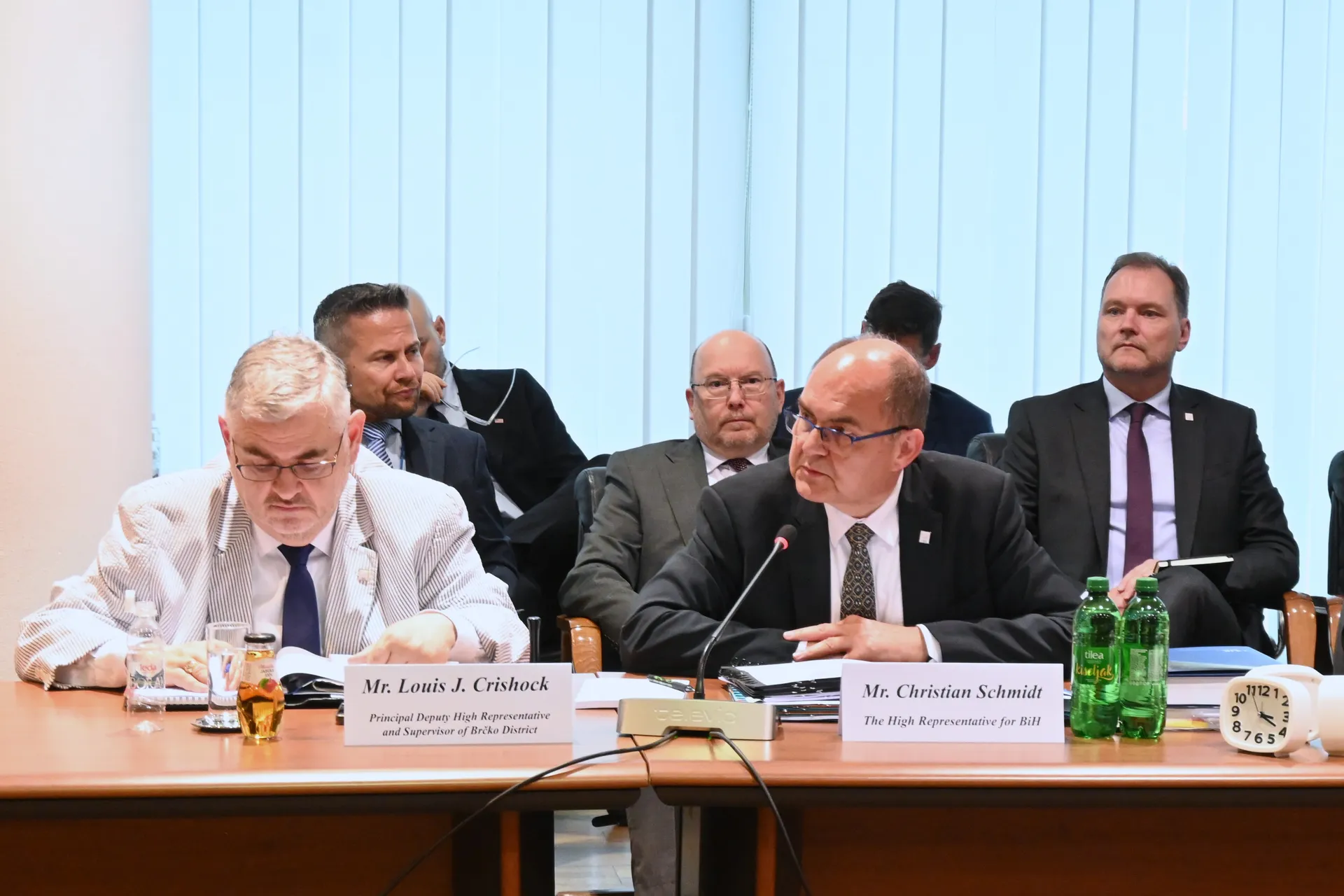
High Representative Not Elected: Germans, French and British Sabotaged Americans, New Attempt at End of June
ČOVIĆ WITHOUT MERCY: How Those Who Brought Ademović to Office Created a Political Hell for Him
Sunny Saturday, quite warm
Tragedy in Albanian resort: Two minors drown