
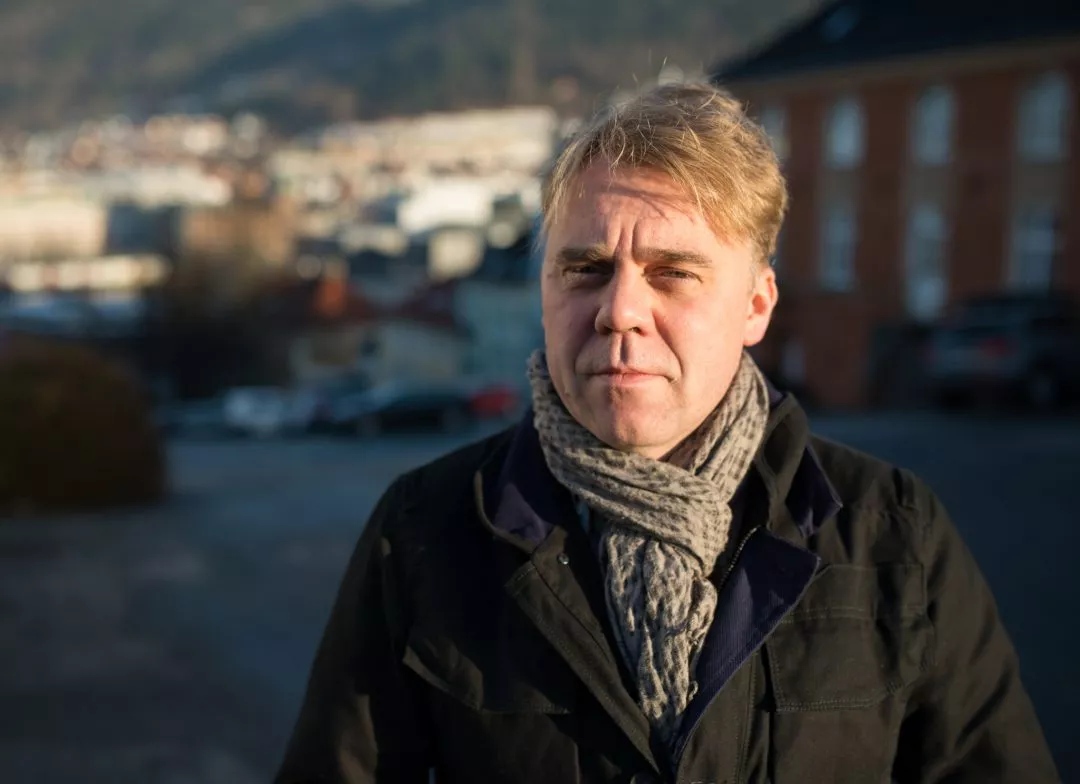
OSLO, (Patria) - Writer and journalist for Norwegian TV2 Øystein Bogen, in an interview with the Norwegian portal Aldrimer.no, talks about his new book in which he describes a systematic and extensive struggle in which Russia is undermining Western democracy, reports the Patria agency in a text translated from Norwegian to Bosnian.
His book is titled "Russia's Secret War Against the West." In it, writer and journalist Øystein Bogen explains how the Russian regime systematically undermines Western democracy and how it carries out a series of serious attacks. The situation is much more serious than during the Cold War, Bogen explains.
They have had several spectacular victories, especially the manipulation of elections in the USA. They succeeded in getting what they wanted then. An investigation is underway into possible manipulation related to the decision on Brexit, and finally, they must assess the nerve agent attacks in the NATO country of Great Britain. The way I see it, the provocative forces in Russia have managed to get away with it without being fully exposed, Bogen tells Aldrimer.no.
An expert on Russia and Russian affairs, Bogen has no doubt that Russia has carried out numerous attacks on Western countries over a long period. In his new book, he explains some situations that could be more than serious for Norway and other NATO countries.
- I call it Russia's secret war against the West. It is an extensive and systematic effort to break trust in these countries, but also to change the policies in these countries in a way that suits Russia.
How extensive is it?
- My research indicates that it has gained significant momentum. And that it is being waged against at least 20 Western European countries - says Bogen.
It is led directly from the top
In his book, among other things, he states that these forces, connected to the old Soviet intelligence services, have gained a significant amount of power in Russia. Vladimir Putin himself has a background in the KGB (now FSB), and also in understanding reality, creating an enemy image, and other methods possessed by many in the Russian leadership.
Today's attack on the West must be understood from the old Soviet desire to undermine and divide the West. Especially the NATO alliance.
But there are two significant differences. While during the Soviet era it was very easy to see what was an attempt at subversion and what was propaganda, today it is much harder to distinguish. Another thing is that during the Cold War, the "rules of the game" were well known. Today, much of that is gone, and today the stability that arises when two superpowers compete against each other is missing, which is dangerous, concludes Bogen.
Intelligence services have been given a free hand. In my opinion, we risk reaching a situation where Article 5 of the NATO treaty is invoked if Russia goes too far. This is a much more dangerous situation now than during the Cold War.
To what extent is it led from the top
- I think many things are led from the top. The most serious attacks are undoubtedly directly linked to the state leadership. But there are also things that indicate that an atmosphere has been created where subordinates in the hierarchy, such as in intelligence services, can carry out independent attempts at similar things. That is what is most chilling, because at lower levels there is a lower level of understanding of things that can be terribly dangerous and disastrous, says Bogen.
Attack on Norway
Just now, there was a nerve agent attack on former spy Sergei Skripal and his daughter. Along with the well-known involvement in the US elections, it shows how there was an attempt to manipulate German and French elections, and how many cases of propaganda and hacker attacks bear a Russian signature. Norway has also been affected. An example of this is the 2016 attack on the Labour Party, UD, PST, and others. It is little known that the oil industry and the Nobel Prize committee were also targeted.
Serious situation in Sweden
The situation in Sweden can be described as even more serious. The country is exposed to an extensive campaign of lies and propaganda. Equally serious are some physical actions resembling typical sabotage, carried out with the intention of training attacks on communications and infrastructure in the country. One incident was so serious that the country sent an alarm letter to NATO.
- Throughout 2015 and 2016, Sweden experienced a series of serious computer attacks and sabotage against major infrastructure, which many fear were orchestrated from the Kremlin. Among the facilities attacked was the Vattenfall headquarters, which deals with nuclear production. At the same time, the radar system of the Swedish Air Force was attacked. All air traffic from Stockholm and Gothenburg was delayed by at least an hour, as a solar storm allegedly disrupted the radar systems. However, many experts have pointed out that there were no serious solar storms at the time.
As early as 2008, I was on national television saying that these attacks would become more frequent. So in a way, none of this is new. The will is there. But the habit of this recurring is somewhat surprising, says Bogen.
We must show seriousness
He also points to dramatic cases in Finland and the Baltics. What is central to Bogen's understanding of all this is that all these events must be viewed as part of Russia's military-strategic doctrine regarding hybrid warfare. The so-called Gerasimov Doctrine (named after Valery Gerasimov) is based on creating great pressure, instability, and undermining the popular machinery and democracy in a country. In other words, the Russians aim to put great pressure on states, even their neighboring countries.
Bogen states without any hesitation that this type of warfare has taken its toll. Now, he says, the Norwegian authorities must take it seriously and speak openly about the things that are happening.
Great Britain has been at the forefront of exposing these hybrid attacks. Norwegian politicians, on the other hand, have been silent. But one must comment on and condemn such attacks. We also need to choose a unified communication strategy. If we don't, we will find ourselves being warned and condemned by NATO. This is a double communication that can confuse both us and Russia.
What do you think about the attention these cases are attracting?
- Often when I travel around the country and give lectures on this topic, I notice that public awareness is not very developed in this regard. One explanation is that due to today's mass media, it is difficult to grasp the full picture, or perhaps our authorities should take more responsibility for informing the public. Until February 2017, Norway did very little to inform the public about what Russians are actually doing, for example, regarding cyber attacks on Norway.
But have you noticed any improvement in public awareness?
- It's a little better now. After all, I don't want people to become Russophobic, but we must know that in some matters, our neighbors do not wish us well.
 Cover of Bogen's book
The US in a special position
The book also describes extensive attacks and attempts to sabotage elections in Germany and France. Where Russia approached certain parties to achieve a higher goal.
But Bogen has no doubt that interference in the US presidential elections is the most serious attack to date.
- What happened in the US is a special situation. There is no doubt about that. But it is very frightening when one sees an attack like the one that happened in England. Then one can say without any problem that a weapon of mass destruction has been used on British territory for the second time in 12 years. Alexander Litvinenko was poisoned with a very dangerous radioactive isotope, produced somewhere in Russia. And again, we see the same thing. A nerve agent that poisoned two people, also produced somewhere in Russia. It's like a loaded gun, and it seems the Russians want to show it off. That is, of course, frightening.
Does what the Russians are doing have any effect?
- Yes and no. It has an effect because they have had several major victories, especially when it comes to interfering in US elections. They achieved what they wanted there. In Trump, they got a bigger friend than they would have in Clinton. Moreover, they managed to create a chaotic situation where a newly elected administration does not want to engage in foreign policy. The impact on other smaller NATO countries is even greater. They now know that they must be especially careful, because if this is done to the US, it will certainly be done to them.
But what about those higher goals. Are they lucky with the leadership of Russian foreign policy?
- No, they certainly are not. They are destroying global friendships, and are increasingly exposed to security and economic policies than they otherwise would be. But we must remember that internal politics is something they deal with a lot, which forces them to do what they do. In the long run, I am sure that the biggest losers will be Russia and the Russian people.
Massive disinformation
After the Skripal case, Bogen noticed that a massive disinformation campaign is being waged by the Russian side. The state has presented at least 20 theories about what actually happened that day. One of them is that Great Britain itself carried out the attack, so that it could blame Russia for the attacks. The tactic is similar to the one used when Russia entered into an alliance in Syria, when Bashar Al Assad carried out a chemical weapons attack on his own people. Then Russian propaganda channels like rt.com and Sputnik presented similar theories and evidence in which guilt is attempted to be shifted to other parties and where doubt and confusion are attempted to be injected into the case.
After the attack in Great Britain, we saw a great effort on the Russian side to inject as much disinformation as possible. What they want to achieve is to give us the impression that we cannot trust the information coming from those places. Russian authorities lie systematically. On the other hand, the British government cannot do that, because they must stand on the right side of the media, the right side and the parliamentary opposition, says Bogen and adds:
- We have an obligation to listen to both sides. But we must be critical of the sources, to know that Russian authorities have lied when it comes to Crimea, the downing of flight MH-17, their support for separatists in eastern Ukraine, and many other things. There is clearly a greater reason to be suspicious of things coming from the Kremlin than of things coming from London.
What was the goal regarding the Skripal case? If we look from the Russian side?
- There are several things that indicate that, in addition to this attack being an attempted murder, it is also a hybrid attack. It also shows how isolated the British actually are after Brexit, and that they do not have as strong support from the US as they once did. And the attack is just one of many. At least 14 similar attacks have occurred so far.
A thousand needle pricks
Bogen describes Russian endeavors as a thousand needle pricks. What he fears is that it is difficult to react to each of them. But that even a strong reaction when it happens can be more than dangerous.
Are we far from war, can it come to that?
- The attacks we have seen so far are not the kind that can cause war. Only a small part of them has that potential. But after some time, an opinion has formed in NATO and in parts of other organizations that these thousand needle pricks have some kind of cumulative effect. The danger of all this, besides being very extensive, is that one must reach a point where one says "enough is enough."
And then one must speak seriously.
Komentari (0)
Prijavite se za komentiranje
PrijavaJos nema komentara. Budite prvi!
Minuta
Sve →Iz drugih kategorija

High Representative Not Elected: Germans, French and British Against Americans, New Attempt at End of June

ČOVIĆ WITHOUT MERCY: How Those Who Brought Ademović to Office Created a Political Hell for Him



Sunny Saturday, quite warm



Tragedy in Albanian resort: Two minors drown












