
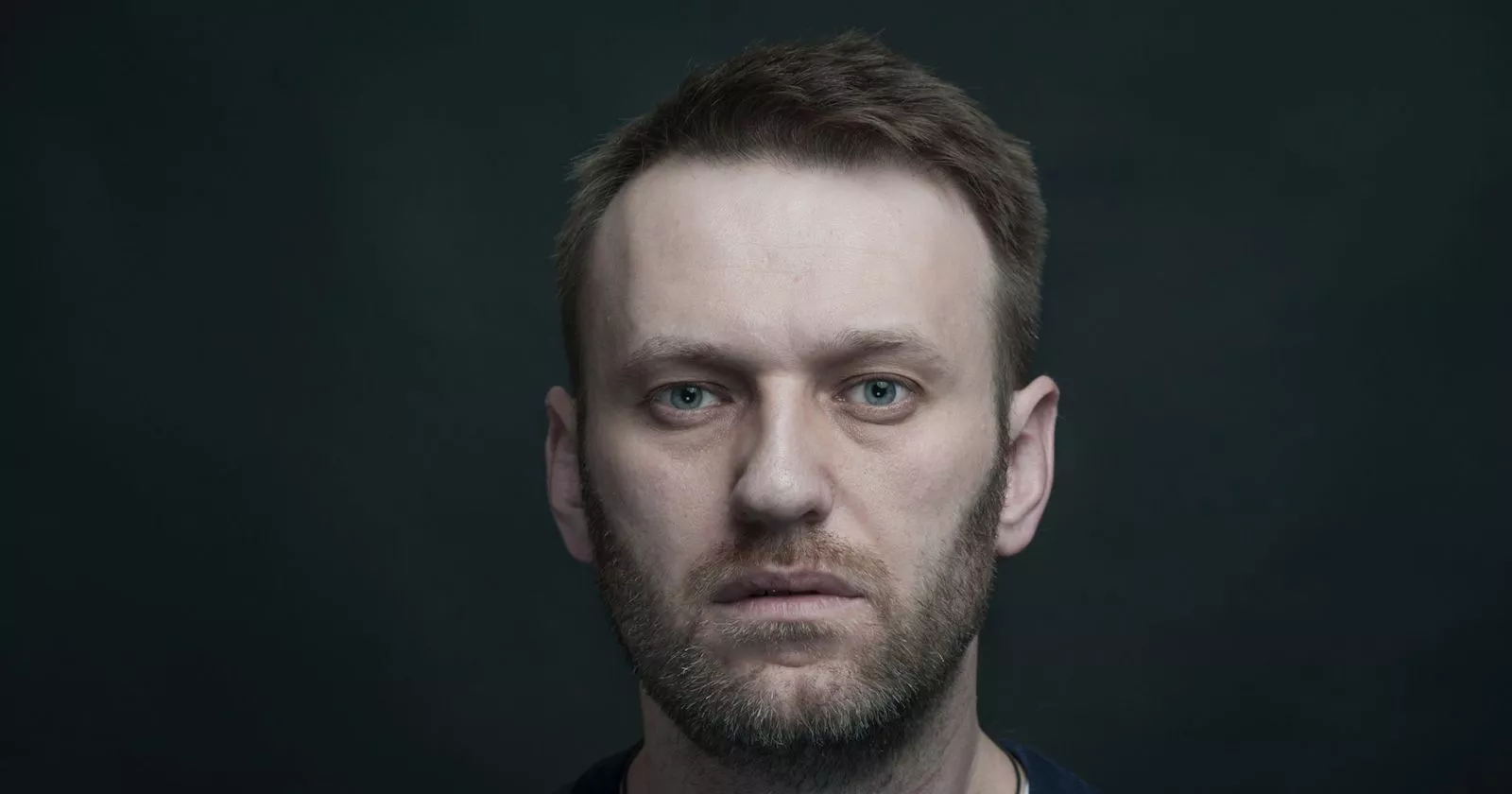
SARAJEVO, (Patria) - Russian opposition leader Alexei Navalny ended up in intensive care at a hospital in Omsk after suddenly falling ill on a plane during a flight.
Navalny was transported to the hospital unconscious, and initial information suggests that the leader of the Russian opposition, a frequent target of Russian President Vladimir Putin, drank hot tea at the airport before boarding the plane, where the poison in the liquid was likely quickly absorbed into the body due to the heat. Kremlin opponents have been killed by poisoning in the last 14 years, specifically through served tea, and the new Cold War between the West and Russia began precisely with the use of poison (Polonium 210) in the liquidation of the defector intelligence officer Alexander Valterovich Litvinenko in London, writes Nova.rs
The discreet elimination of political opponents and pretenders to the throne is not solely a Russian, Chinese, or North Korean method. This practice is as old as the struggle for power.
The first instances of poisoning political opponents were recorded as far back as the time of Egyptian pharaohs, Roman emperors, Chinese emperors, and medieval lords, where various deadly plants such as hemlock, belladonna, oleander, castor bean, poison ivy, and various mushrooms were used for elimination. Reptile and spider venom were used for killing, and much later, metals such as lead and mercury came into use, and many centuries later, cyanide and radioactive isotopes, as well as nerve agents.
The most effective liquidator in history is considered to be the Gallic herbalist Locusta, who arrived in Rome in the first century AD and, according to historians' accounts, immediately recognized the ambitions and greed of the population of the then capital of the world and became a professional poisoner. The Middle Ages are considered an experimental period of poisoning. The Borgia family at the turn of the 15th and 16th centuries are certainly most responsible for this. The title of the greatest poisoner is held by the beautiful Lucrezia Borgia, Duchess of Ferrara, who solved state problems with the help of a ring on her hand from which she poured deadly drops of castor bean into the victims' drinks.
During World War II and just before its end, the Nazis carried cyanide as a last resort. Cyanide is considered the most famous poison, which has been used by many assassins throughout history who wanted to eliminate their target as if by "natural death" – since death from cyanide poisoning looks like a heart attack.
The case of the mysterious liquidation by poison that shook Western Europe was the liquidation of Bulgarian dissident Georgi Markov. Markov was a writer and playwright who left Bulgaria in 1969 and went to London, where he worked as a BBC announcer and a collaborator for Radio Free Europe. Markov sharply criticized the then Bulgarian President Todor Zhivkov and the communist regime. According to one version, the reason for Markov's liquidation followed when he identified Soviet diplomat Arkady Vasilievich to the British intelligence service MI5 as a resident of the Soviet intelligence service in London, while another version states that the reason was his last radio broadcast, in which he openly attacked Todor Zhivkov. With the help of collaborators, the liquidator arrived in London.
The day of "D-day" for Markov's assassination was set for September 7, 1978. As Markov waited for a city bus, he suddenly felt a sharp sting in his thigh. He turned around and saw a man picking up an umbrella from the ground after it had fallen from his hand. The man then got into a taxi and disappeared. Markov fell ill and was taken to the hospital. Doctors were misled by a mysterious fever and nausea. Because of his story, they examined his entire body. During the examination, they discovered a tiny metal pellet with a diameter of 1.52 mm in his thigh with a magnifying glass. Analysis determined that the pellet was made of a platinum-iridium alloy and had two masterfully drilled holes with a diameter of 0.35 mm. Traces of ricin, which was twice as poisonous as cobra venom, were found in these cavities. Markov was in agony for four days before he died.
Just two weeks later, Bulgarian emigrant Kostov, a former radio announcer who had fled to Paris, was targeted. While riding the Paris metro, an unknown man shot a poisonous pellet from a deadly umbrella at him from behind in the crowd. The attack was carried out skillfully, but Kostov had incredible luck because there was not enough poison in the pellet, and he managed to survive the assassination attempt with the help of doctors at a Paris hospital.
After the end of the Cold War, the poisoning of opponents continued, but to a much lesser extent.
Death arrived via telephone receiver
Russia continued to use old KGB methods of poisoning opponents. Still without concrete evidence, one of the first victims of the FSB was the secretary of banker Ivan Kivelidi, who was poisoned via a telephone receiver.
Alexander Litvinenko, who himself died after being poisoned with a radioactive isotope, revealed to the British media the agency's stance that poison is a weapon like any other, for example, a pistol.
Poisoned letter for a jihadist
Saudi jihadist Khattab was poisoned when he opened a letter in Chechnya that was delivered to him. Yuri Shchekochikhin, an investigative journalist and parliamentarian, who died of a mysterious illness, was also a victim.
Poisoning of Viktor Yushchenko
Dioxin was used as a means of poisoning political opponents in an assassination attempt on the former head of the Ukrainian state and one of the leaders of the "Orange Revolution," Viktor Yushchenko, in 2004. Namely, while he was still the leader of the opposition, he was poisoned with dioxin, which was put into his food. His wife, Kateryna, suspected that something was wrong when she kissed him and felt as if he had used some medication on his lips. Five days after dinner, Yushchenko was sent to a Kyiv hospital, and from there, due to suspicion of Ukrainian doctors, to a private clinic in Vienna. Toxicological analysis of the Ukrainian opposition leader showed that he was poisoned with pure dioxin, better known as the "orange agent," which the US Army used in the Vietnam War. Dioxin caused gastrointestinal problems for Yushchenko, and his face became completely deformed from pure dioxin. Yushchenko was saved from certain death by Viennese doctors who confirmed the presence of dioxin.
The most publicly exposed case was the poisoning of the defector FSB agent Alexander Litvinenko. On November 23, 2006, the defector agent of the Russian Federal Security Service (FSB), Alexander Litvinenko, died at the University College Hospital in central London. He had been admitted to the hospital on November 1 with symptoms of food poisoning. Detailed toxicological analyses only confirmed on the evening of November 22 that Litvinenko's body contained the radioactive element "polonium 210," which is obtained by exposure to strong radiation in a serious nuclear reactor after complex metallurgical processing. Polonium 210 is a powerful alpha emitter with a half-life of 138 days, very dangerous to handle, store, and transport. The mystery of how it reached Litvinenko has never been fully resolved. The investigation launched by the British police identified two of his former colleagues, Dmitry Kovtun and Andrey Lugovoy, as suspects in the murder, as they were the ones who sat and drank tea with Litvinenko and the Italian Mario Scaramella on the fateful evening of November 1, 2006. The journey home was fatal for Litvinenko, who felt nauseous and was taken to the hospital, as food poisoning was suspected. The rapid hair loss prompted doctors to suspect thallium poisoning, but the results were negative. Only the day before his death, radiological analysis confirmed the presence of the radioactive element polonium 210. Traces of polonium 210 were also found on two former FSB operatives, Lugovoy and Kovtun, who were suspected but had left Britain. The results regarding whether polonium 210 was present in the Italian Scaramella were never announced. Litvinenko's younger brother, Maxim, accused the British of being responsible for Alexander's death, while Scotland Yard and MI5 determined that Moscow was the main culprit for the liquidation. Nikolai Patrushev and Russian President Vladimir Putin were named as the instigators.
The Middle East was not immune to poisoning either. History is full of mysterious assassination attempts with poisonous substances, but two stand out. One occurred in 1997 when Israeli Mossad poisoned one of the Hamas leaders, Khaled Meshaal, in Jordan. A Mossad agent approached him and injected an unknown poison into his neck with a needle from a syringe. Mossad agents were caught, and Israel was forced to send an antidote under pressure, and in return, the captured agents were handed over. The poison injected was never disclosed.
Another case that resonated was the poisoning of PLO leader Yasser Arafat. The cause of his death was never revealed, which fueled various conspiracy theories, including poisoning with polonium 210. The commission investigating Yasser Arafat's death accused former Fatah official Mohammed Dahlan of being responsible for Arafat's death, claiming he administered a poisonous drug to him in a Paris hospital, or according to another version, gave him poison in tea at Arafat's home in Ramallah. Dahlan went into exile after being accused of corruption and treason for cooperating with Israel.
The introduction of nerve agents in the liquidation of political opponents, as well as in the settling of scores between ruling families, was recorded a year ago in Malaysia when Kim Jong-nam, the eldest son of the late leader Kim Jong-il and the elder brother and leader of North Korea Kim Jong-un, was killed. Kim Jong-nam was killed while waiting in line to board a plane. Airport security cameras recorded the moment when an unknown woman approached him, placed a handkerchief on his face, and after a few seconds, walked away with another woman, keeping her hands away from her body. The attacked Kim sought help and complained that someone had smeared his face with a handkerchief, after which he died in the airport clinic. Citizens of Indonesia and Vietnam were suspected of the attack, and a North Korean was arrested in Kuala Lumpur. Malaysian police believe the girls were actually trained North Korean agents trained to handle poisonous substances. Kim Jong-nam was killed by the chemical nerve agent VX, one of the deadliest chemical weapons, a single drop of which can kill an adult in just a few minutes.
The case that stirred passions between Moscow and London, after Litvinenko's death and led to a diplomatic war, was the attempted assassination of double agent Sergei Skripal and his daughter Yulia, who were poisoned with the nerve agent "NoviChok."
"Her eyes were completely white. They were wide open, and foam was coming out of her mouth. Then the man stiffened. His hands stopped moving, but he was still looking straight ahead," said an eyewitness to CBS who found Skripal and his daughter unconscious. These are classic signs of nerve gas poisoning. British authorities confirmed this, but it was not revealed which poison it was. The BBC initially reported that it was not one of the two most well-known nerve gases, Sarin and VX, but something that was later confirmed to be Novichok.
Komentari (0)
Prijavite se za komentiranje
PrijavaJos nema komentara. Budite prvi!
Minuta
Sve →Iz drugih kategorija

High Representative Not Elected: Germans, French and British Against Americans, New Attempt at End of June

ČOVIĆ WITHOUT MERCY: How Those Who Brought Ademović to Office Created a Political Hell for Him



Sunny Saturday, quite warm



Tragedy in Albanian resort: Two minors drown












