
The New York Times has won this year's Pulitzer Prize for international reporting on violence against Afghan women, and The Washington Post for national reporting on police violence.
The prize for public service was awarded to the Associated Press for its reports on the exploitation of workers in the seafood industry, the Pulitzer Board announced on Monday.
The Pulitzer Prizes, the most prestigious award in American journalism, were awarded for the 100th time this year.
Alissa Rubin of The New York Times received the Pulitzer Prize for reporting on the atrocities endured by Afghan women. Journalists from The Washington Post were awarded for establishing a database on how often police in the U.S. shoot to kill, according to world media reports.
The Associated Press was also honored. After this agency published a story about the severe exploitation of workers in the seafood industry, reforms were initiated, more than 2,000 slaves were freed, and perpetrators were brought to justice.
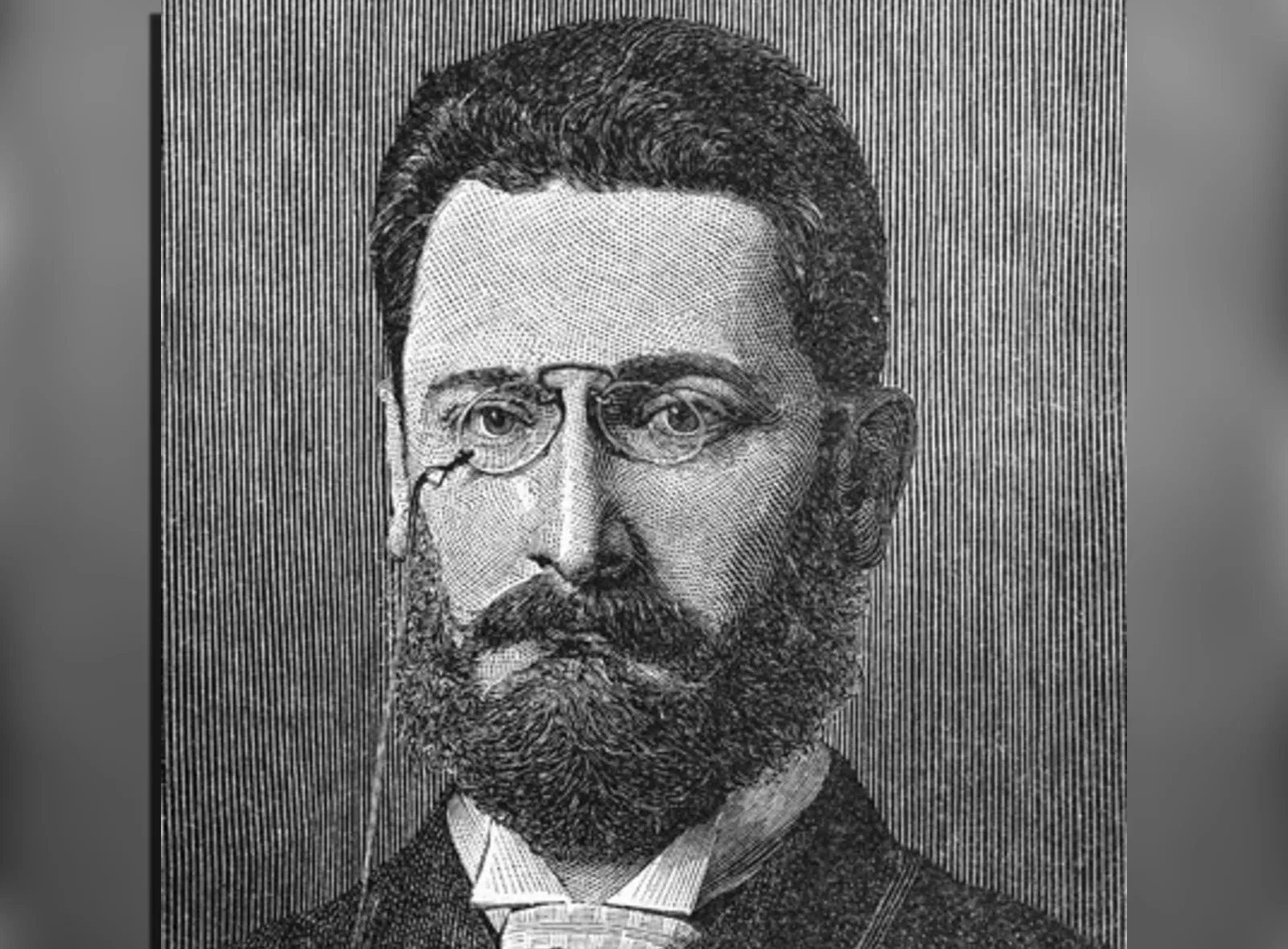
The Pulitzer Prize is awarded by Columbia University in New York. The prize was first awarded in 1917 and was established by newspaper publisher Joseph Pulitzer, an American of Hungarian descent.
Pulitzer was born in Makó, Hungary, as the eldest son of a Hungarian Jew. His father, Fülöp, was a successful and prosperous grain merchant who died when Joseph was 11 years old. A few years later, his mother married Max Blau, a businessman. Pulitzer was educated at a private school in Budapest. In 1864 (at age 17), he emigrated from Hungary to the U.S., arriving at Castle Garden without any money.
The Austrian army rejected Pulitzer due to poor eyesight, and he was also not accepted by the French Foreign Legion, but in his new country, he served in the 1st Brigade of the First New York Lincoln Cavalry until the end of the Civil War. Pulitzer spoke fluent German, French, and Hungarian but initially had trouble with the English language. After the war, Pulitzer went west in search of fortune.
His first job as a stevedore in St. Louis failed - Pulitzer worked as a waiter, buried cholera victims in 1866 on Arsenal Island, and then worked as a reporter, first for the St. Louis Westliche Post, a German-language newspaper. “He was a born reporter,” one of his colleagues later said of him. Later, in 1872, Pulitzer bought the Westliche Post for $3,000. During the 1860s, he participated in political life and studied law, but only briefly. He joined the Republican Party and in 1869 became a member of the Missouri State Legislature. In 1874, Pulitzer moved to Washington, where he worked as a correspondent for the New York Sun. In 1877, he married Kate Davis, a niece of Jefferson Davis.
In 1878, he also bought the St. Louis Dispatch for $2,700, merging these two dailies (the Westliche Post) into the St. Louis Post-Dispatch, which remains the most important daily newspaper in St. Louis, Missouri, to this day.
In 1883, Pulitzer, by then a wealthy man, bought the New York World, a newspaper operating with an annual loss of $40,000. Scandals, human-interest stories, and sensations became the focus of Pulitzer's interest. In 1885, he was a member of the U.S. House of Representatives for just a few months. He resigned from his membership, believing that politics was not for him. In 1887, he recruited Nellie Bly, the famous investigative journalist whose real name was Elizabeth Jane Cochran, into his newsroom. In 1895, the World introduced the immensely popular Yellow Kid, by author Richard F. Outcault. The Yellow Kid was the first color comic strip. Under Pulitzer's leadership, circulation rose from 15,000 copies to 600,000, making it the largest newspaper in the country.
In 1890, the editor of the rival New York Sun called Pulitzer a „Jew who had renounced his faith“ in the newspaper (Pulitzer's father was Jewish, his mother Catholic, and his wife Kate Davis was an Episcopalian). In 1895, William Randolph Hearst bought the New York Journal, beginning a relentless rivalry. It was precisely this race with Hearst, especially during reporting before and during the Spanish-American War, that linked Pulitzer's name with yellow journalism.
In 1892, Pulitzer offered Seth Low, the president of Columbia University, money to open the world's first school of journalism. The university initially refused the money. In 1902, Nicholas Murray Butler, the new president of the university, was more receptive to both the school and the prizes, but the fulfillment of Pulitzer's dream would not come to fruition during his lifetime. Pulitzer bequeathed $2 million to the university, which was realized in 1912, by which time the University of Missouri already had its own first school of journalism. However, the Columbia University Graduate School of Journalism became one of the most prestigious in the world.
Joseph Pulitzer died on his yacht in Charleston harbor. He was buried in Woodlawn Cemetery in the Bronx, New York. In 1917, according to Pulitzer's wish, the Pulitzer Prize was awarded for the first time, Patria reports.
Komentari (0)
Prijavite se za komentiranje
PrijavaJos nema komentara. Budite prvi!
Minuta
Sve →Iz drugih kategorija

High Representative Not Elected: Germans, French and British Sabotaged Americans, New Attempt at End of June

ČOVIĆ WITHOUT MERCY: How Those Who Brought Ademović to Office Created a Political Hell for Him



Sunny Saturday, quite warm



Tragedy in Albanian resort: Two minors drown












