
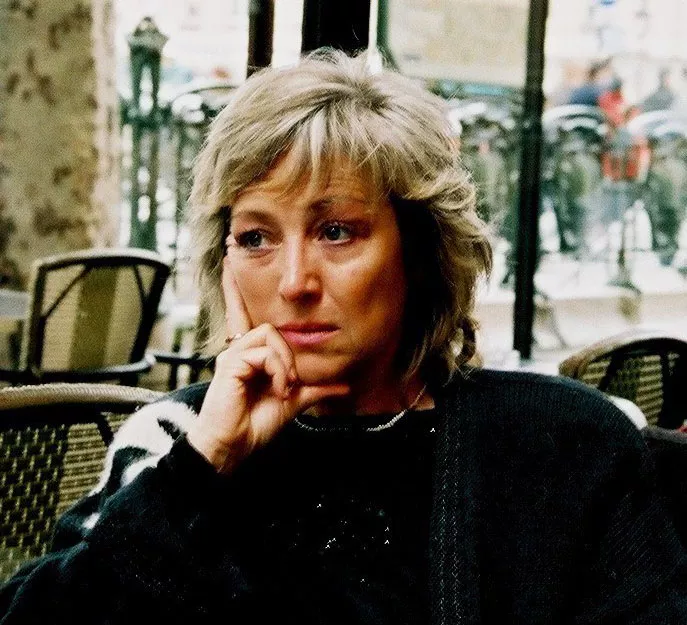
Prof. dr. Jasna Šamić is a European-renowned orientalist and translator from Arabic, French, and Turkish, a literary critic, and an award-winning writer. She was a university professor at the Faculty of Philosophy in Sarajevo, then a professor at the University of Strasbourg.
For Patria, she speaks about unknown details of the horrific crime in Paris, criticizes the shameful attitude of some Bosnians towards the killing of innocent people, and the unnecessary comparison of victims. She warns about the dangers arising from the new sectarian Islam in Bosnia and Herzegovina, and the seduction and manipulation of young and unemployed people from France to BiH.
Patria: What was that terrible night in Paris like? Where were you when you learned the details of the tragedy? What were the first reports? What were the reactions of people around you?
Šamić: On that fateful evening, "Black Friday," November 13th, I had just glanced at a literary program – a tribute to the recently deceased Andre Glucksmann, who was a friend to me and to all those who were humiliated and offended – when my son called me, his voice filled with tragedy, telling me to quickly turn on the news channels, that there had been shootings in Paris and at least 18 dead. My son, by chance, did not go to those fateful parts of the city that evening, though he usually does, like many young people, for the past ten years. He went to a nearby suburb, not far from the scene of the tragedy, where he was celebrating a friend's birthday.
I turned on one of the channels broadcasting non-stop news, and of course, I saw what was happening. The number of victims was increasing by the second.
My son remained hidden in that house until almost morning. Only the next day did we learn that one of the killers had parked almost in front of the windows of the house where he was with his friends. And two days ago, we found out that he was also the main orchestrator of this entire drama, the now-deceased Abul Hamid Abaud. My son missed the killers by a few minutes. Of course, panic struck us later. Then I learned many more details; there isn't a family that didn't have a friend or a friend's friend who went out that evening to relax with friends and who suffered: either died or was left crippled for life.
As for the reactions from the surroundings, it was shock at first. And concern for friends' children. We called each other to find out where everyone was, if they were alive. My feeling was identical to what I felt here when Serbia attacked Slovenia with tanks first, then Croatia, and despair reached its peak when Bosnia was attacked and Sarajevo was besieged and bombed. It's a feeling of utter helplessness, where you can do nothing to help those in danger. The factual difference is that there was a war, or rather, "genocide was isolated," as the representatives of the great powers said (we isolated the genocide, those are the literal words), while in this case, the cancerous wound called "black Islam" has metastasized, and a massacre can be expected in every corner of the planet.
Friends from all over the world immediately called me to ask how I was feeling, and I publicly thanked them in an open letter published in e-novine. What deeply hurt me, and my friends and acquaintances from Sarajevo, was the reaction of some of our fellow citizens and some people from Belgrade and Serbia, who, instead of asking us how we were, immediately started attacking France. They almost said, "serves you right"; some even said it publicly. Immediately, a competition of victimization began, of shed tears for this or that person, measuring whose "deaths matter, whose don't." Utterly tasteless and inhumane.
Imagine if the French, and we who were here when the shelling of Sarajevo began, when the Serbs opened camps, had told our fellow citizens, "serves you right." If we deserved it here, especially those young innocent people, following the logic of our "avengers" and Serbs who suddenly found themselves on the side of the Islamists, then it can be said that in the nineties, my fellow citizens "there" also deserved to be killed by Serbs for so many years.
Such people are incapable of understanding that there are times when one must remain silent; they do not know what dignity is; they do not know what it means to observe a minute of silence for innocent victims, and only later, perhaps, discuss the mistakes of various policies. Do I need to repeat that the innocent always suffer?
Patria: Paris is a metropolis, but did you perhaps know any of the victims or their families? Did you perhaps recognize any of the deceased later?
Šamić: Fortunately, I didn't know anyone personally, but my son and his friends did, so we feel like there isn't a family untouched by this massacre. My son told me how a friend of one of his acquaintances managed to survive the massacre in the Bataclan hall, where there were about a hundred dead, but then, two days later, when everyone had come out of their shelters again, he died in a motorcycle accident; a car "swept" him away.
Patria: We in Bosnia have little information about this tragic event. Who are the victims mostly, and how much is known about them so far?
Šamić: The victims are mostly young people, as it's a neighborhood they frequent, especially on weekends, and it's mainly Parisians. These are not tourist neighborhoods in the true sense of the word, but parts of the city full of cafes and restaurants, which are not overly expensive and are very lively at night. In the past, places for young people to go out were Saint Germain des Prees, or Montparnasse, mainly the "left bank" of Paris, while today, for the past ten years, it's the neighborhoods around the Republic and Bastille, where the grand new Paris Opera is also located.
Besides the young people, there were also older Parisians, and foreigners, mostly young people who know Paris well.
It should be emphasized that this time the killers did not target only "Islamophobes," but everyone who breathes French and Parisian air, so among the dead are a huge number of Muslims. And Muslims and Islam are, let's not forget, the first and greatest victims of these drugged criminals and killers in the name of Allah.
Patria: We don't have, for example, news about the current condition of the injured people from that terrorist attack. How many have recovered from critical condition? How are the French media talking about the massacre today?
Šamić: The death toll has risen to 130 so far, with about 350 injured receiving treatment, and around a hundred in critical condition. After the shock, grief, and revolt, the time has come for discussions about mistakes, criticism, and analyses, which emphasize that this was an absolute attack on the French, or rather, the purely Parisian way of life, on freedom, on a free way of life. Some politicians openly condemn French involvement in Libyan politics and the bombing of Libya, which led to even greater chaos in the Middle East and this tragedy.
They also highlight other mistakes in French policy, above all American policy, whose mistakes have been evident since 2003 and the bombing of Iraq. No one spares the role of Saudi Arabia and Qatar, who are the main financiers of the maniacs called Daesh (ISIL); or Turkey, through which criminal oil is sold.
Patria: How did the large Muslim community in Paris react to this crime? What reactions could be heard from the Muslims of Paris? Were there any particularly significant or specific attempts to condemn and pay tribute to the victims?
Šamić: Finally, all Muslim representatives publicly condemned this criminal act (which was not the case before). They called for "this disease that poisons everyone, including Islam, to be eradicated from France by all means." However, some imams continue to spread evil. For example, for them, listening to music is still the greatest sin, not killing those who listen to it. That's what they tell young children in mosques during their sermons, threatening them that if they listen to music, they will turn into pigs. Unfortunately, there are a large number of such imams in France; they are self-taught imams, who have not completed any schools but are hired with foreign money. Some politicians are calling for the closure of Salafist mosques, which are breeding grounds for hatred and terrorism. I myself believe that this is absolutely necessary.
Patria: Can you tell us something about the current relationship between individuals and the state towards French Muslims?
Šamić: Everyone in the media, all politicians and intellectuals, repeat the litany daily that one must not equate Muslims/Islam with Islamists, but this will be difficult in the future. One can repeat endlessly that this is not Islam; the killers claim they are doing it in the name of Allah and promise to soon tear down all the greatest cultural monuments in the world, starting with Western culture. They have already destroyed all cultural monuments in Syria and Iraq that came into their hands. And then, imagine, they sell them to black market traffickers. Besides oil sales, news about organ sales of those they slaughter with their own hands is very frequent. It is believed that there are a huge number of such cases.
Patria: France was proud of its multi-ethnicity, multi-confessionalism, and especially multiculturalism. What does that look like today? Are these French values in crisis?
Šamić: Those republican values have long been in crisis due to the general economic crisis, youth unemployment, xenophobia, and racism, which have existed for a long time, despite tolerance and democracy on the other hand, which exists alongside all of the above, but is poorly evident. The problem has long been some suburbs, especially in the north of Paris, and in some other cities, where ghettoization has occurred, where young people, mostly of Maghrebi origin, are left to drug dealers and unemployment. As such, they are completely susceptible to manipulation. These young people, unlike their parents, don't even speak French properly.
Patria: You were the first person to send a warning from France via social media, before the murder of two soldiers in Sarajevo, about radical groups planning to attack Bosnia. How did that seem to you at first? Others didn't believe in that possibility, but you reacted?
Šamić: As an orientalist, I have been studying Islam and the Orient for years, and then our variant of Islam. Radicalization began during the war, and immediately after the war. And it is growing more and more, with foreign money; there is no religiosity or deep faith in God, but it is simply manipulation, primarily by Saudis and Qataris, who are increasingly penetrating our lives and want to impose their customs and traditions, which were completely foreign to us until recently, as was their variant of Islam, especially the Wahhabi and Salafist types, which originated in Saudi Arabia and are considered the only sects in Islam. It must be admitted and emphasized that the behavior of adherents of this variant of Islam is absolutely sectarian. They have a caliph today; in a sect, that's a guru; it's the same "brainwashing" that happens in sects, the same psychological influence on unfortunate young people who feel they have no future, who are in an adolescent crisis, who feel helpless and useless in society; this is how sect leaders operate, and so do Islamist gurus. I saw them in Sarajevo long ago; they are becoming more powerful, more aggressive, more brazen, richer...
I wrote about the rise of Islamism and radicalization years ago in my novel "Portrait of Balthazar Castiglione"; here it was published in an altered form in French as "Portrait de Blathazar," by M.E.O. publishers, and I received a literary award for that novel in 2014. In the book, I discuss how it is not easy to notice the threat of this sect at first glance by looking at our society...
So, it did not surprise me what happened in Sarajevo shortly after the massacre in Paris. Unfortunately, this is just the beginning. If our authorities do not wake up from their decade-long slumber and preoccupation with money, because they are selling the most beautiful parts of our country to the Saudis and Qataris for a hundred years, and no one knows their ultimate goal, if they do not come to their senses, and abandon the "after me, the flood" policy, if they do not prevent the activities of all "dangerous elements" among the Wahhabis and Salafists, everything will soon go to hell.
Patria: During the aggression against BiH and the killing of your Sarajevo, you were a kind of person who awakened French conscience. You were brave and persistent in condemning the crimes. We in besieged Sarajevo watched you with gratitude then. Today, we feel miserable when these terrible news of mass killings come from Paris. How do you feel today with such experiences?
Šamić: I am brave, at least I believe I am, but I am not devoid of lucidity. I tried to "awaken" the French then, just as I try to do here in Bosnia. But, honestly, I think these voices are heard much less than the radical ones. The problem arose, the same as with the Serbs during the war in the nineties: identification with the perpetrators. And after identification comes denial of the crime, and accusations against the "other."
Komentari (0)
Prijavite se za komentiranje
PrijavaJos nema komentara. Budite prvi!
Minuta
Sve →Iz drugih kategorija

High Representative Not Elected: Germans, French and British Sabotaged Americans, New Attempt at End of June

ČOVIĆ WITHOUT MERCY: How Those Who Brought Ademović to Office Created a Political Hell for Him



Sunny Saturday, quite warm



Tragedy in Albanian resort: Two minors drown












