
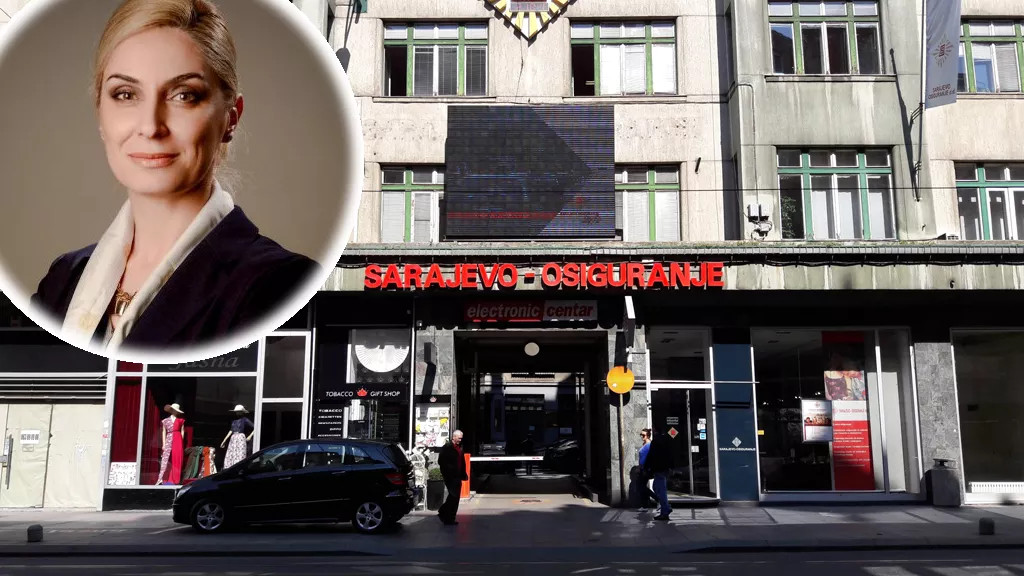
The Government of the Federation of BiH has given the green light for the sale of nearly 45 percent of the Government's stake in Sarajevo Osiguranje. Such a decision by the Government has triggered a wave of criticism from opposition parties and trade unions...
Sarajevo Osiguranje is one of the largest insurance companies in Bosnia and Herzegovina, with nearly 400 employees and a long tradition.
The official buyer, as well as the price at which the Government will sell its stake in this insurance company, is not yet known, but trade unions believe that no matter the price, it cannot justify the sale of state shares.
Macroeconomist Prof. Dr. Adisa Omerbegović-Arapović also disagrees with the sale of shares in Sarajevo Osiguranje in the way the FBiH Government has envisioned it. When asked by Patria journalists how she views the FBiH Government's decision to sell its ownership stake in Sarajevo Osiguranje, Dr. Adisa Omerbegović-Arapović says that, to put it mildly, the decision is surprising, because the sales method has been changed and is very questionable as such.
- The sale of the Government's ownership stake in this company through direct negotiation is an even more non-transparent and worse method, from the perspective of control and fair market competition, than the previously promoted mechanism of selling a block of shares through the stock exchange, as in the case of FDS. With this move, the Government shows an unjustified intention to sell these companies at any cost. Direct sale means the absence of a minimum price, any correction mechanisms, and review of the validity of this decision. Therefore, without transparent criteria and protection of public interest, national wealth can be squandered for next to nothing – believes Dr. Omerbegović-Arapović.
To a further question as to whether Sarajevo Osiguranje is undervalued and whether the sale will represent a loss for the citizens, the respected macroeconomist believes that Sarajevo Osiguranje has already suffered enormous damage because the Government has been 'selling' its stake for a long period due to the alleged 'poor performance' of this company, which, she says, has led to a poor business result accumulating for a long time.
- The sale of insurance premiums has been declining, and this could only benefit those who wanted to devalue what was being sold. Therefore, it was only in the interest of those who had the ambition to buy this company and all the assets it owns – says Dr. Omerbegović-Arapović. She further explains:
- This includes buildings in attractive locations and all non-operational assets of around KM 50 million, according to the company's balance sheet as of 30.06.2016. The actual market value is likely much higher. A correct valuation of this company must take these facts into account.
Furthermore, it is unknown who conducted the valuation of Sarajevo Osiguranje for the FBiH Government. The public has been deprived of the details of this analysis and valuation. For a long time, I have advocated only for transparency and fair valuation when assessing the value of companies in which the Government has sold and intends to sell its stake. The justification for selling these stakes due to fiscal unsustainability, conditions set by the IMF, and the Government's inability to effectively apply the principles of corporate governance in this and other companies, is not a good excuse, and I do not think the decision to sell is correct at all.
As proof of the social loss in the sale of Sarajevo Osiguranje, I have conducted a valuation of the company based on publicly available data and company reports, as well as generally accepted and recognized methods for valuing companies in the insurance sector, which I am willing to defend publicly. The most important outcome of this analysis is that the credible value of a Sarajevo Osiguranje share is KM 18.6. The FBiH Government should not sell shares below this minimum market value.
If it cannot achieve this, the Government can also consider a completely different scenario, namely recapitalization or buying out shares from smaller shareholders to ensure sovereign management of the company, revitalize it, and significantly increase its value. Only then might it be worthwhile to sell the company for a large sum of money.
Komentari (0)
Prijavite se za komentiranje
PrijavaJos nema komentara. Budite prvi!
Minuta
Sve →Iz drugih kategorija

High Representative Not Elected: Germans, French and British Against Americans, New Attempt at End of June

ČOVIĆ WITHOUT MERCY: How Those Who Brought Ademović to Office Created a Political Hell for Him



Sunny Saturday, quite warm



Tragedy in Albanian resort: Two minors drown












