
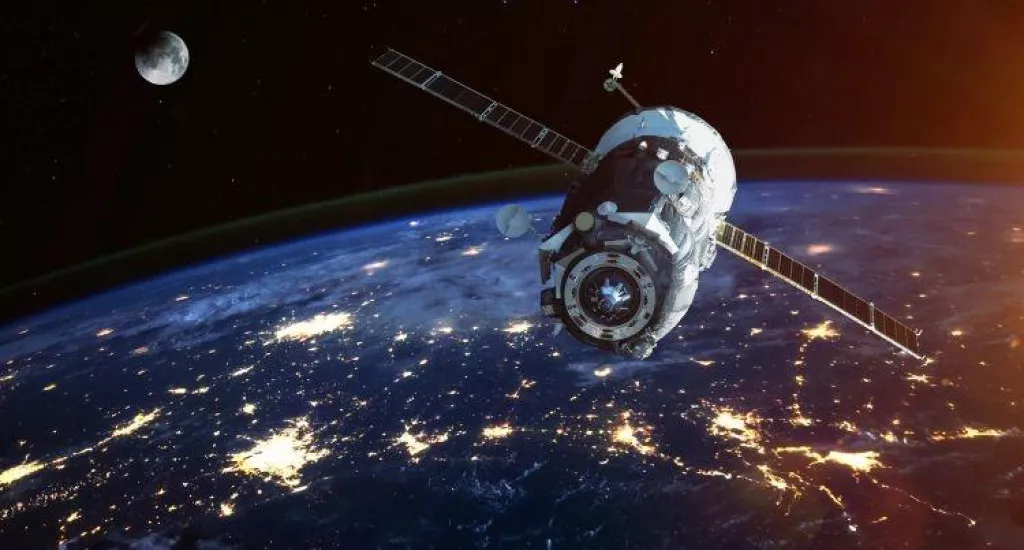
(Patria) - A spacecraft built and operated by the Houston-based company Intuitive Machines LUNR.O landed on the Moon's surface on Thursday around 18:24 Eastern Time, overcoming a last-minute navigation problem. It is the first US moon landing in more than half a century and the first to be entirely carried out by the private sector, Reuters reported.
The six-legged lander, named Odysseus, performed a "pitch-over" maneuver to position itself vertically above the lunar surface as it descended for landing. The vehicle, which targeted a crater named Malapert A near the Moon's south pole, carried a suite of scientific instruments and technology demonstrations for NASA and several commercial customers designed to operate on solar power for seven days before the sun sets over the polar landing site.
NASA's payload will focus on collecting data on space weather interactions with the lunar surface, radio astronomy, and other aspects of the lunar environment for future landings and NASA's planned return of astronauts later this decade.
The uncrewed spacecraft had been orbiting the Moon at an altitude of 92 km (57 miles) above the surface since arriving in orbit on Wednesday, six days after being launched by a SpaceX Falcon 9 rocket from NASA's Kennedy Space Center in Cape Canaveral, Florida.
Odysseus remained "in excellent health" as it continued to orbit the Moon, about 384,000 km (239,000 miles) from Earth, transmitting flight data and lunar images to Intuitive Machines' mission control center in Houston, the company said on Wednesday.
If the landing is successful, the IM-1 mission would represent the first controlled descent by a US spacecraft onto the Moon's surface since Apollo 17 in 1972, when NASA's last moon mission with astronauts Gene Cernan and Harrison Schmitt landed there.
To date, spacecraft from only four other countries have landed on the Moon – from the former Soviet Union, China, India, and last month, Japan. The United States is the only one to have sent humans to the Moon's surface.
Odysseus's success would also be the first "soft landing" on the Moon ever by a commercially built and operated vehicle and the first under NASA's Artemis lunar program, as the US races to return astronauts to Earth's natural satellite before China lands its own crewed mission.
NASA aims to land its first crewed Artemis mission in late 2026 as part of a long-term, continuous exploration of the Moon and a stepping stone to eventual human flights to Mars. The initiative focuses on the Moon's south pole partly because of the presumed presence of frozen water there that could be used for life support and to produce rocket fuel.
A host of small landers like Odysseus are expected to pave the way under NASA's Commercial Lunar Payload Services (CLPS) program, designed to deliver instruments and hardware to the Moon at a lower cost than the US space agency's traditional method of building and launching those vehicles.
A greater reliance on smaller, less experienced private ventures carries its own risks. Just last month, another company's lunar vehicle, Astrobotic Technology, suffered a propellant leak en route to the Moon shortly after being placed into orbit on Jan. 8 by a United Launch Alliance (ULA) Vulcan rocket on its debut flight. Astrobotic's landing failure marked the third failed attempt by a private company to achieve a moon landing, following unsuccessful efforts by companies from Israel and Japan.
Although Odysseus is the latest star of NASA's CLPS program, the IM-1 flight is considered an Intuitive Machines company mission. The company was co-founded in 2013 by Stephen Altemus, a former deputy director of NASA's Johnson Space Center in Houston, and is now its president and chief executive officer.
The proliferation of commercial space ventures is itself driven by developments in technology over the past few decades. The Apollo program and the Surveyor robot missions that preceded it flew in the nascent dawn of the computer age, before the advent of modern microchips, electronic sensors and software, or the development of super-lightweight metal alloys and countless other advances that have fueled a revolution in spaceflight.
Komentari (0)
Prijavite se za komentiranje
PrijavaJos nema komentara. Budite prvi!
Minuta
Sve →Iz drugih kategorija

High Representative Not Elected: Germans, French and British Against Americans, New Attempt at End of June

ČOVIĆ WITHOUT MERCY: How Those Who Brought Ademović to Office Created a Political Hell for Him



Sunny Saturday, quite warm



Tragedy in Albanian resort: Two minors drown












