
By: Istraga.ba
On April 27, 2023, the High Representative made 3 decisions, imposing amendments to the Criminal Code of Bosnia and Herzegovina (new Article 219b), the Criminal Code of the Federation of Bosnia and Herzegovina (new Article 382b), and the Criminal Code of Republika Srpska (new Article 321a).
All amendments are essentially the same and criminalize lobbying, but also potentially, at the level of speculation, freedom of belief.
By placing these provisions within the criminal codes in BiH, the High Representative has thematically linked them to the parts of the criminal codes relating to giving a reward or other form of benefit for influence peddling (at the BiH and FBiH level), or influence peddling (at the RS level).
When reading the text of the imposed provision itself, it is difficult to shake the impression that it is impossible for any party president or member of a party body not to be held accountable daily under this provision.
Namely, party presidents promise their members who are members of, for example, legislative bodies, places on election lists (e.g., which for most members of legislative bodies in BiH means securing their livelihood) or positions in the executive branch, and for which promise, a member of the legislative body would be obliged to vote as their president "incites" them.
Essentially, the alleged goal of imposing these criminal code provisions in BiH is to further prevent corruption. However, the way they are formulated essentially points to a ban on any form of lobbying (which is, of course, regulated by laws in other countries), but also to potential numerous opportunities for abuse of the provisions in question. Because, it seems that for criminal liability, it is enough that a person in an administrative body does something they would have to do anyway, and someone offered them an incentive or someone close to that person.
Namely, doing something that one is obliged to do anyway, or not doing something that one should not do, is precisely just performing one's duty in a legislative, executive, or judicial body of authority, or an administrative or other body. The existence of criminal liability in situations where someone indirectly offers a benefit to someone for another person undermines criminal liability as it exists in the BiH legal tradition - knowledge, intent, responsibility for one's own actions and within the limits of one's intent.
Of course, the key question that necessarily arises is what it means to do something that one should not do, or not do something that one should do, or to do something that one would have to do anyway, or to omit something that one should not do - what specifically is it, in the case of, for example, a member of the legislative body, that they would have to do or not do?! Essentially, it comes down to voting. Every member of the legislative body votes according to their conscience, desire, will. Prescribing how one "must" vote or "must not" vote calls into question the purpose of the existence of legislative bodies in BiH.
However, let's translate: paragraph 1 of the new provisions criminalizes seeking or accepting money (or anything else, including a promise), for oneself or for another, to do something that should not be done or not do something that must be done, including mediation in such seeking or accepting of money (or promise). Paragraph 2 prescribes essentially the same, only for something that must be done anyway or to omit something that should not be done anyway, while paragraphs 3 and 4 are essentially the same, only they relate to active bribery.
Paragraph 5 is interesting from several aspects, as it states: "Whoever, in the performance of official duty in a legislative, executive, judicial, administrative, or any body that is wholly or partially financed from public funds at the Federation level, does something that they should not otherwise do or fails to do something that they would otherwise be obliged to do, if there were no money or financial instrument or other value or other material or immaterial benefit or advantage or service or any kind of incentive for themselves or for another, including a legal person, regardless of when such improper incentive was received or promised, shall be punished with imprisonment from one to ten years and a fine."
Therefore, someone who fails to do something they must do or does something they should not do, and there was a certain benefit, will be punished according to the provisions of the imposed amendments. However, what is interesting are the words: "regardless of when such improper incentive was received or promised." Essentially, this can, although it should not, in accordance with the prohibition of retroactivity, also apply to situations where money or some other benefit was promised or received before this law came into force. What would be important is that the person does something they should not do or fails to do something they should do. However, it is clear that such conduct would be prohibited.
On the other hand, BiH already has experience in situations where the OHR imposes amendments to criminal laws, BiH applies them, and then BiH is found by the ECtHR to be a country that violates human rights. This, of course, alludes to the amendments to the Criminal Code of BiH relating to the temporal validity of the Criminal Code of BiH, which were imposed by the OHR, BiH applied them as the OHR "said", and then the ECtHR concluded that BiH violates human rights, i.e., the prohibition of retroactivity (ECtHR decision in the case Damjanović-Maktouf). The provisions of the amendments themselves are so broadly formulated that they cover all forms of (even permissible) lobbying, including even the prescribed punishment for an improper attempt.
In paragraph 6, it is essentially prescribed that criminal offenses exist even if the person whom the perpetrator tried to incite did not meet the conditions to act, because they did not assume the duty or are not competent or for any other reason. This essentially, translated into plain language, means prescribed punishment for an attempted murder with a water pistol. Everyone, including the person who "shoots," knows that murder cannot occur for several reasons, but it doesn't matter, it's punishment for an improper attempt.
Paragraph 10 of the imposed amendments prescribes the legal consequences of conviction, which include "prohibition of holding public office in a legislative, executive, judicial, administrative, or any body that is wholly or partially financed from public funds at the XX level, for a period of five years from the date of serving, pardon, or statute of limitations of the sentence." Essentially, this provision means that candidacy in elections is prohibited, among other things. This is a new form of security measures, which somewhat resemble those prescribed in the criminal codes in BiH relating to the prohibition of holding positions, activities, or functions.
However, the prohibition of candidacy in elections, the revocation of decorations, is more reminiscent of so-called loss of civil rights, which has so far been seen as a sanction that violates human rights. In the Republic of Croatia, the Law on Local Elections prohibits candidacy if a prison sentence of at least six months has been imposed for any criminal offense. In BiH, now, the prohibition of candidacy in elections is imposed on anyone convicted of this criminal offense, even if they were sentenced to a fine or a suspended prison sentence (which is possible, given the prescribed penalties), and even if they were found guilty and acquitted of the sentence (which is also possible in the BiH legal system and has happened in court practice). The question of the compliance of this provision with Article 3 of Protocol No. 1 to the ECHR will, of course, arise here.
It is worth noting, and this was likely the goal of the very strict penalties prescribed in the imposed provisions, that special investigative actions are permitted for these criminal offenses.
Countries in the region, of course, do not have such a prescribed ban on lobbying; instead, they prohibit and criminalize actual criminal offenses that elected officials can commit. For example, Article 339 of the Criminal Code of the Republic of Croatia prescribes a penalty for persons who, as representatives in the Croatian Parliament, the European Parliament, or as councilors in the representative body of local or regional self-government, demand or accept a bribe or accept an offer or promise of a bribe in order to vote in a certain way in the representative body (as well as a person who offers a bribe to a representative in the representative body to vote in a certain way). The Republic of Serbia has prescribed the criminal offense of influence peddling in its Criminal Code, but exclusively that. Montenegro also prescribes influence peddling.
As mentioned at the beginning, all criminal codes in BiH had (and still have) the criminal offense of influence peddling, as well as other criminal offenses related to elections, but also to the prevention of corruption. The imposed provisions are specific in that they also contain an exhaustive list of possible forms of participation in the commission of criminal offenses.
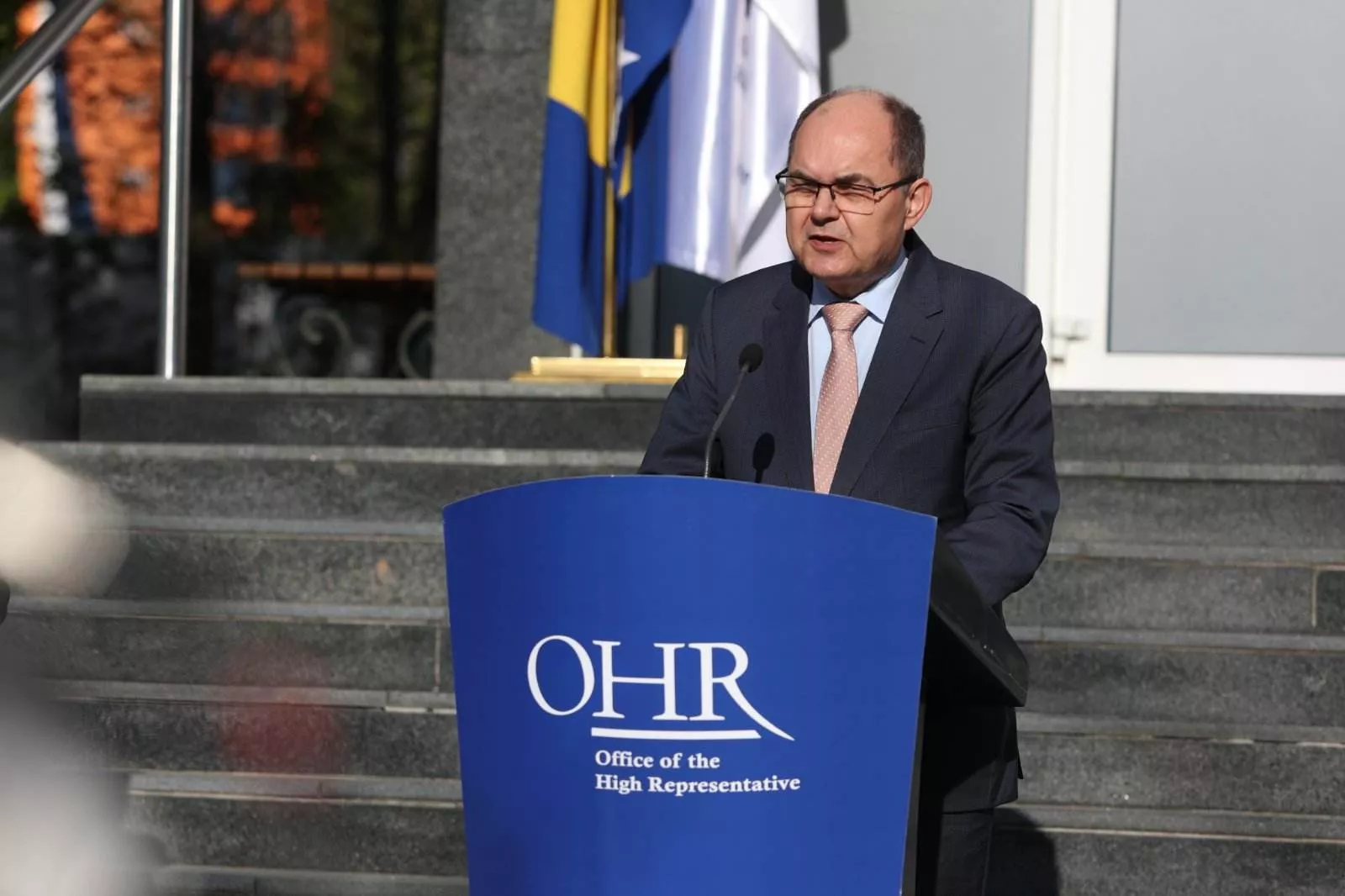
"In order to improve the integrity of elections, I have amended the criminal law to include a new criminal offense of election bribery. This enables the sanctioning of any bribery of officials. This should serve as a warning to all those who intend to resort to bribery and intimidation to win elections, while at the same time encouraging those who want fair play and assurance that their votes will not be misused," said Christian Schmidt during the imposition of the criminal code provisions.
The point of elections, at least of the electoral system that existed in BiH before the interventions of the High Representative, is, among other things, the possibility of voting for an individual, not for a party, because an individual thus has the assurance that their vote will not be misused in such a way that a member of the legislative body, like a trained dog, votes exclusively as the entire party votes, and not as their convictions dictate.
It seems that a much more logical step, and more beneficial for BiH, if it is already in BiH's interest, would be to regulate the area of lobbying. The law can provide for a mandatory register of lobbyists so that information about the identity of persons who communicate with relevant public officials or high-ranking individuals on certain policy or legislative issues or on future decisions is available to the public. It can also provide a framework for establishing the accountability of persons engaged in lobbying and the manner in which they carry out this activity. Of course, a law on lobbying also prescribes restrictions and conditions that apply for a certain period to appointed officials and persons in certain positions in case of a possible conflict of interest.
Finally, it is interesting to emphasize the entry into force of the provisions imposed by the High Representative - the provisions at the FBiH level enter into force on the first day from the date of publication in the "Official Gazette of the Federation of BiH," or the eighth day from the publication in the "Official Gazette of Republika Srpska," while at the BiH level, the High Representative is somewhat indecisive, stating: "This law enters into force on the eighth day from the date of publication on the official website of the Office of the High Representative or the day after publication in the "Official Gazette of Bosnia and Herzegovina," whichever occurs first." On the other hand, in the decision itself, it states: "2. This Decision enters into force immediately and is immediately published on the official website of the Office of the High Representative and in the "Official Gazette of Bosnia and Herzegovina" (this paragraph is also stated in the decisions relating to the FBiH and RS)."
Therefore, today, none of the provisions imposed by the High Representative are yet in force. Or perhaps they are. Milorad Dodik has clearly stated that the imposed amendments will not be published in the Official Gazette of RS, nor will they be applied in RS.
(This analysis was prepared by an investigative legal associate with many years of experience in criminal law)
Komentari (0)
Prijavite se za komentiranje
PrijavaJos nema komentara. Budite prvi!
Minuta
Sve →Iz drugih kategorija

High Representative Not Elected: Germans, French and British Sabotaged Americans, New Attempt at End of June

ČOVIĆ WITHOUT MERCY: How Those Who Brought Ademović to Office Created a Political Hell for Him



Sunny Saturday, quite warm



Tragedy in Albanian resort: Two minors drown












