
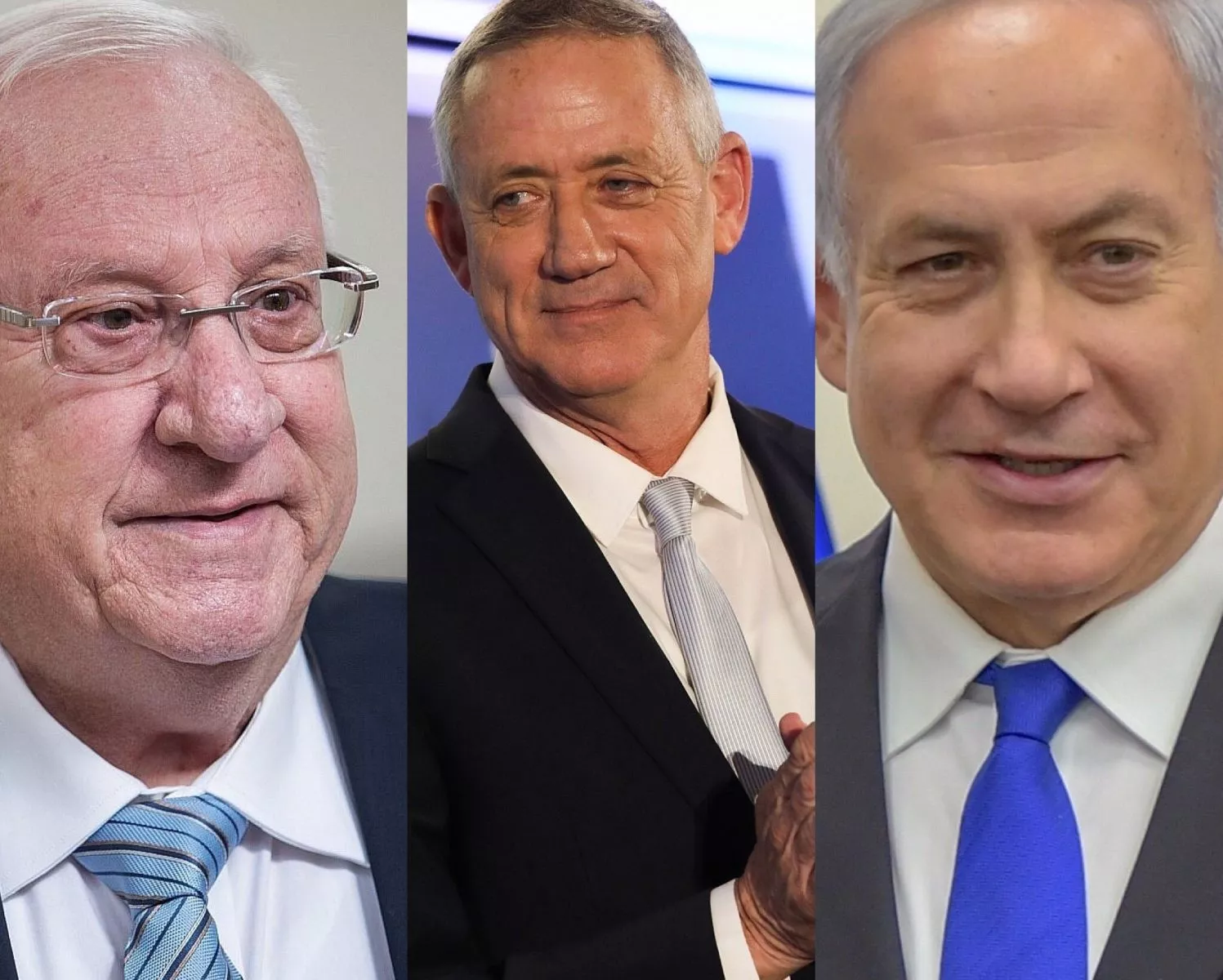
The outcome of the September elections in Israel is similar to the previous one in April, which is why the elections were repeated in the same year – an almost equal right-wing Likud and the liberal Blue and White alliance, without majority support for either of the two largest parties, even with the help of allied smaller parties.
However, these elections have brought something new that may mark the beginning of a new political era in the country – the defeat of the Likud party of controversial Prime Minister Benjamin Netanyahu (31 seats in the 120-seat Knesset), and the victory of the opposition alliance Blue and White of former high-ranking Israeli army officer, Benny Gantz (33 seats).
Netanyahu has publicly admitted that his attempt to form a right-wing government has failed. His attempt to enter into a coalition with the winner Gantz, who flatly rejected the offer, has also failed – after all, this is a long-awaited victory of historical significance. And such a coalition would be the only way for Netanyahu to stay in power. However, Gantz would rather risk the failure of forming a government, which would lead to the third election this year, than share power with Netanyahu, whom he narrowly defeated. In the end, Gantz is a former army chief who cannot allow anyone to tell him what to do. Especially his political rival Netanyahu. But he will probably, as a former officer, obey his superior.
And Netanyahu's defeat per se is so striking and so historic that his biographer Anshel Pfeffer wrote that 'Netanyahu's magic – has disappeared'. The Israeli Attorney General, who firmly holds three corruption cases against Netanyahu, has partly 'contributed' to this, and Netanyahu is soon expecting a final hearing before a verdict is reached. With his electoral failure, Netanyahu has lost hope that parliament will protect him by granting immunity, which would ensure he remains free despite the various 'mischiefs' attributed to him. The media also mentions a 'deal' that would grant Bibi immunity if he withdraws from the power struggle.
Back to the table
On Sunday afternoon, Israeli President Reuven Rivlin will begin two days of consultations with parties, a usual procedure that should ultimately result in the formation of a government. His duty is to choose, by October 2nd, a candidate from among the 120 new members of parliament whom he believes will succeed in meeting the growing challenge of forming a government, and this is usually chosen from the strongest, winning party. The potential prime minister will then try to form a government, and given the election results, through coalitions, which will ultimately be approved by parliament.
Although Rivlin acted similarly in the previous elections when he chose Netanyahu, the government was not formed, partly because Likud did not have a majority support, nor did it manage to secure a majority coalition, and partly because Netanyahu believed that by dissolving parliament, he would achieve a more convincing victory in the next elections, which eluded him in April – a risk that did not pay off despite a strategically executed election campaign in which he used his strongest card – his friendship with US President Donald Trump.
Rivlin is ready to do everything to avoid the April scenario, i.e., calling forced third elections in the same year, but he is aware of the difficulty and complexity of the task. If his candidate fails to form a government within 6 weeks of being appointed, the president can choose another candidate, which gives hope, but at the same time prolongs the agony and, as is usual for the uncertainty that the power struggle brings – deepens the divisions and already present animosities.
The winner does not decide
However, it has long been speculated that secular ultranationalist, former Defense Minister Avigdor Lieberman and his Yisrael Beytenu party, despite winning only 8 seats in parliament, will play a key role. Lieberman's refusal to enter into a coalition with Netanyahu after the April elections cost Israel new elections, but he has proven to be a man not ready for compromises in the past (in 2014, he resigned as Defense Minister due to a ceasefire with Hamas in Gaza). This undeniable secularist, who believes that Israel should join the EU and NATO alliances (at least he held that view a few years ago), strongly opposes coalition building and any alliance with Israeli ultra-Orthodox and religious parties in general, while dreaming of (and working on) creating a unified national government.
Given the existing (and recently deepened) antagonism that prevails among the political parties there, and the deepening division of political structures and society, despite a common ultimate goal for Israel, there is little chance that Lieberman will achieve his vision of a unified national government.
Unless a miracle happens... which is not a miracle but politics – it is enough that no candidate for interim prime minister (for forming a government) wins 61 votes of support, and the president has the authority to decide in favor of forming a unified national government in which Netanyahu and Gantz would be forced to share the prime minister's seat on a rotating basis.
The Israeli parties that have entered the Knesset essentially have the same ultimate goal (except for the predominantly Arab Joint List) – Israel as a Jewish state, but they differ in their approach to the Palestinian Authority (Palestine as a state is partially internationally recognized), where, for example, Gantz's alliance agrees to peace negotiations with the Palestinian government, while Netanyahu's Likud rejects this as a possibility, as illustrated by Netanyahu's pre-election annexation of parts of the Palestinian territory in the West Bank.
Ironically, the main card is now in the hands of the Joint List, composed of four Arab parties, whose vote will decide the winner – Gantz or Netanyahu, as well as Lieberman, who prefers the role of the man behind the scenes making decisive moves and having the final say.
He refused to enter into a coalition with Netanyahu in the spring, but every season implies a change in temperature.
Komentari (0)
Prijavite se za komentiranje
PrijavaJos nema komentara. Budite prvi!
Minuta
Sve →Iz drugih kategorija

High Representative Not Elected: Germans, French and British Sabotaged Americans, New Attempt at End of June

ČOVIĆ WITHOUT MERCY: How Those Who Brought Ademović to Office Created a Political Hell for Him



Sunny Saturday, quite warm



Tragedy in Albanian resort: Two minors drown












