
(Patria) - Poland on Friday began its presidency of the Council of the European Union, mired in a diplomatic dispute with Hungary that underscored a deepening sense of political disunity across Europe at a time when it faces a series of major global challenges, Reuters reports.
Weighed down by a sluggish economy, the EU is preparing for Donald Trump's return to the White House this month on an "America First" platform and the possible imposition of US tariffs on European exports.
It is also facing worsening trade relations with China and Russia's war in Ukraine at a time when the European Union's two leading powers, France and Germany, are distracted by domestic political upheavals.
Against this bleak backdrop, Poland is seeking a leading role in shaping European policy, particularly on security.
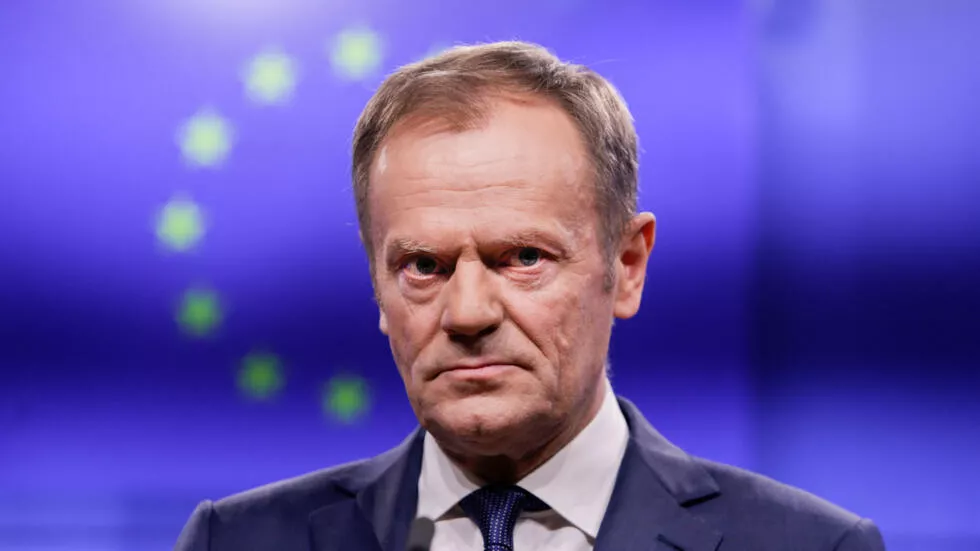
"If Europe is powerless, it will not survive... Let us do everything so that Europe and Poland do not have to pay the highest price for freedom, for strength, for sovereignty. Let us do everything so that Europe becomes strong again," Polish Prime Minister Donald Tusk said in Warsaw at the ceremony marking the takeover of the presidency.
He was joined by European Council President Antonio Costa, who stressed the importance of continued support for Kyiv.
"This year we must continue to stand by Ukraine - for as long as it takes, for as long as it lasts, to achieve a comprehensive, just and lasting peace."
"To do this, we must continue to see defence as a strategic priority for the European Union," he said.
Poland's ambitions
"Tusk hopes to lead a realignment in the European Union when it comes to building a coalition around support for Ukraine and a meaningful peace that benefits Kyiv, not Moscow," said Edit Zgut-Przybylska, an assistant professor at the Institute of Philosophy and Sociology at the Polish Academy of Sciences.
Tusk, a former President of the European Council who previously headed the centre-right European People's Party, is a well-connected figure on the European Union stage. However, as European capitals face tough decisions on issues such as how to strengthen and finance defence spending, analysts say Warsaw is unlikely to be able to lead alone.
Piotr Buras, head of the European Council on Foreign Relations office in Warsaw, said the challenges facing the European Union exceed the capacity and time horizon of any six-month presidency.
"This is a key moment for Europe, primarily because of Trump's arrival and the situation in Ukraine, but also issues related to the broader economy, competitiveness and a possible trade war, coupled with weak leadership and a transitional moment within the European Union itself," Buras said.
Regarding European collective security and support for Kyiv, some analysts say Germany, Europe's largest economy, could take on a greater role after national elections on February 23, which conservatives are expected to win.
"The only hope is that the new German leadership will decide to take a much more active and assertive stance," said Peter Bator, a former Slovak ambassador to NATO, now a chief analyst for the opposition party Progressive Slovakia.
Diplomatic dispute
The Polish government said Hungary's envoy was not welcome at the ceremony marking Warsaw's assumption of the rotating six-month presidency of the European Union, a public snub following months of political bickering between the leaders of the two countries.
Hungary angered Poland last month by granting political asylum to a former Polish deputy justice minister who is under investigation at home for alleged misuse of public funds, which he denies. Warsaw called the move a "hostile act" contrary to European Union principles and recalled its ambassador from Budapest.
Hungarian Foreign Minister Peter Szijjarto described Friday's snub as "childish," the news website HVG.hu reported.
Poland's move only added to growing signs of European disharmony. Slovakia, which like Hungary has sought to maintain some ties with Russia, threatened retaliation against Ukraine on Thursday after it halted transit flows of Russian gas, while on Friday negotiations to form a new government in Austria suffered a setback when a key party broke off talks.
Komentari (0)
Prijavite se za komentiranje
PrijavaJos nema komentara. Budite prvi!
Minuta
Sve →Iz drugih kategorija

High Representative Not Elected: Germans, French and British Sabotaged Americans, New Attempt at End of June

ČOVIĆ WITHOUT MERCY: How Those Who Brought Ademović to Office Created a Political Hell for Him



Sunny Saturday, quite warm



Tragedy in Albanian resort: Two minors drown












