
By Armin Sijamić
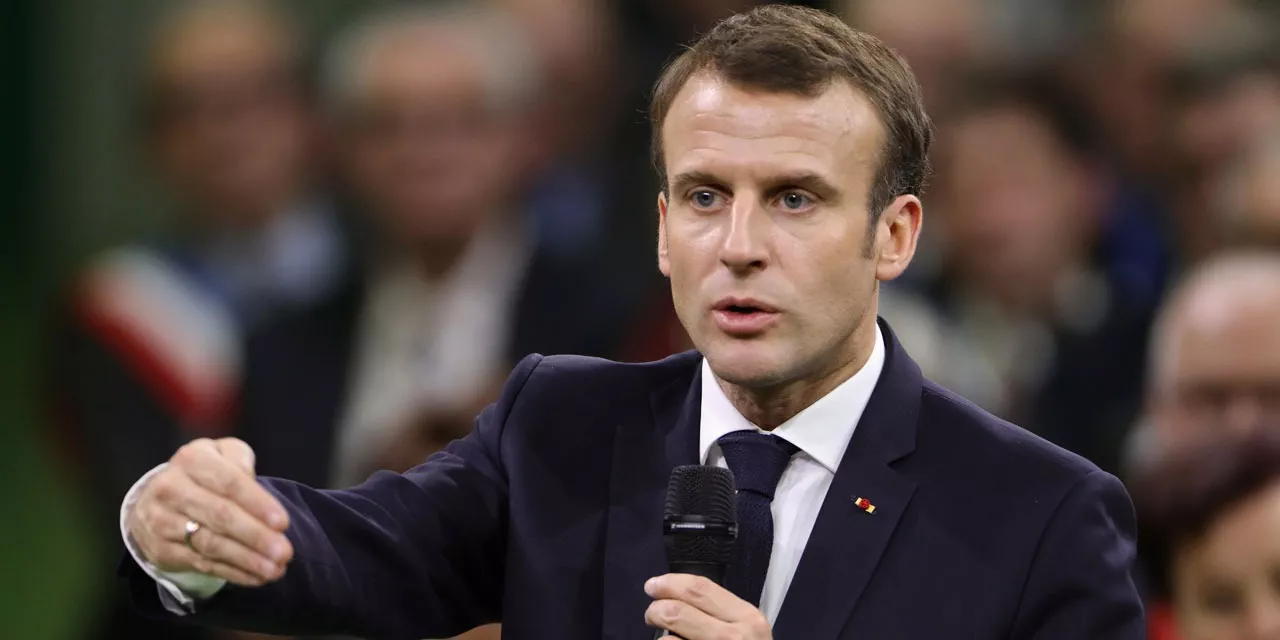
In recent days, a political and legal drama has been unfolding in France, with streets becoming a scene of clashes between police and dissatisfied citizens. Emmanuel Macron's decision to gradually increase the retirement age from 62 to 64 by 2030, bypassing parliament, is not something that only affects labor relations, but is a decision that concerns legal and constitutional matters, demography, politics, and the economic system as a whole, as well as the media, which is specific to Macron and journalists there.
Since France is the largest country in the European Union, there is no doubt that the same or a similar model will be applied elsewhere if the need arises. France has been shaken by a political crisis for weeks. President Macron, faced with demographic and economic trends in the country, decided to increase the retirement age from 62 to 64. The majority of French parliamentarians and a large part of labor unions reacted sharply. It was clear to them that this was only an introduction to new practices, and not a final solution to the problem. Opponents of this law were not only against the French retiring later, but they were against it because the French social system is gradually being replaced by American-style liberal capitalism, and economic rationality, with which there is no compromise, is being introduced into French politics, meaning the state cares less and less for its citizens. Let's recall that until 2010, the French retired at the age of 60.
Citizen Macron
Before we delve into the reform that led to the political crisis in the country, let's briefly touch upon Macron's relationship with the media, as the behavior of the French media in relation to this crisis is very specific and important. Some media outlets found themselves in an unenviable position when Macron decided to use a constitutional provision to impose the pension reform, and the editor of the renowned newspaper Le Monde diplomatique, Serge Halimi, refused to attend a tribute to his mother, Gisele Halimi, organized by the president on the day he announced that the right to abortion would become part of the constitution. Halimi strongly opposes the pension reform, calling the president a "man against the people" in his article last week. Such a stance would not be strange, as French media are very critical of certain government decisions, were it not for the somewhat bizarre article from 2017 in which Le Monde diplomatique, along with a host of other media outlets, supported Macron's rise to power.
The "media candidate," as Macron was titled and as the article is called, suggests that the little-known Rothschild banker is what France needs and that he can preserve the country as "liberal and social" and Euro-Atlantic oriented. Although it is difficult to discern from the article how a relatively unknown politician managed to win over the owners and editors of French media in such a short time, one could conclude that this polite and capable young banker and investor is what France needs.
In a short period, a leader was created who, in his second term, governs the country by bypassing parliament and implementing liberal capitalism beyond what the French can tolerate. In the aforementioned article from last week, Halimi writes that Macron decided to cut funding for schools, hospitals, and pensioners, while the army's budget is planned to double between 2017 and 2030. In a statement to AFP, he said that the pension reform would most affect women who perform the hardest jobs. In those days, Macron was paying tribute to his mother for her fight for women's rights.
Who could have expected such a turn of events?
Economy and Politics
Using the legal procedure known as 49-3, Macron avoided a vote on the pension reform in the lower house of the French parliament because he did not have a majority there. This caused outrage among some parliamentarians, unions, media, and citizens... However, Macron's stance is that the country's pension system cannot sustain such a large number of pensioners who are living longer while fewer are being born. Macron claims that the pension system is on the verge of collapse if the reform is not implemented, and one of his key points in reforming the French economy was pensions. Left-wing and right-wing parliamentarians did not share this view. Macron and the imposition of the decision were opposed by the leader of the left, Jean-Luc Melenchon, the right-wing politician Marine Le Pen, the communist leader Fabien Roussel, and one of his party colleagues called the decision a political "guillotine".
Others said this was Macron's attack on democracy and the will of the majority of citizens who elected parliament. MPs asked why money for pensioners was not taken from other budget items. They consider the reform unfair to workers, and even more vocal in their condemnation of the imposition of the law. A motion of no confidence in the government was initiated, but there were not enough votes to overthrow it. Even before Macron "pushed through" the reform, protests occurred across the country, some of which were violent.
Dozens of people were arrested. Unions went on strike. New protests and new strikes were announced, and Macron says he will not back down from the reform. The transport, waste collection, energy production, and other sectors have threatened to stop working.
An Example for Europe
Developments in France are being closely watched across Europe. Macron has not received condemnations, but has received support from some countries, for example from Spain, where a left-wing minister said that this reform is necessary. This solidarity with Macron is not surprising, as he, along with the media that supported him, is facing the gradual decline of traditional parties (socialists and followers of Charles de Gaulle) and the rise of radical right-wing and left-wing parties. Even Macron formed a party before his first presidential race, trying to satisfy both the right and the left with his program. A similar process has affected Spain with parties like Podemos, Ciudadanos, and Vox, against which traditional parties (socialists and conservatives) are finding it increasingly difficult to respond. The French pension reform may be an indicator of where Europe is heading, if there are no changes brought by parties that do not belong to traditional political forces.
It is known that France has a developed immigration policy and has allowed planned immigration from its former colonies. However, demographic trends have threatened decades of work by French demographers. Therefore, it is not difficult to conclude that other countries, especially those facing a significant decline in population, will follow Macron's path, and that public resistance will be weaker than in France, which has strong unions. Let's recall the warning of former Italian Prime Minister Silvio Berlusconi that his country will not be able to pay pensions.
Therefore, Macron's reform could have long-term consequences for France and Europe, especially in times of economic crisis and a lack of new policies offering sustainable solutions. The French president's decision to impose an unpopular decision also speaks to the importance of the issue of demography, i.e., the urgency to act. The way he did it and the possibility that his ideological conviction lies behind such a decision is another question that is as important as the reform itself.
Komentari (0)
Prijavite se za komentiranje
PrijavaJos nema komentara. Budite prvi!
Minuta
Sve →Iz drugih kategorija

High Representative Not Elected: Germans, French and British Sabotaged Americans, New Attempt at End of June

ČOVIĆ WITHOUT MERCY: How Those Who Brought Ademović to Office Created a Political Hell for Him



Sunny Saturday, quite warm



Tragedy in Albanian resort: Two minors drown












