

By Armin Sijamić
In Sunday's elections in Chile, the second richest country in South America, José Antonio Kast emerged victorious, which was not a surprise. Kast's victory has implications for numerous issues that are important beyond the borders of the country that is a world leader in the production of copper and lithium.
For decades, Chile has been considered one of the most stable countries in South America, and the strength of its economy attracts millions of legal and illegal migrants, especially from neighboring Peru and Bolivia.
The victory of Gabriel Boric in the presidential race in March 2022 was a harbinger that a different Chile was possible. Riding the wave of popularity of Latin American leftists, Boric secured the presidency but failed to meet the expectations of those who expected miracles from him. Chile's established political system and the power of big capital limited the young president's room for maneuver, assuming Boric was sincere when he promised what he would do upon taking office.
José Antonio Kast (Photo: X)
There are other opinions on this matter. The Spanish right-wing newspaper El Mundo quoted a professor who was disappointed that Boric did not fulfill his promise to make Chile the "graveyard of neoliberalism," stating that the president "governed for businessmen."
Therefore, those who call themselves the left, in a bind, supported a minister from the current government in these elections. Jeannette Alejandra Jara Román, a member of the Communist Party of Chile, was the choice of the left and the progressive side. However, despite the name of her party, she did not advocate for what is understood by communist ideas. Her political program was a mix of leftist ideas, libertarian tenets, the forced positions of millennials, and the desires of those whose expectations had been repeatedly disappointed.
Thus, Kast's victory in the second round of the presidential elections was not a surprise. He secured 58 percent of the vote in a race whose outcome was known to everyone in Chile. The defeated side can hope that these elections could be the beginning of a new policy in the future, but that is just an option for now. What is a fact is that Kast won in many traditional strongholds of the left as well.
Latin America is Moving Right
Kast is an experienced politician, and his biography sounds frightening to many. Among other things, Kast is a politician from the right and the son of a German Nazi from World War II, and his brother was a minister during the infamous Augusto Pinochet's regime and head of the central bank.
His program for these elections was simple. He called for order and fixing the situation in Chile, as there were various crises under Boric (polls indicated that security was the main concern for sixty percent of voters). Some problems arose from the fact that Boric was often at odds with the United States and especially President Donald Trump.
The economy also suffered. From 2004 to 2013, it grew by an average of 4.8 percent, and from 2014 to 2023, by 1.9 percent. Kast presented this as a consequence of the strengthening of the left.
Other problems stemmed from Boric's missteps, the arrival of hundreds of thousands of illegal migrants, and the young president's close ties with some leftist leaders in Latin America. Kast offered a solution – good relations with Washington and the liberal capitalism that had previously brought Chile impressive economic growth.
Kast's victory was welcomed in Washington, and it is well-known that he is strongly pro-Israel. Washington's support for the Chilean right-winger is not surprising – it did the same in Pinochet's case. But the fact that a man with such a biography is pro-Israel shows how much the political landscape worldwide is changing.
Although Boric distanced himself from some of them after his victory, the fact remains that he came to power on the wave of successes of leftists across South America. Kast's victory is a move in the opposite direction, as right-wingers will now govern Argentina, Bolivia, Paraguay, Peru, Ecuador, Bolivia, and Chile starting in March next year.
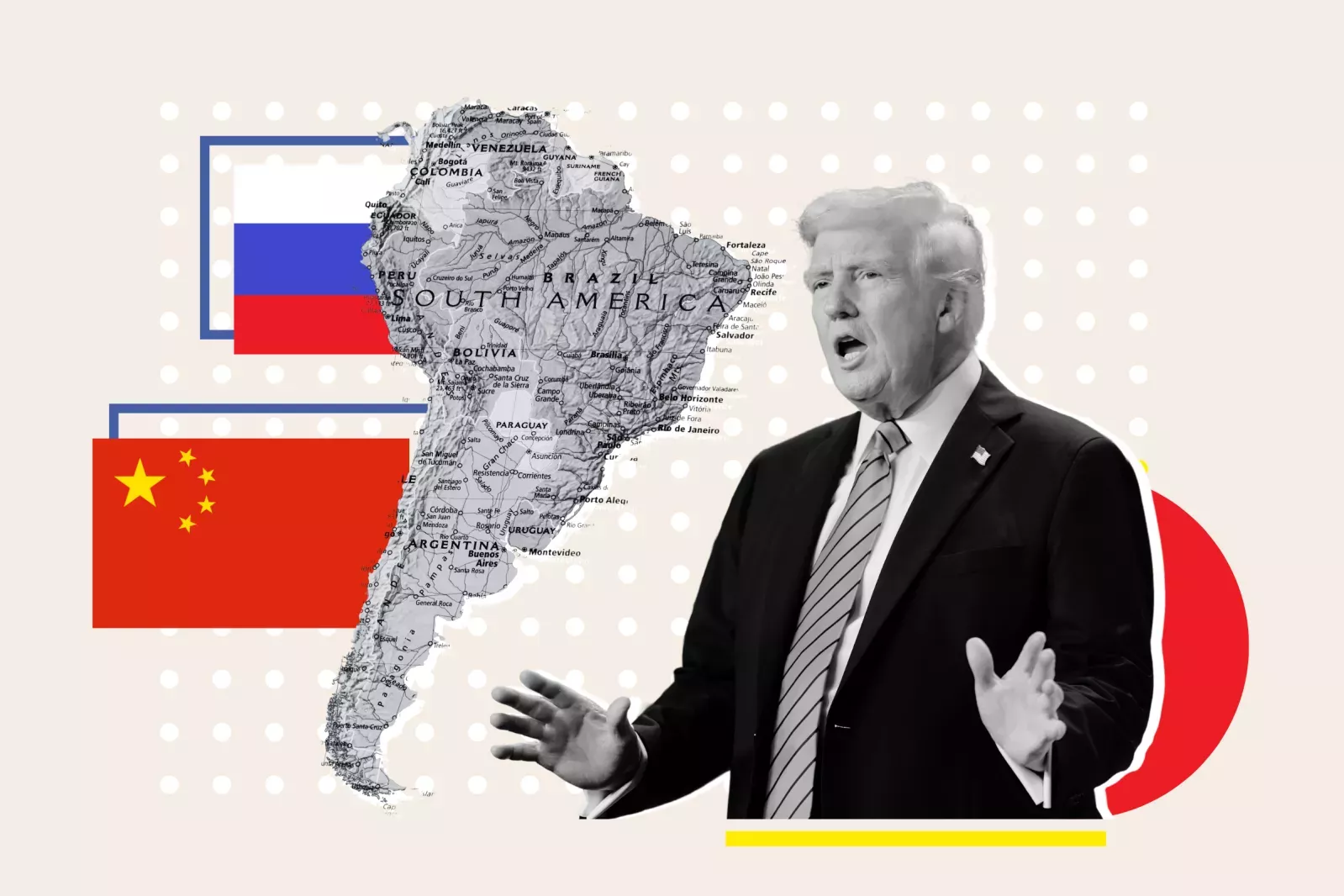
However, Kast's voters cannot expect miracles yet, as the national parliament remains divided, and parties that nominally and substantively oppose the right have significant strength. It is believed that Kast will have to make various compromises with some of them when he takes office in March.
Leftists on this continent retain power in Uruguay, Brazil, Colombia, and Venezuela, which has been facing the threat of a US military intervention for months.

Who is Left, and Who is Right?
Kast's victory has also opened up other questions important for the future of Latin America, and in a broader sense, for the West and all parts of the world where elections are held. The Chilean elections have once again shown that far-right individuals worldwide stand with Israel, while those who claim to be left stand with Palestine.
Although there is a significant Palestinian and Jewish community in this part of the world, this division is not important solely for that reason. Namely, this is one of the rare issues on which many candidates worldwide now diverge. For example, the defeated communist, who is the current minister in Boric's government, was far from the ideology she supposedly represents. The same applies to Boric, who supported Palestine and condemned Israel, distanced himself from Venezuela and Nicaragua, clashed with the Brazilian leftist government, sided with Washington, and was a favorite of many mainstream media outlets... In other words, ideological divisions, as we know them, are fading and being replaced by others.
Those familiar with the situation in Chile claim that Kast will also be significantly different from what the public expects and what was part of his campaign program.
Almost everyone dismisses the possibility that he will follow in Pinochet's footsteps, and everyone agrees that he will not copy Javier Milei from neighboring Argentina, who is stripping the state of regulations and rules...
It is believed that Kast will focus on the economy and try to present the face of the new Latin American right, given that elections will be held in Colombia and Brazil next year.
Some will describe Kast's style of governance with the word 'portaliano,' referring to Diego Portales, who in the 1830s developed the idea of a republican and conservative order for Chile, a concept the newly elected president has shown in his speeches by calling for 'order' in the country.
Kast's economic program will certainly be supported by the Chilean business community, which sided with him in these elections.
Furthermore, it is certain that Kast will align himself with the policies of Washington and Donald Trump. Kast's electoral victory is another success for Trump, even though he did not have to support him with American money like Milei in Argentina.

The fact that Trump is directing various political processes worldwide, and not just by force, shows how much the political scene is changing. What his predecessors in the White House (Joseph Biden or Barack Obama, for example) tried to achieve with enormous resources, Trump is succeeding at by promising nothing more than offering something better. Trump, however, is changing some things, and at a great speed.
Komentari (0)
Prijavite se za komentiranje
PrijavaJos nema komentara. Budite prvi!
Minuta
Sve →Iz drugih kategorija

High Representative Not Elected: Germans, French and British Sabotaged Americans, New Attempt at End of June

ČOVIĆ WITHOUT MERCY: How Those Who Brought Ademović to Office Created a Political Hell for Him



Sunny Saturday, quite warm



Tragedy in Albanian resort: Two minors drown












