
The top performance and high growth rate of the Turkish economy in the last ten years have been achieved thanks to consistent fiscal policy, which, with the support of reforms, has been permanently implemented since 2002, announced the Embassy of Turkey in BiH, reports the Patria news agency.
Structural reforms, which from a macroeconomic standpoint enable alignment with the global economy, place Turkey in the position of a regional leader when it comes to figures achieved in foreign direct investments (FDI) on the one hand, and pave the way for revolutionary innovations in the economic and financial sector, on the other hand.
These reforms, which gained momentum with the support of the EU membership process, are primarily focused on the liberalization of the Turkish economy, promoting the private sector, strengthening the productivity/resilience of the financial sector, as well as establishing a strong and healthy social security system.
The implemented reforms have strengthened the country's fundamental economic and financial indicators, as evidenced by the fact that in the period from 2002 to 2015, the real GDP growth rate averaged 4.7% annually.
In addition, the growth of the Turkish economy in 2015 of 4% even surpassed global economic growth, which (according to the IMF's calculation) amounted to 3.1%. Also, the Turkish economy in the first quarter of 2016, with a growth of 4.8%, ranked among the top 5 economies in the world with the highest growth rate.
In the period of the global economic crisis, which hit the world in 2009 until today, Turkey has shown impressive performance, achieved despite very unfavorable global conditions.
Gross domestic product per capita in 2015 tripled compared to 2002, jumping from $3,492 to $9,261.
While national income per capita in 2015, according to purchasing power parity, exceeded $20,000. The industrial production index in May 2016 was 131.7 (2010=100), which is 6.8% higher compared to May of the previous year.
On the other hand, from economic indicators, it can be established that the public debt of European countries is higher compared to Turkey. Turkey's public debt is at the level of 30-32% of gross domestic product. This rate in EU countries averages 116%, and in OECD countries 93%. The central government budget deficit rate of Turkey in 2015 amounted to 1.2% relative to GDP, which puts it in a better position than 19 EU member states, and thus satisfies the Maastricht criterion of 3%.
Without deviating from fiscal discipline, Turkey continues with stable growth. Within this framework, the banking system established on solid foundations continues to provide support to the economy, in no way deviating from current lending criteria. The capital adequacy ratio of our banks is at the level of 15.5%. In the upcoming period, the implementation of lending directed towards economic growth is planned.
The Turkish economy in the last year provided jobs for 1.1 million people. Since the beginning of the economic crisis in 2009 until today, over 7 million people have been employed.
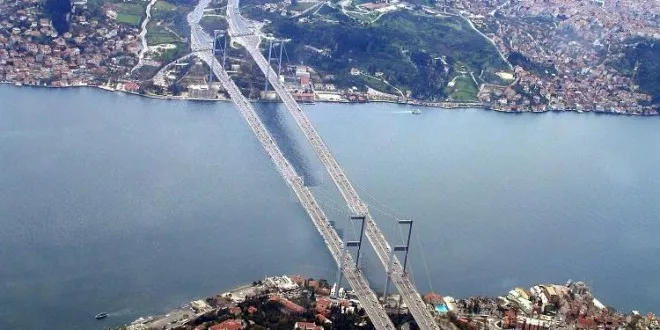
Incentive measures for medium-term and long-term investments continue to be undertaken. In this regard, on August 26, the Yavuz Sultan Selim Bridge will be opened to traffic, and on December 20, the Eurasia Tunnel (Avrasya), as two significant transportation and infrastructure projects of today. This year, the foundation stone is planned to be laid for the construction of the Çanakkale Bridge, which will be the longest bridge in the world. Again in 2018, the first phase of work on the largest airport in the world will begin in Istanbul. The goal of our country is to increase investments, employment, production, and exports.
In this sense, it is necessary to emphasize our government's commitment to the market economy. The market economy will continue to function, and transactions of all financial instruments will be carried out without problems. The banking system continues with routine operations, and there are no problems regarding money transfers.
Likewise, the transport of goods is realized without problems, and import and export operations are carried out under normal conditions. The same situation applies to ports, airports, roads, highways, railways, and all logistical infrastructure. Air traffic of Turkish Airlines (THY) and other domestic airlines is proceeding without any problems, states the announcement of the Embassy of Turkey in BiH.
Komentari (0)
Prijavite se za komentiranje
PrijavaJos nema komentara. Budite prvi!
Minuta
Sve →Iz drugih kategorija

High Representative Not Elected: Germans, French and British Sabotaged Americans, New Attempt at End of June

ČOVIĆ WITHOUT MERCY: How Those Who Brought Ademović to Office Created a Political Hell for Him



Sunny Saturday, quite warm



Tragedy in Albanian resort: Two minors drown












