
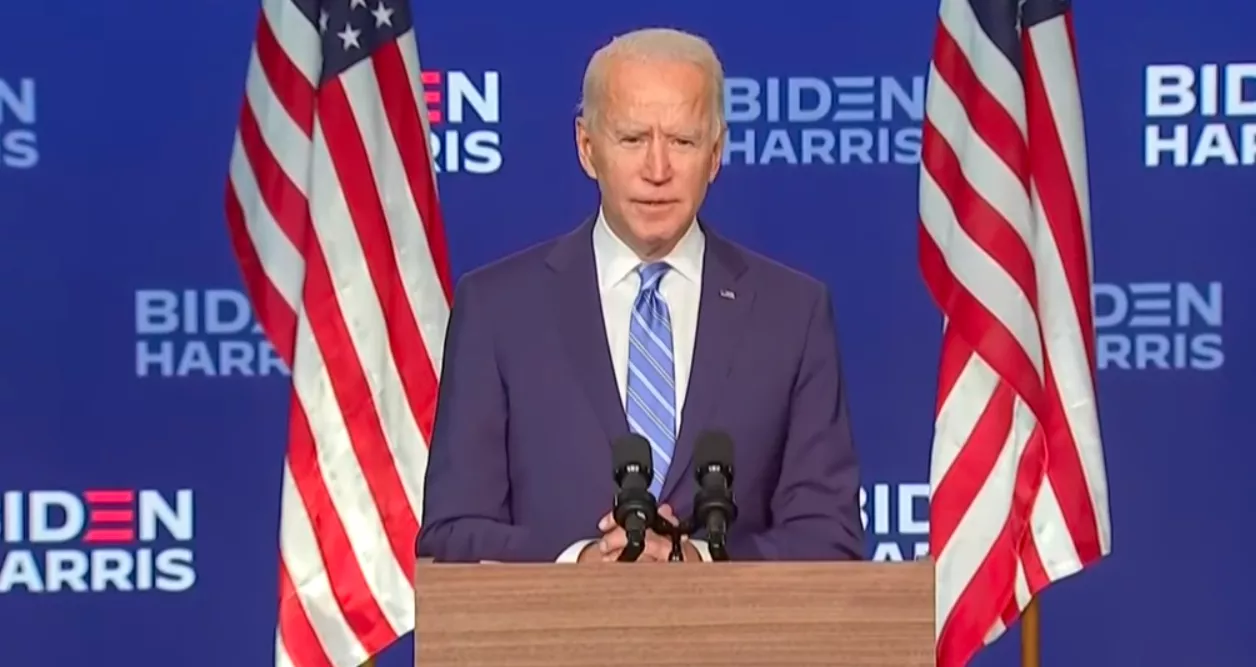
(Patria) - The Working Group for BiH sent a letter to US President Joe Biden, a letter also drafted with the support of the Circle 99.
"We are writing to you to appeal to you to respond decisively to threats to the sovereignty and territorial integrity of Bosnia and Herzegovina. It is crucial to prevent Bosnian Serb and Bosnian Croat nationalists from destabilizing Bosnia and Herzegovina through threats of secession or further deepening ethnic divisions, developments that would ultimately enable the realization of the goals of the genocide and international aggression from the 1990s. Furthermore, it is crucial that we support the High Representative who oversees the implementation of the Dayton Peace Agreement. Further in this letter, we analyze aspects of the current crisis and recommend strategic initiatives to defend the sovereignty of Bosnia and Herzegovina, preserve peace, and ensure a better future for the next generation.
Milorad Dodik, a Bosnian Serb nationalist, who is currently a member of the tripartite Presidency, has recently intensified his efforts to destabilize Bosnia and Herzegovina and the region through simultaneous boycotts of state institutions, undermining the constitution, and threats to establish his own army. In his report of November 5, 2021, to the United Nations Security Council, High Representative Christian Schmidt warned that such actions would constitute an abandonment of the constitutional order of Bosnia and Herzegovina and the Dayton framework and that "they would have the practical effect of the secession of Republika Srpska" from Bosnia and Herzegovina. The High Representative called such developments a "serious attack" on the Dayton Peace Agreement that has thwarted all hopes for peace and reconciliation in Bosnia and Herzegovina.
Even more significantly, however, any such move by Republika Srpska towards secession or "autonomy" must be understood as nothing less than the realization of its genocidal founding goals. The Trial Chamber of the International Criminal Tribunal for the former Yugoslavia found Radovan Karadžić guilty of a joint criminal enterprise aimed at permanently removing non-Serb populations from the territory claimed by Bosnian Serbs and establishing an ethnically homogeneous state. Mr. President, on December 13, 1995, you bravely condemned the atrocities as a "Serbian genocidal enterprise" and "brutal, pure genocide." You characterized your commitment to Bosnia and Herzegovina as a commitment to the values of justice and the promise that genocide would never happen again. We appeal to you to fulfill that promise by directing your diplomatic team to ensure that genocidal goals are not realized.
In addition to the aforementioned threats to peace from Republika Srpska, the nationalist leader of Bosnian Croats, Dragan Čović, insists on electoral law reform that would enable the election of representatives of his nationalist party HDZ (Croatian Democratic Union) to the Presidency. Such a development would further strengthen ethnic divisions and lead to the creation of a third entity and further destabilization of Bosnia and Herzegovina. The formation of a third entity would, moreover, achieve the goal of international aggression organized into what has been ruled as a joint criminal enterprise that originated in Croatia, a JCE aimed at establishing Herceg-Bosna or "Greater Croatia" in Bosnia and Herzegovina. Mr. Čović seeks to impose his election law reform proposal by blocking the functioning of the government and threatening to boycott the next elections.
We appeal to you to direct your negotiating team to reject this electoral law reform proposal and to work with civil society groups to enable Bosnia and Herzegovina's transition from a state composed of "constituent peoples" to a modern liberal democracy of citizens with equal rights and dignity. It is in this very spirit that we ask you to direct your negotiating team to be guided by democratic principles and the rulings of the European Court of Human Rights in the Sejdić-Finci case from 2009 and the Zornić case from 2014. These nationalist goals are openly supported by the Russian Federation, which sees such destabilizing initiatives by Bosnian Serbs and Bosnian Croats as an opportunity to prevent Bosnia and Herzegovina's Euro-Atlantic integration. In another official statement, it was emphasized that the Russian Federation views Bosnia and Herzegovina as two entities, not as a unified state.
By supporting Mr. Dodik's various referendums challenging the Constitutional Court and the High Representative, a recent statement indicated that the Russian Federation would view Bosnia and Herzegovina's membership in NATO as a hostile act to which it would have to react. Indeed, Mr. Putin recently stated that "the West views Russia's warnings not to cross its 'red lines' as 'too unserious.'" While this undoubtedly referred directly to Ukraine, Republika Srpska could equally represent another Donbas basin for Moscow, a sitting line of resistance to NATO and the European Union.
Given Bosnia and Herzegovina's facing threats from Republika Srpska and the Russian Federation's interference in this region, we appeal to our diplomats under your leadership to advocate for an increase in the EUFOR presence in Bosnia and Herzegovina to a more realistic level and to initiate NATO contingency planning. We also appeal to our negotiating team to reject the electoral law reform designed to benefit Bosnian Croat nationalists in achieving their goal of further destabilizing Bosnia and Herzegovina, and to express unconditional support for the High Representative in his efforts to resist Milorad Dodik's violent provocations and hate speech.
Ultimately, we believe that the United States must respond to Mr. Putin's "red lines" with its unwavering commitment to our values of justice, democracy, and human rights, along with our enduring promise to prevent the recurrence of genocide and international aggression in Bosnia and Herzegovina," the letter states.
Working Group for Bosnia and Herzegovina
Prof. David Pettigrew, PhD, Professor of Philosophy and Holocaust and Genocide Studies, Southern Connecticut State University, Board of Directors of the Genocide Studies Program at Yale University,
Vildana Bijedić, MA, Mandala Academy Foundation,
Patrick McCarthy, Director of the Medical Center Library, Associate Dean for University Libraries, Saint Louis University,
Dženita Pašić, Attorney, Louisville, Kentucky,
Mirsad Čaušević, concentration camp survivor from Omarska and Manjača
Kenan Arnautović, MD, Memphis, Tennessee,
Dijana Mujkanović, PhD candidate, University of Pittsburgh
Mead Mišić, Attorney, Boston, Massachusetts,
Adna Karamehić-Oates, PhD, Director of the Bosnian Studies Center at Fontbonne University,
Azem Dervišević, Business and Community Entrepreneur, Cambridge, Massachusetts,
Nerma Bučan, Chief of Staff/Political Advisor in the Office of Prof. Dr. C. Schwarz-Schilling,
Prof. Emir Festić, MD, MA, Ponte Vedra Beach, Florida,
Esad Boškailo, MD, Associate Professor of Psychiatry, University of Arizona, College of Medicine
Phoenix,
Damir Husamović, MA in Economics, Community Activist, Director of Community Engagement at Cydea, President of the Bosnian Islamic Center in St. Louis,
Jordan Steven Sher, Author, And Still We Rise: A Novel About the Genocide in Bosnia /A mi ipak ustajemo: roman o genocidu u Bosni i Hercegovini/
Rupert Wolfe Murray, Author
Peter Lippman, Author, Surviving the Peace: The Struggle for Recovery in Postwar Bosnia-
Herzegovina /Preživjeti mir: borba za oporavak u postratnoj Bosni i Hercegovini/
Keith Doubt, Professor Emeritus, Wittenberg University
With the support of
Adil Kulenović, President of Circle 99, Sarajevo,
Mustafa Cerić, PhD, former Reis-ul-ulema of Bosnia and Herzegovina,
Munira Subašić, President of the Association of Mothers of the Enclaves of Srebrenica and Žepa
Šemso Osmanović, PhD, Srebrenica survivor,
Satko Mujagić, Guardians of Omarska, concentration camp survivor from Omarska and Manjača,
Bakira Hasečić, President, Association 'Woman - Victim of War',
Samir Vranović, President, Association Truth Kalinovik 92,
Halida Konjo-Uzunović, President, Association of War Victims Foča 92-95
Jasna Čaušević, Officer for Genocide Prevention and Protection Responsibility, Society for Threatened Peoples (STP), Germany
Komentari (0)
Prijavite se za komentiranje
PrijavaJos nema komentara. Budite prvi!
Minuta
Sve →Iz drugih kategorija

High Representative Not Elected: Germans, French and British Sabotaged Americans, New Attempt at End of June

ČOVIĆ WITHOUT MERCY: How Those Who Brought Ademović to Office Created a Political Hell for Him



Sunny Saturday, quite warm



Tragedy in Albanian resort: Two minors drown












