
Written by: Armin Sijamić
The wars in Eastern Europe and the Middle East are capturing public attention worldwide. These wars also occupy the attention of the US military and officials. "Overstretch" and "overcommitment", as if from American textbooks on geopolitics, give China an opportunity to show strength to Taiwan and once again push the boundary of what they dare to do.
Since the beginning of the year, relations between Taiwan and China have taken on a new dynamic. After the election victory of Lai Ching-te, a proponent of independence and distancing from China, Beijing received in black and white that at this moment, on the renegade Chinese island, those who wish to submit to it are a minority.
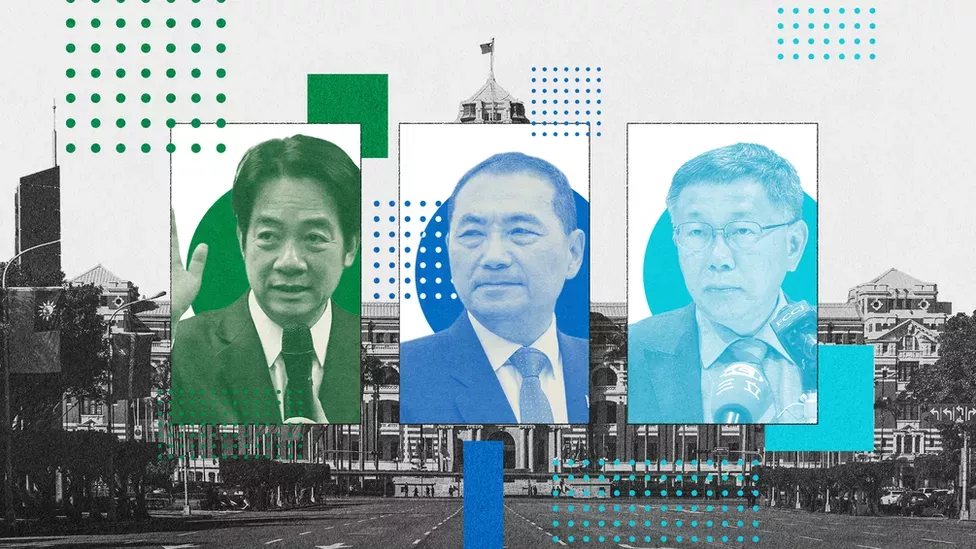
Lai Ching-te's recent speech was the occasion for this week's show of force by Beijing. Speaking on the occasion of Taiwan's National Day, as reported by agencies, he promised to "resist the annexation" of the island and insisted that Beijing and Taipei "are not subordinate to one another."
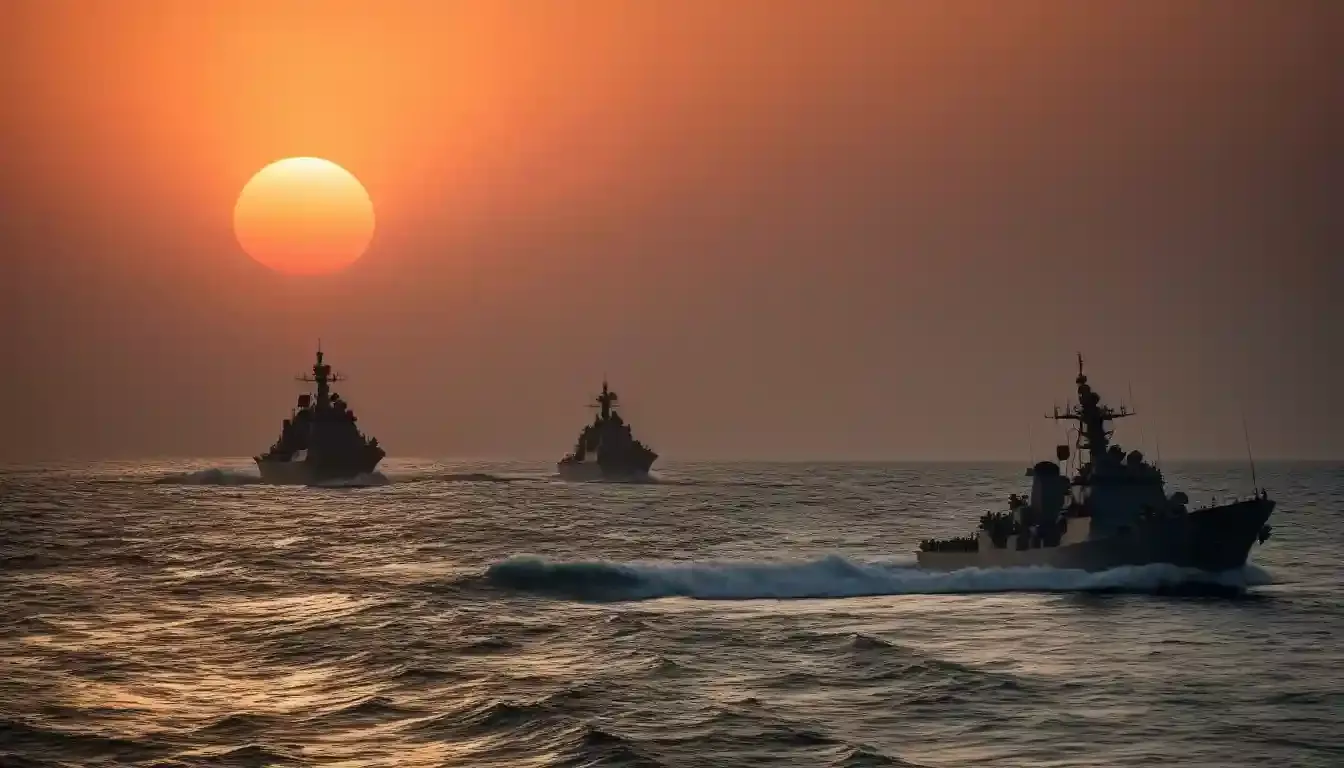
This speech by the "separatist," as Beijing labels Lai Ching-te, was marked as a "provocation" leading the people of Taiwan to "catastrophe." To show that it has forces ready to respond when the opportunity arises, Beijing held a military exercise on Monday called "Joint Sword-2024B," just four days after Lai Ching-te's aforementioned speech. Taiwan was surrounded by Chinese ships, while over a hundred Chinese aircraft were in the air.
Step by step
The name of the exercise speaks volumes. When Lai Ching-te took office in May, China held its largest-ever exercises off Taiwan's coast, calling them "Joint Sword-2024A," which also simulated a blockade of the island. According to the Chinese military, this week's exercises were even closer to the island, a clear message to the authorities in Taipei.
The exercises "test the joint operational capabilities of theater command troops," Beijing announced. They are taking place in "areas north, south, and east of Taiwan Island," said Captain Li Xi, spokesperson for the Eastern Theater Command of the Chinese military. The exercises are "focused on patrols, sea-air combat readiness, blockades of key ports and areas," he said. The exercises practice "attacks on maritime and land targets."
According to agencies, China used the aircraft carrier Liaoning, military ships, and over a hundred aircraft of various types in the exercises. At nine locations around Taiwan, the Chinese military conducted exercises and fired projectiles. Taiwan first announced that China had used seventeen warships and 125 military aircraft, a record number for a single exercise of this kind. Then Taiwan said it had detected 25 Chinese aircraft, seven warships, and four other vessels.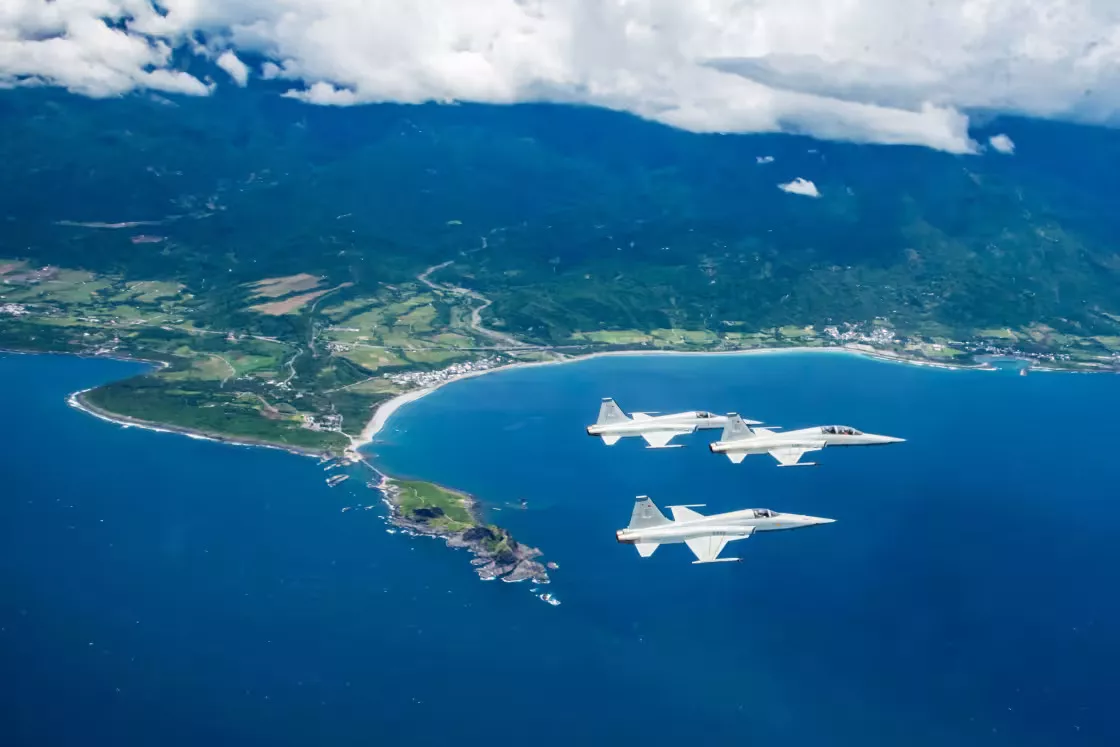
This Chinese show of force is not only due to Lai Ching-te's speech. The preoccupation of the United States with other issues is an opportunity for China. The demonstration of force off the coast of a close ally, which President Joseph Biden has pledged to defend militarily in case of an attack, was met by official Washington with a "warning" and a message that it is "monitoring" Beijing's activities.
China did not attack Taiwan, but once again violated what is considered an unofficial boundary. Beijing again crossed the (non-)existent border without warning, and Taiwan did not react. Previously, Taiwan responded to similar Chinese maneuvers by raising its military and sending aircraft and ships to the area. The same happened on Monday, but no one stopped the military under Beijing's command.
China has been trying to impose this "new normal" for years, following a similar recipe to when the US sails along the Chinese coast in "international waters," which Beijing condemns and then stops. But with Taiwan, Beijing plays more boldly, putting it in a subordinate position and erasing established norms.
Let us recall the events from late February this year, when China erased Taiwan's red lines near the Kinmen islands. After two Chinese fishermen lost their lives in waters that Taiwan claims are its own, located right off the coast of China, Beijing sent coast guard patrols to establish order, i.e., to show that Taipei has no sovereign authority in that area.
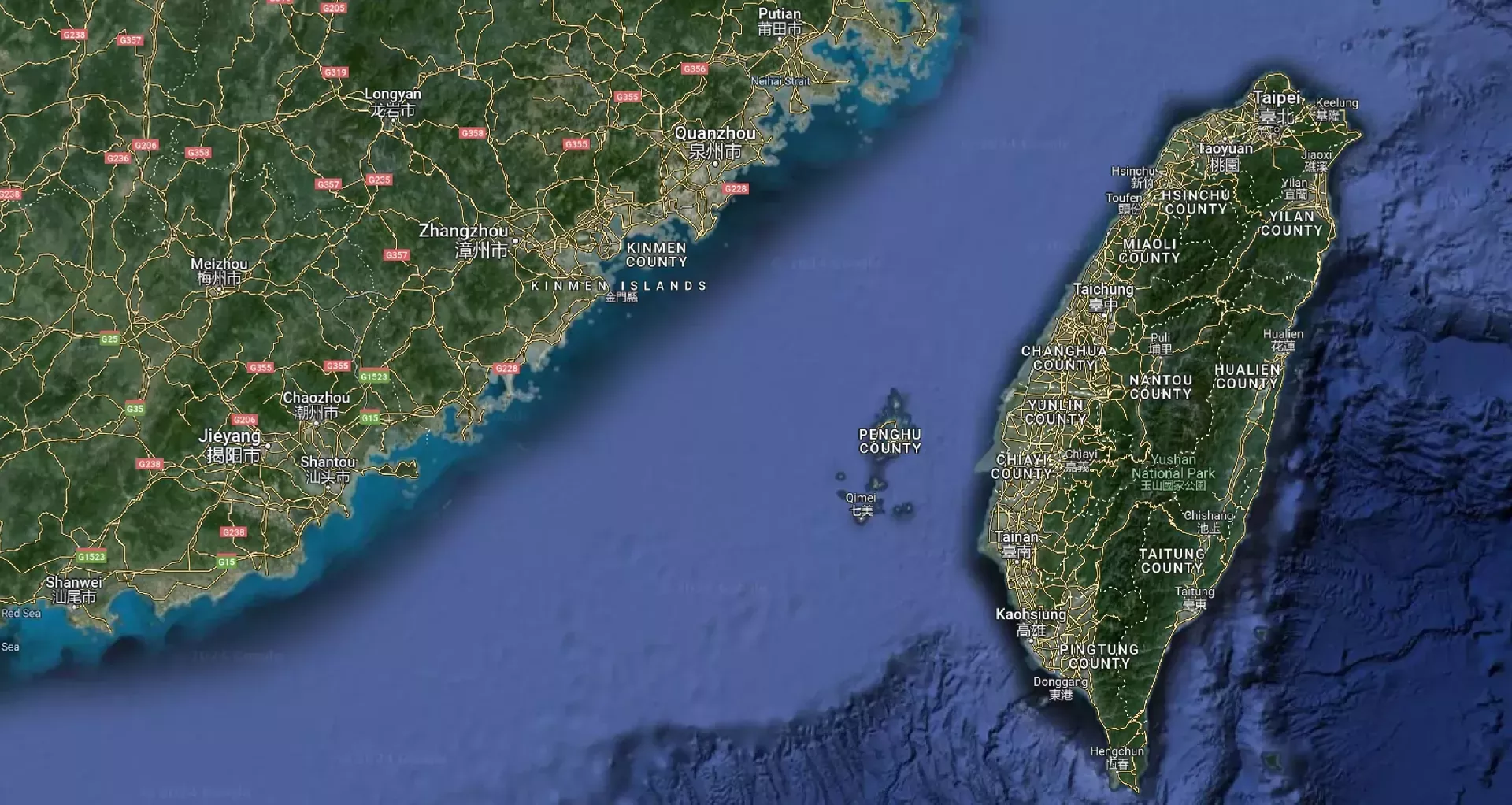
The events near Kinmen and the actions of the coast guard take on new meaning after this week's exercises. China behaves in the Kinmen area as if it were an internal matter, while closer to Taiwan it uses the navy. In other words, in the first case, they signal to Washington that some issues will be resolved on their own, without unnecessary conflict, while on the issue of Taiwan, Beijing intends to break separatism by force. Chinese Foreign Ministry spokesperson Mao Ning said that Taiwan "is not a diplomatic matter," when asked about this week's exercises.
For whom does time work?
With this approach, Beijing ties Taipei's hands, signaling that the Taiwan issue, since it cannot be resolved peacefully, will be resolved in relation to the United States. While the Chinese navy was encircling Taiwan, it was simultaneously involved in other exercises. Together with Russian ships, Chinese vessels conducted exercises in the Pacific Ocean.
These are just one in a series of exercises conducted with the Russian navy this year. The Chinese navy, the largest in the world, needs experience to deal with the American navy, which has been unrivaled for decades. The Chinese navy continues to grow, calculating that it must contend with the American one.
Nevertheless, China avoids conflict with the United States. First, it believes that time is on its side. Second, the US military is stronger than China's. Therefore, the issue of shifting (non-)existent boundaries is important, because at some point it could escalate into conflict, whether the Taiwanese or US military tries to stop the Chinese. Erasing boundaries in peacetime is an important victory for President Xi Jinping.
That is why Beijing plays cautiously, showing force where it can and refraining where it must. Washington can tolerate such tactics for a long time, but it is difficult for well-armed Taiwan, i.e., its political leadership, which faces voters and promises distancing from Beijing. Lai Ching-te came to power precisely with such a policy.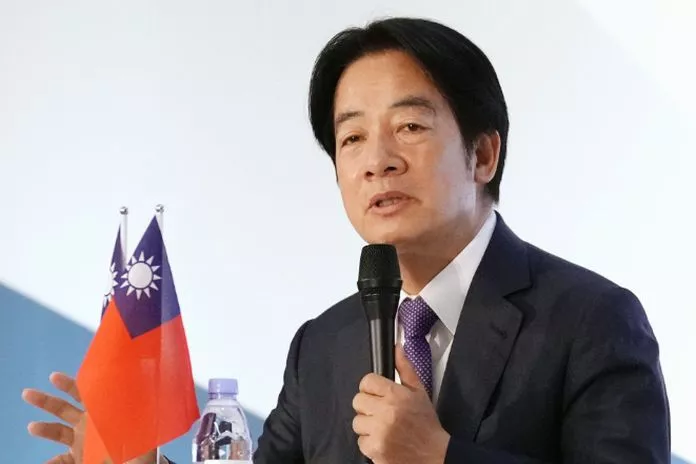
This week's military exercises are a message precisely to him and his like-minded supporters. Insisting on independence from China comes at a cost, and each time the price could be higher. For example, if the Chinese military exercises in a certain area, that territory is closed to all others. With such tactics, Beijing can disrupt the normal functioning of life in Taiwan, preparing for further steps.
Nevertheless, Taiwan remains a painful issue for China, a country that wants to be a superpower. At this moment, Beijing does not control all of China's territory, and this is a source of frustration, especially for the military. The return of Taiwan under Beijing's control is not going as planned, because Taipei does not want to submit. Therefore, the promise to unify the country, even by force, before the centenary of the founding of the Chinese Communist Party in 2049, remains to be fulfilled. A clear timeframe, known enemies, and real risk in a game that is intensifying and unfolding in the Pacific, in the competition between Beijing, Washington, and their allies.
Komentari (0)
Prijavite se za komentiranje
PrijavaJos nema komentara. Budite prvi!
Minuta
Sve →Iz drugih kategorija

High Representative Not Elected: Germans, French and British Sabotaged Americans, New Attempt at End of June

ČOVIĆ WITHOUT MERCY: How Those Who Brought Ademović to Office Created a Political Hell for Him



Sunny Saturday, quite warm



Tragedy in Albanian resort: Two minors drown












