
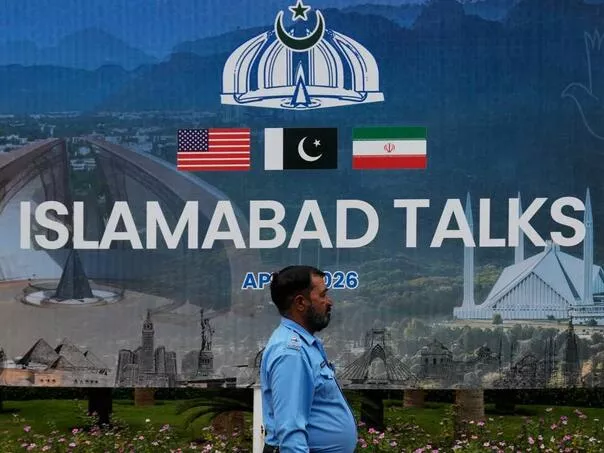
(Patria) - Negotiations between the United States and Iran appear to have concluded for now, the Iranian government announced early this morning, after a series of talks in Pakistan, which ended a six-week war between Washington and Tehran, Reuters reported.
The talks in Islamabad were the first direct meeting between the US and Iran in more than a decade and the highest-level talks since the Islamic Revolution in 1979. The outcome could determine the fate of a fragile two-week ceasefire and the reopening of the Strait of Hormuz, a bottleneck for about twenty percent of global energy supplies that Iran had blocked since the start of the war. The conflict led to a sharp rise in global oil prices and killed thousands of people.
In a post on social media platform X, the Iranian government announced that after fourteen hours of talks, they had concluded and that technical experts from both sides would exchange documents.
"Negotiations will continue despite some remaining differences," the post added, although it did not specify when they would resume.
An Iranian state television reporter said the talks would continue today.
US Vice President JD Vance, special envoy Steve Witkoff, and President Donald Trump's son-in-law, Jared Kushner, met with Iranian Parliament Speaker Mohammad Baqer Qalibaf and Foreign Minister Abbas Araqchi two hours before the break, according to a source from mediator Pakistan.
The Iranian delegation arrived on Friday dressed in black as a sign of mourning for Supreme Leader Ayatollah Ali Khamenei and others killed in the war. They wore shoes and bags belonging to some students killed during the US bombing of a school, the Iranian government announced. The Pentagon said the attack was being investigated, and Reuters reported that military investigators believe Americans were likely responsible.
"There were mood swings on both sides, and the temperature rose and fell during the meeting," said another Pakistani source regarding the first round of negotiations.
During the negotiations between the US and Iran, Islamabad, a city of more than two million inhabitants, was under lockdown, with thousands of security forces deployed on the streets.
Pakistan's mediating role represents an extraordinary transformation for a nation that was a diplomatic pariah a year ago.
Strait of Hormuz
When the negotiations began, the US military announced that it was "setting conditions" for the start of clearing the Strait of Hormuz.
The Strait of Hormuz is crucial for ceasefire negotiations. The US military announced that two of its warships had passed through the strait and that conditions were being set for mine clearance, while Iranian state media denied that any US ships had passed through the waterway.
Before the negotiations began, an Iranian source told Reuters that the United States had agreed to release frozen assets in Qatar and other foreign banks. A US official denied this.
In addition to the release of foreign assets, Tehran demands control over the Strait of Hormuz, war reparations, and a ceasefire throughout the region, including Lebanon, according to Iranian state television and officials. Tehran also wants to charge transit fees in the Strait of Hormuz.
Trump's declassified objectives have changed, but at a minimum, he wants free passage for global shipping through the strait and to prevent Iran's uranium enrichment program to ensure it cannot produce an atomic bomb.
Komentari (0)
Prijavite se za komentiranje
PrijavaJos nema komentara. Budite prvi!
Minuta
Sve →Iz drugih kategorija

High Representative Not Elected: Germans, French and British Against Americans, New Attempt at End of June

ČOVIĆ WITHOUT MERCY: How Those Who Brought Ademović to Office Created a Political Hell for Him



Sunny Saturday, quite warm



Tragedy in Albanian resort: Two minors drown












