
By Armin Sijamić
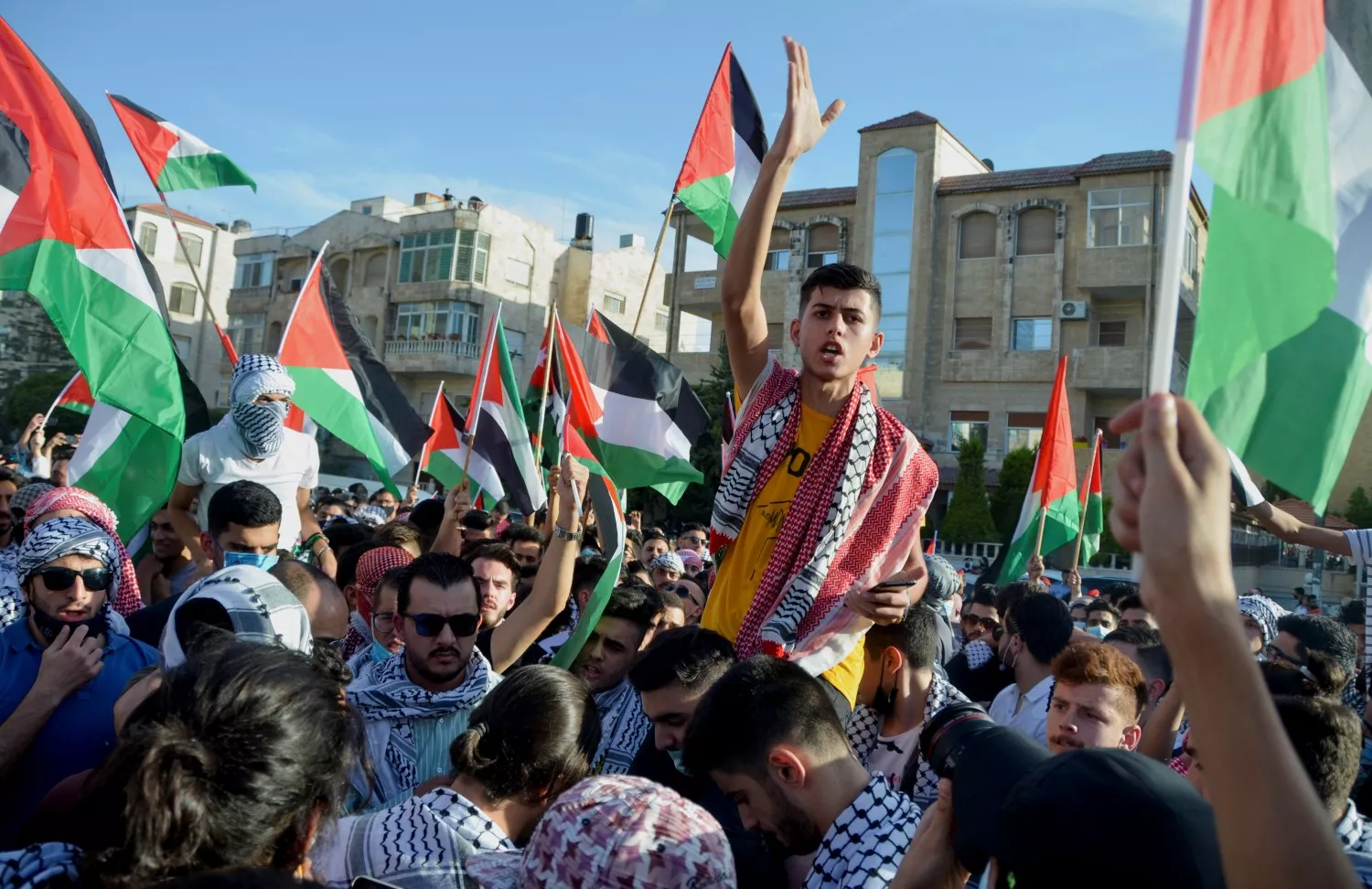
The suffering of Palestinians has lasted for decades. The fight for every meter of Palestine continues, and for years, Palestinians have watched the territory they live on shrink. Under various pretexts, the Israeli authorities are expanding the territory they control, while Arab states remain silent. In parallel, interest in the Palestinian issue is increasing among non-Arab states.
The struggle of Palestinians for their state is continuous and has lasted for seven decades. It manifests in various ways, even when the people are abandoned by everyone. The tragedy of the Palestinian people is now known worldwide, and unlike in the past, there are fewer unknowns. In the era of new media and social networks that connect people from the farthest corners of the world in an instant, everyone can find out what is happening in Palestine.
Despite this, it seems that in recent years, the Arab world has been paying less attention to and hearing less about Palestinian suffering. This primarily applies to the leaders of these countries, and due to repression in numerous Arab states, the local population is not allowed to express their views.
Repression in numerous Arab states has been a factor that has largely determined the fate of Palestine, or rather, the amount of support the Palestinians have received. Namely, the Palestinian struggle in the 20th century for a secular and democratic state was perceived as a threat to autocrats in many Arab countries. Palestinian organizations resisting Israel were secular and leftist in their roots. Today, such organizations are weaker.
Palestine also interests others
Arab intellectuals have said a lot about the insincere attitude of a large number of Arab states towards Palestine. The issue of Palestine, or rather the ability of Arabs to resist the numerically smaller Israelis, has become important in considering the political and social dynamics of the Middle East.
Many have concluded that some Arab leaders use Palestinian suffering for personal promotion, making inflammatory statements without providing concrete assistance. For example, the Gaza Strip borders Egypt and has been under Israeli blockade for years. 1.4 million Palestinians live in an area of 360 km². For comparison, the Posavina Canton has an area of 330 km².
However, the Palestinian issue has long ceased to be solely an Arab concern. During the Cold War, official Moscow used Palestine to confront Washington, and the Non-Aligned Movement did not remain on the sidelines either. With the collapse of the USSR and the communist bloc, Moscow did not deal with Palestine for decades, and the Non-Aligned Movement has been unable to find its purpose since then.
Since the Iranian Revolution, Palestine has become an important issue for Tehran in its confrontation with Israel and the United States. Iran, along with Syria and the Lebanese Hezbollah, has been supporting Palestinians for years. During the 2021 war between the Israeli army and Hamas, when Israel suffered significant losses and Gaza was severely devastated, Hamas leaders publicly thanked Tehran for financial and technical support in acquiring rockets.
Turkey, under Recep Tayyip Erdoğan, has also dealt with Palestine, as have some European countries. The European Union and the US are major donors to Palestine.
Palestine was also a topic in South America for years, and its leftist leaders openly expressed support and criticized Israel. For example, Venezuelan President Hugo Chávez, whose main adversary was Washington, called neighboring Colombia the "Israel of Latin America," alluding to official Bogotá being under the control and protection of the United States.
A multipolar world and Palestine
One of the last trump cards that Arab states use in discussions with the West when talking about Palestine is the issue of normalizing relations with Israel. During Donald Trump's administration, the Abraham Accords were initiated, according to which Arab states were supposed to establish diplomatic ties with Israel in exchange for economic and political concessions.
The United Arab Emirates, Bahrain, Sudan, and Morocco thus recognized Israel. Then Washington removed Sudan from the list of state sponsors of terrorism, Tel Aviv recognized Morocco's sovereignty over Western Sahara, and the UAE and Israel concluded important economic agreements.
The culmination of Trump's plan was supposed to be the normalization of relations between Israel and Saudi Arabia. Joseph Biden's administration continued Trump's plan. However, Riyadh decided to normalize relations with Iran, mediated by China. This diplomatic defeat for Israel and Washington resonated strongly throughout the Middle East. China also demonstrated its growing power in the region by offering mediation to Israel and Palestine to normalize relations.
China's move came at a time when Russia's aggression against Ukraine was creating deep divides in the relationship between the West and a large part of the world. After Israeli comments on Russian aggression, Moscow responded by questioning Israel's relationship with Palestine. There is no doubt that such positions of Beijing and Moscow are also conditioned by their relationship with Washington, which has been Israel's greatest protector and ally since its formation in 1948.
One of the organizations formed by Moscow and Beijing with the intention of resisting Western dominance and establishing a multipolar world is BRICS, which has been gaining importance in recent years. Brazil, Russia, India, China, and South Africa, which make up BRICS, have taken it upon themselves to speak on behalf of the "global South," i.e., developing countries.
As reported by the Palestinian news agency Wafa, last week BRICS issued a resolution calling for the establishment of an independent Palestinian state with East Jerusalem as its capital, urging respect for United Nations resolutions.
New Order
The Palestinian people will not benefit much from yet another resolution. However, the adoption of a resolution by BRICS at this moment is indicative. BRICS members have numerous issues to address, including differing views on the future of the organization.
The war in Ukraine, on which BRICS members have differing views, has accelerated certain processes and opened up some new and some old issues. The issue of Palestine is one of them, as it has been the core of Middle Eastern chaos for decades. If BRICS members aspire to be involved in global processes, then the Middle East and Palestine cannot be avoided.
President Mahmoud Abbas also counts on this, as evidenced by his visit to Xi Jinping in mid-last month when they declared a "strategic partnership" between the two countries. Xi Jinping, who welcomed the guest with the highest honors, said he supports Palestine within the 1967 borders with Jerusalem as its capital, Palestine's membership in the UN, and that the "historical injustice" against Palestinians must be rectified, offering assistance in reconstruction and development.
Abbas invited China and Xi Jinping to become more involved in the Middle East and welcomed "Chinese wisdom" in politics. Incidentally, he angered the West and many majority Muslim countries by stating that China is treating Uyghurs correctly.
The renewed interest in Palestine from non-Arab states shows the fundamental scale of the conflict between these states and the West. It seems that there are fewer common positions and more attempts to exploit weaknesses on the opposing side, regardless of the consequences. Palestinians are probably aware of this, which is why they themselves do not believe that changes will happen overnight. But Palestinians do not have many options, so every straw of hope seems like a serious plan. What is certain is that Palestine needs more allies and any kind of help, and its friends and enemies know this.
Komentari (0)
Prijavite se za komentiranje
PrijavaJos nema komentara. Budite prvi!
Minuta
Sve →Iz drugih kategorija

High Representative Not Elected: Germans, French and British Sabotaged Americans, New Attempt at End of June

ČOVIĆ WITHOUT MERCY: How Those Who Brought Ademović to Office Created a Political Hell for Him



Sunny Saturday, quite warm



Tragedy in Albanian resort: Two minors drown












