
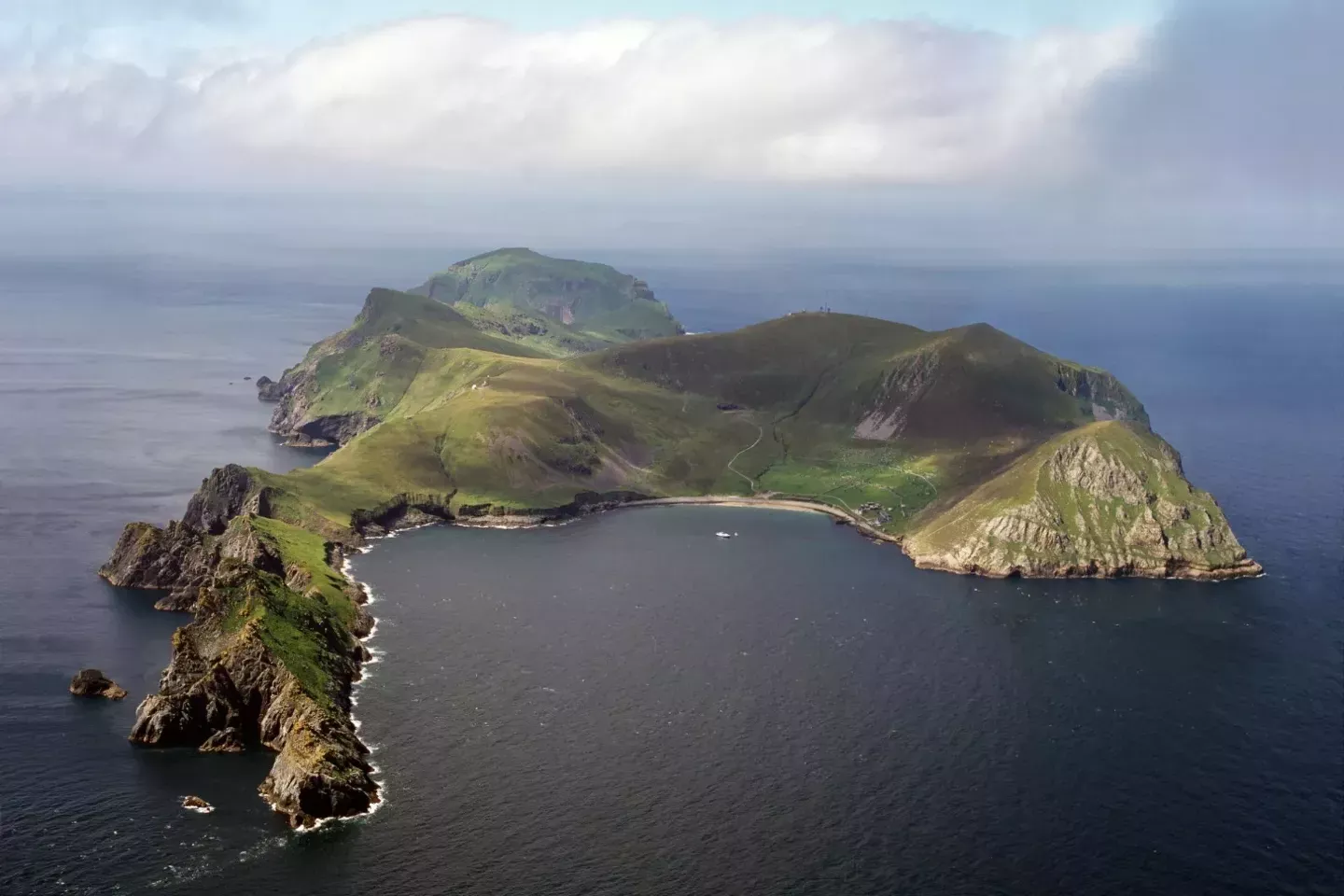
(Patria) - Imagine living on a relatively small island, with the nearest mainland (by the way, also an island) being no less than a full 64 kilometres away.
One thing is certain - you would get a good rest, but such a life would probably bore you at some point.
The Scottish archipelago of St Kilda is the aforementioned 64 kilometres from the Hebrides. The origin of the name remains unclear, because no matter how hard they tried, no one managed to find a saint named Kilda, so it is probably a misinterpretation by sailors, who passed on the name Kilda in the 17th century.
The most famous and largest island is Hirta, which boasts the highest cliffs in the entire United Kingdom. Along with Hirta, the larger islands are Soay and Boreray, and there are also several smaller islands.
Temperatures are anything but pleasant, so life here was truly not easy - from an average of 5 degrees in January to 12 in July. Cynics would conclude that at least not much different clothing is needed.
The islands also have great historical significance. Although their settlement is first mentioned in the Middle Ages, life existed on the islands long before, as evidenced by prehistoric dwellings.
Nevertheless, although the archipelago was once inhabited, it never numbered more than 180 souls, and after the mid-19th century, the number fell below 100.
Interestingly, at the end of the 19th century, tourism developed significantly (of course, nowhere near today's mass tourism), and tourists arrived until World War I, during which the archipelago was partly damaged.
After that, it never recovered in terms of population, as the 1920s brought a flu epidemic that decimated the inhabitants.
Eventually, the number dropped to just 36 inhabitants, and in 1930 the entire population was evacuated. Today, the island is only inhabited by the military, while in the summer various scientists and biologists come for research, due to some special animal species that inhabit the islands.
When mentioning these animal species, primarily the Atlantic puffin is meant, but also the northern gannet, the Manx shearwater and the great skua. Also, on some islands, rare species of sheep still live, and back in 1986, the archipelago was deservedly inscribed on the UNESCO World Heritage List, reports Punkufer.hr.
Komentari (0)
Prijavite se za komentiranje
PrijavaJos nema komentara. Budite prvi!
Minuta
Sve →Iz drugih kategorija

High Representative Not Elected: Germans, French and British Sabotaged Americans, New Attempt at End of June

ČOVIĆ WITHOUT MERCY: How Those Who Brought Ademović to Office Created a Political Hell for Him



Sunny Saturday, quite warm



Tragedy in Albanian resort: Two minors drown












