
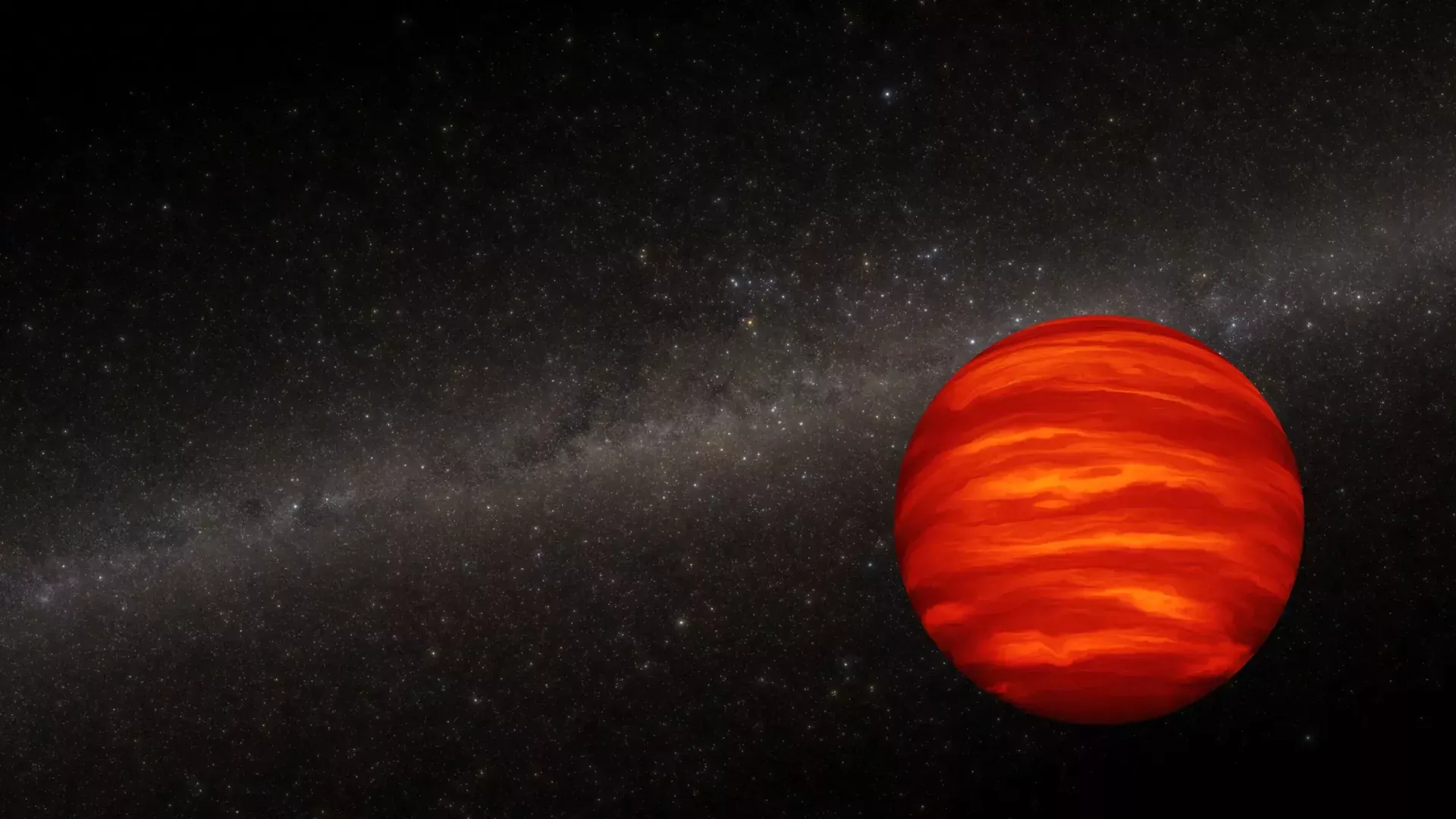
(Patria) - Three amateur astronomers using a NASA telescope have discovered an unusual celestial body hurtling through space at such speed that it will soon leave the Milky Way.
This cosmic wonder is moving at a speed of 1.6 million kilometres per hour, making it unique in our galaxy, reports Euronews.
- I cannot describe the level of excitement. When I first saw how fast it was moving, I was sure it had already been reported - says Martin Kabatnik, who first noticed the unusual object.
What kind of celestial body is it?
CWISE J1249, as this object has been named, could be a low-mass star or a body that lies between a giant planet and a so-called brown dwarf.
It is neither a comet nor an asteroid, and it also has much less iron and other metals, which are usually found in stars and brown dwarfs, so for now there are no clear indications of what it is.
The discovery was made as part of NASA's "Backyard Worlds: Planet 9" project, launched in 2017, which invites citizens to participate in analyzing a large amount of footage taken with powerful telescopes, with the aim of finding previously unnoticed dwarf planets and other objects.
In this case, the images that "captured" the mysterious body were taken by the infrared wide-field telescope WISE, which between 2009 and 2011 searched for distant light sources based on thermal energy.
This telescope, located in Earth's orbit, ran out of frozen hydrogen, which served to cool its system, so NASA put it into hibernation status for a time.
Two years later, the spacecraft woke up with a new purpose - it was renamed NEOWISE and tasked with "hunting" potentially dangerous celestial bodies near Earth, such as asteroids and comets.
The search does not stop
Although it achieved numerous successes and registered about 44,000 celestial bodies, the spacecraft retired last week, as it will soon be in too low an orbital position to provide any useful data.
In the case of CWISE J1249, besides Martin Kabatnik, citizen researchers Thomas P. Bicl and Dan Casselden participated in the discovery, and the research was published in the scientific journal "Astrophysical Journal Letters". However, their work is not yet finished.
Scientists will continue to search for the answer to the question of what is the key cause of its speed. One possibility is that the object was once part of a binary star system and was launched into space by the explosion of its companion.
Also proposed is the idea that it originates from a dense star cluster that encountered black holes. The complex dynamics of such cosmic encounters could have ejected one of the stars from the group.
Komentari (0)
Prijavite se za komentiranje
PrijavaJos nema komentara. Budite prvi!
Minuta
Sve →Iz drugih kategorija

High Representative Not Elected: Germans, French and British Against Americans, New Attempt at End of June

ČOVIĆ WITHOUT MERCY: How Those Who Brought Ademović to Office Created a Political Hell for Him



Sunny Saturday, quite warm



Tragedy in Albanian resort: Two minors drown












